Is Timisoara Located In Transylvania?
No, Timisoara is not in Transylvania. The city sits in Timis County, in the Banat region of western Romania, a separate historical region from Transylvania. Here is the full geography, why the confusion exists, and how to visit Transylvania from Timisoara.
Timisoara is a city in Timis County, in the Banat region of western Romania, and no, it is not located in Transylvania. The two are neighboring historical regions, and the border between them is real, even if it never shows up on a modern administrative map the way a county line does. Travelers booking flights, planning road trips or scanning tour listings conflate the two constantly, usually because "Transylvania" is the Romanian region with the international name recognition, while Timisoara is the one with the airport. The confusion is understandable, but it matters for planning: distances, driving routes and even the character of the countryside differ on either side of the divide.
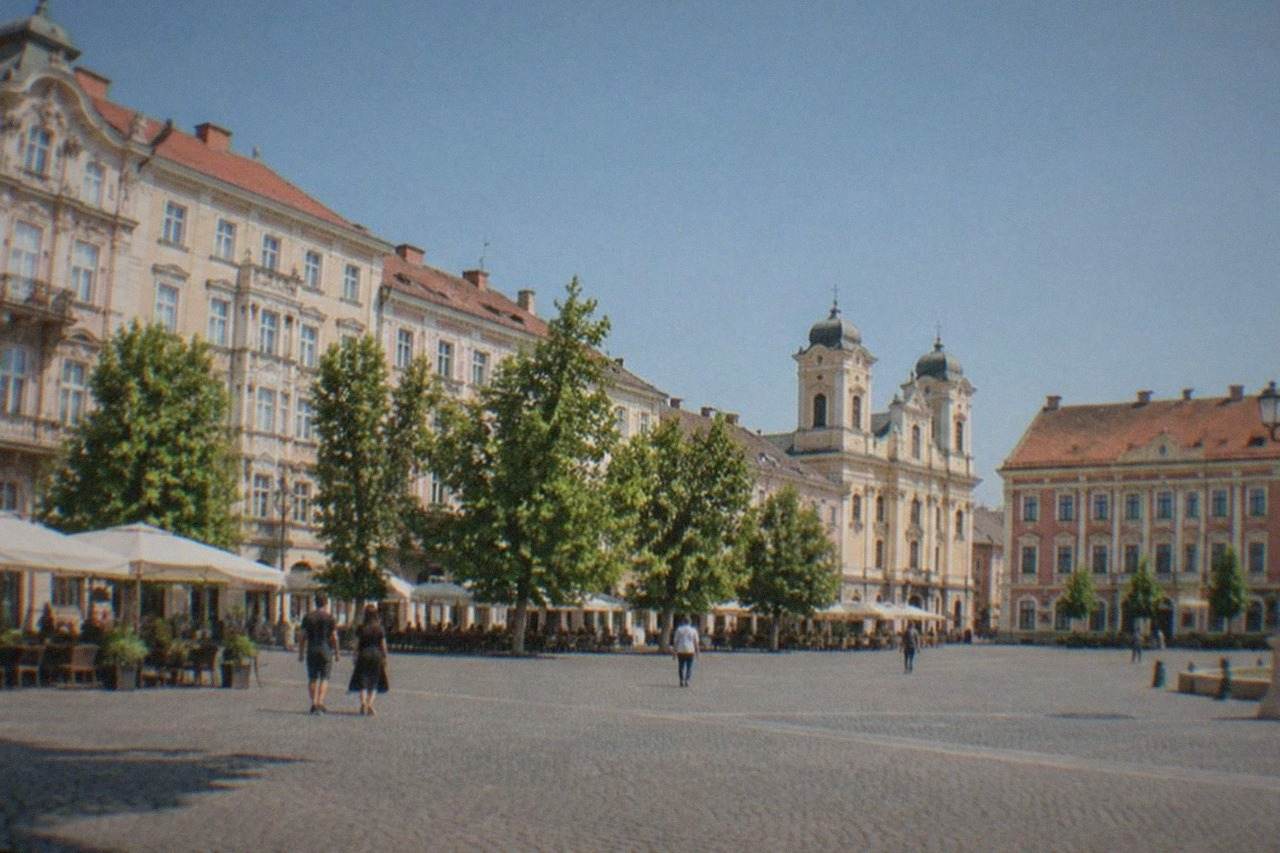
Where Is Timisoara, And What Region Is It In?
Timisoara is the main city of Timis County, in the Banat region of western Romania, close to the borders with Hungary and Serbia. Under its Hungarian name, Temesvár, and its German name, Temeswar, the city spent centuries as a Habsburg fortress town on the empire's southeastern edge. The Banat is a historical region in its own right, and Timisoara is its undisputed capital, a status the city has held for centuries.
The Banat is one of Romania's several historical regions, alongside Transylvania, Moldavia, Wallachia, Dobrudja, Maramures and Bukovina. Unlike the modern counties, which are administrative units, these regions are defined by centuries of history, and their boundaries do not always match today's paperwork. The Banat today is split three ways between Romania, Serbia and Hungary, with the Romanian share forming a wedge of land bounded by the Mures river in the north, the Southern Carpathians in the east and the Serbian border in the south.
Timisoara's identity is inseparable from that geography. The city's famous list of firsts, the electric street lighting of 12 November 1884, the first horse-drawn tram in the Habsburg Empire on 8 July 1869, the first brewery attested in Romania in 1718, all belong to a Banat frontier city that absorbed Austrian, Hungarian, German, Serbian and Romanian influences at once. That layered character is what visitors actually encounter in the squares of the Cetate district, and it is quite distinct from the Saxon fortified churches and Szekler villages that define the Transylvanian countryside further east. For more on the city's character, see what Timisoara is known for.
Is Timisoara Located In Transylvania?
No. Timisoara is not located in Transylvania. The city sits in the Banat region, roughly on the western side of Romania, while Transylvania is the large historical region that begins further east and north, beyond the Mures river valley and the Western Carpathians. Timisoara is the Banat's capital city, and it has never been part of Transylvania in any historical or administrative sense that historians recognize.
The mix-up usually starts with a map search. Romania's western half looks like one continuous block, and Transylvania is the only region name many travelers arrive knowing, so everything west of Bucharest gets filed under it. The second driver is tourism marketing: Transylvania sells, so castle tours, Dracula itineraries and "Transylvanian" experiences get promoted to visitors who are actually staying in the Banat. The city's own nickname adds a final layer of fog, since why Timisoara is called Little Vienna has nothing to do with Transylvania and everything to do with Habsburg architecture.
Here is the clean version of the geography:
| Question | Answer |
|---|---|
| What city is Timisoara? | The capital of Timis County and the main city of the Banat |
| What region is Timisoara in? | The Banat, a historical region split today between Romania, Serbia and Hungary |
| Is Timisoara in Transylvania? | No, Transylvania is a separate historical region east and north of the Banat |
| What separates the Banat from Transylvania? | The Mures river in the north and the Western Carpathians, with no single modern border |
| Is Timis County in Transylvania? | No, Timis County lies in the Romanian part of the Banat |
The practical consequence is smaller than the conceptual one. Nothing stops you from sleeping in Timisoara and spending the day in Transylvania, and in fact that is one of the more efficient ways to see both regions on a short trip. Operators run full-day and multi-day excursions from the city across the regional divide, so the geography becomes an itinerary feature rather than an obstacle.
What Is The Difference Between The Banat And Transylvania?
The Banat and Transylvania are two different historical regions with different founding stories. The Banat was a Habsburg frontier province organized in a later era, built around Timisoara as a military and administrative capital, and settled deliberately with German, Serbian, Hungarian and Romanian colonists. Transylvania is far larger and far older as a distinct polity, a medieval principality with its own centuries of autonomy, Saxon towns and Hungarian nobility, with its heart around cities like Sibiu, Brasov and Cluj.
The architectural difference is visible within minutes of arriving in each region. Timisoara's Cetate district is a baroque grid of squares, pastel facades and Secession details, the look of a provincial Habsburg city. Head into Transylvania and the vocabulary changes: Gothic churches ringed by defensive walls, steep shingled roofs, mountain backdrops. The food traditions, the dialects and even the folk music diverge along the same lines.
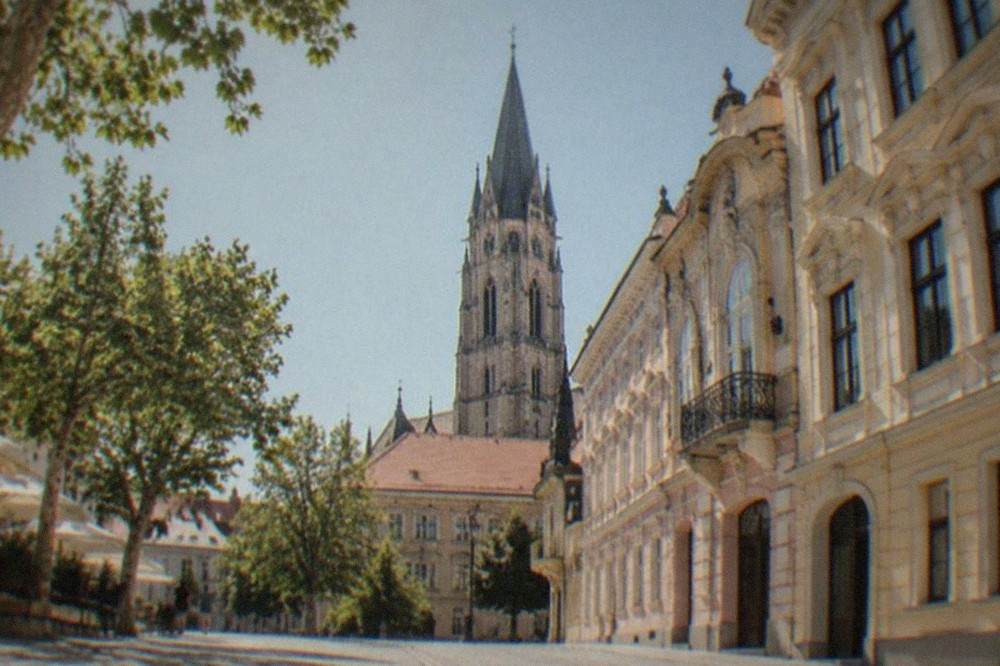
One more distinction worth knowing: the mountains that separate the regions are also the reason the Banat feels different climatically. Timisoara sits on a plain at low altitude, with JMA climate normals for station TIMISOARA 15247 giving a January mean of 0.0 C and a July mean of 22.8 C, and annual precipitation of 600.7 mm. It is classic continental lowland weather, not the cooler, wetter mountain climate of the Transylvanian interior.
Wondering whether the day trip across the divide is worth a day of your itinerary?
Can You Visit Transylvania From Timisoara?
Yes, Transylvania is reachable from Timisoara as a day trip or a multi-day trip, because the regional border sits close enough for guided excursions to cross it and return. Corvin Castle at Hunedoara, the city of Sibiu and the Turda Salt Mine are the classic Transylvanian targets from Timisoara, and all three sit inside Transylvania proper, never inside the Banat. Organized tours handle the driving, which matters because no independently verified driving times for these routes are published here.
The roster of guided options tells the story. There are single-day excursions built around Corvin Castle and Sibiu, longer versions that add the Turda Salt Mine, and private two-day itineraries that push deeper into the region. For travelers who want the mountain landscapes rather than the castles, the Apuseni Mountains, the northwestern corner of Transylvania known for its caves, also appear on combined itineraries out of the city. The tour's own listing carries the duration, price and rating; those figures are never quoted here from memory.
The most direct Transylvania-focused option from the city is the guided excursion below, which crosses the regional border and returns the same day.
If your base is Timisoara but Transylvania is the priority, the honest planning advice is to split the stay. Two or three nights in Timisoara for the Banat, then a transfer east, gives both regions their due. Travelers weighing the city against other Romanian destinations can start with whether Timisoara is worth visiting.
Why Do So Many People Think Timisoara Is In Transylvania?
Three forces drive the confusion: lazy map reading, tourism marketing and the sheer size of the Transylvanian brand. Romania's western half reads as one undifferentiated block on most travel maps, Transylvania is the only region name most foreign visitors arrive knowing, and tour sellers lean on the word because it converts browsers into bookers. Add the fact that both regions share a Habsburg past and you get a very persistent piece of received wisdom.
The Habsburg overlap deserves a specific mention. Timisoara was a Habsburg city from a later century onward, and large parts of Transylvania also came under Habsburg rule, so both regions carry Austrian-era architecture, German-speaking heritage communities and similar coffee-house traditions. A visitor who sees a baroque square in Timisoara and a baroque square in Sibiu can reasonably assume they are in the same region. They are not, but the visual rhyme is real.
There is also a simple naming trap: Timis County, where Timisoara sits, sounds as though it should belong to Transylvania, because "Transylvania" contains the word "trans". The county name actually comes from the Timis river, which flows through the Banat. Similarity of sound is not evidence of geography.
Does The Banat Have Its Own Attractions Worth The Trip?
Yes, the Banat has attractions that Transylvania cannot offer, starting with Timisoara's own squares, its 1989 Revolution history and the Serbian border barely an hour's drive south. The Danube Gorge, the Nera Gorge, the Banat waterfalls and the remote mountain villages of the region are all Banat subjects, not Transylvanian ones. The region also holds the western end of the scenic Banat mountain railway, a piece of infrastructure Transylvania has no equivalent for.
The 1989 Revolution is the clearest example. The uprising against the Ceausescu regime began in Timisoara in December 1989, and the city's Memorial Museum, in the former Communist Party headquarters, commemorates it. That history belongs to the Banat, and travelers who want the full story can read what happened in 1989 in Romania.
For a sense of how the region sits relative to its neighbors, which city is closest to Timisoara covers the cross-border options, including Novi Sad and Szeged, both reachable because the Banat is Romania's gateway region to both Serbia and Hungary.
Common Questions About Timisoara And Transylvania
Is Timisoara located in Transylvania?
No. Timisoara is located in the Banat region of western Romania, in Timis County. Transylvania is a separate historical region that begins east and north of the Banat, beyond the Mures river and the Western Carpathians.
Is Timis County in Transylvania?
No. Timis County lies in the Romanian part of the Banat. Its name comes from the Timis river, which flows through the Banat, and has no connection to the "trans" in Transylvania.
Is Cluj in the same region as Timisoara?
No. Cluj-Napoca is a major Transylvanian city. Timisoara is the capital of the Banat. The two cities belong to different historical regions, though both are reachable from each other for onward travel.
Can you day trip to Transylvania from Timisoara?
Yes. Guided day tours from Timisoara cross into Transylvania and visit destinations such as Corvin Castle at Hunedoara, Sibiu and the Turda Salt Mine, returning the same day. Multi-day private options reach deeper into the region.
Is Corvin Castle in Timisoara?
No. Corvin Castle is in Hunedoara, inside Transylvania. It is a popular day-trip destination from Timisoara, but the castle sits in a different historical region from the city itself.
Is the Banat part of Transylvania?
No. The Banat and Transylvania are neighboring historical regions. The Banat was organized as a Habsburg frontier province in a later century, while Transylvania was a medieval principality with its own distinct history and settlement patterns.
The short version: Timisoara Travel Guide covers a city in the Banat, and Transylvania is the next region over. Sleep in Timisoara, explore the Banat, and cross the divide only when a castle or an old Saxon town calls, ideally with a guide who knows which side of the border every stop falls on.