Which Christmas Market Is Best In Romania?
A comparison of Romania's Christmas markets, with the case for Timisoara's market in Piata Victoriei, plus planning advice on weather, food and dates to confirm.
Romania's Christmas market scene has outgrown the single famous answer most guides give, and the honest reply to "Which Christmas Market Is Best In Romania?" depends on what you want from a winter trip. Timisoara, in the Banat region of western Romania, holds its market in Piata Victoriei, the broad square where the 1989 Revolution began, and the setting is the strongest argument in its favor. Timișoara was a European Capital of Culture in 2023, and the city's winter calendar still carries that energy. Sibiu, Brasov and Bucharest each make a competing case, and this page compares them honestly, then tells you what to eat, what weather to expect and which dates to confirm before you book.
What Makes A Great Christmas Market In Romania?
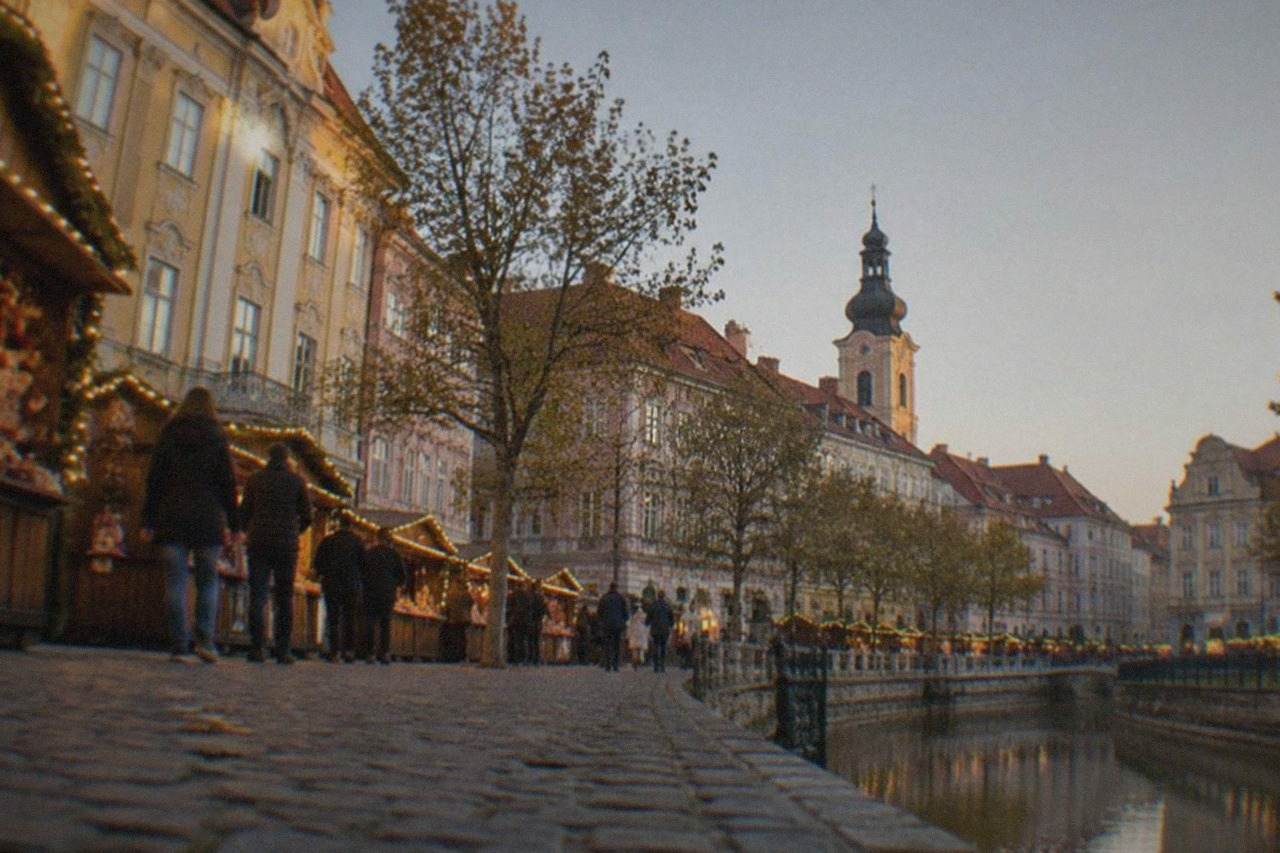
A great Romanian Christmas market needs three things together: a historic square that holds the lights well, a walkable old town around it, and enough local food and crafts to distinguish it from a generic stall grid. Timisoara's market in Piata Victoriei scores highest on the first two, because the square is wide, lined with Secession facades and steps from the Cetate old town. Sibiu wins on medieval intimacy, Brasov on mountain backdrop, Bucharest on scale.
That last point matters more than any ranking. A Christmas market is an evening activity, an hour or two of mulled wine and browsing, and the rest of your day is the city around it. Timisoara rewards that surrounding time unusually well: the squares of Cetate, the bars of Elisabetin, the Bega canal promenade and the museums are all inside a compact walkable core. The city was named Romania's Destination of the Year 2026 at a gala in May 2026, decided by public votes and a jury, which is a reasonable signal that the momentum from the 2023 Capital of Culture year has not faded.
The comparison below is deliberately qualitative. No market had its stall count, opening hours or prices verified, so it compares what can be honestly compared: setting, character and what the surrounding city offers.
| City | Market setting | Character | Best for |
|---|---|---|---|
| Timisoara | Piata Victoriei, a broad square lined with Secession buildings, with stalls spreading into surrounding squares | Festive and civic, in the square where the 1989 Revolution started | Visitors who want a full city break, not just a market evening |
| Sibiu | Medieval main squares of the old town | The most storybook old-town atmosphere in the country | First-time visitors who want Transylvania's medieval look |
| Brasov | Historic center below Mount Tampa | Mountain-town winter mood, cable car nearby | Visitors combining a market with snow scenery |
| Bucharest | Central squares and surrounding streets | The largest and busiest, most big-city | Short city trips built around shopping and nightlife |
Why Is The Timisoara Christmas Market A Strong Contender?
Timisoara's market takes over Piata Victoriei, a square with real historical weight, wide enough for a proper stall layout and framed by the buildings where the 1989 Revolution unfolded in front of national television cameras. Few Christmas markets in Europe stand in a place with that specific history, and the city adds a walkable old town, three historic districts and a growing food scene on top.
The 2023 European Capital of Culture program left the city with more venues, more festivals and a habit of programming the winter calendar, which is why the market feels like part of a living city rather than a pop-up. The square itself does a lot of the work. Piata Victoriei is the ceremonial heart of Timisoara, and in December the lights and stalls sit against a backdrop of ornate facades and the Opera. From the market you can walk to Piata Unirii, the baroque showpiece of Cetate, in a few minutes, and to Piata Libertatii beyond it. That cluster of three connected squares is what makes a winter evening here feel generous: you are not trapped in one crowded plaza, you drift.
For placing all of this in context, a guided walk is hard to beat, and the options below cover the squares, the Revolution story and the wider city.
The deeper planning resources live elsewhere on this site: the dedicated Timisoara Christmas Market guide covers the market itself, and the Christmas In Timisoara itinerary builds a full short break around it.
When Do Romanian Christmas Markets Run, And Which Dates Must You Confirm?
Romanian Christmas markets typically run from late November into the first week of January, following the pattern of recent years, but each city sets and announces its own dates in autumn. The 2026 Timisoara Christmas Market dates were still unannounced currently, so treat any late-November start you see online as an estimate until the city confirms. Confirm the dates for the year you travel before booking anything non-refundable.
The winter calendar around the market is worth knowing too. Timisoara's December is anchored by the annual commemoration of the 1989 Revolution, which typically falls around 15 to 20 December and includes ceremonies and cultural programs at the key Revolution sites around Piata Victoriei and the Opera. If your trip overlaps those days, you will see a side of the square that has nothing to do with shopping and everything to do with why the square matters, and the history of the 1989 Revolution explains what you will be watching.
Weather is the other planning variable, and the numbers are solid. The JMA/WMO climate normals for station TIMISOARA 15247 give the city a mean of 0.0 C in January and 1.5 C in December, so a Christmas trip is a proper winter trip: pack for sub-zero evenings, with precipitation around 45 mm in December. Everything else covered here is indexed on Timisoara Travel Guide.
| Month | Mean temperature | Precipitation |
|---|---|---|
| December | 1.5 C | 44.7 mm |
| January | 0.0 C | 37.3 mm |
| February | 2.1 C | 35.5 mm |
Source: JMA/WMO CLIMAT normals, station TIMISOARA 15247.
If you are weighing the whole question of whether the city justifies the flight, whether Timisoara is worth visiting is the honest companion read, and it applies double in winter.
Thinking about a winter visit already? The classic guided walk below can be booked ahead, and free cancellation means your plans stay flexible until the market dates are confirmed.
What Should You Eat And Drink At The Timisoara Christmas Market?
Expect the standard Romanian winter-market repertoire: mulled wine, called vin fiert, grilled sausages of the mici and carnati families, covrigi pretzels, chimney cake known as kürtőskalács, and hot bowls of ciorba, the sour soup that defines Romanian winter eating. Banat cuisine adds its own layer, since this region's cooking carries Hungarian, Serbian and Swabian German influences, so look for paprika-heavy stews and pork dishes alongside the national standards. Prices are set by individual stalls and change year to year.
Check at the counter rather than planning from a guide figure. That is a rule this site holds to strictly: no stall, stand or kiosk at the Timisoara market had its prices verified, and market pricing moves with the season anyway. What does not change is the logic of ordering. Vin fiert is sold by the cup, often with a deposit on the mug that you get back when you return it, and the sausages come straight off the grill in paper trays. If you want the fuller food picture beyond the market stalls, the city's restaurant scene is covered separately, and the food culture of Timisoara explains what Banat cooking actually is.
One practical note for the whole trip: Romania's currency is the Romanian leu (RON), the euro is not adopted, and stallholders at a Christmas market will expect cash in lei even where card terminals are common in the city's restaurants. The question of cash versus card in Romania is worth settling before you arrive.
How Do You Plan A Christmas Trip To Timisoara Around The Market?
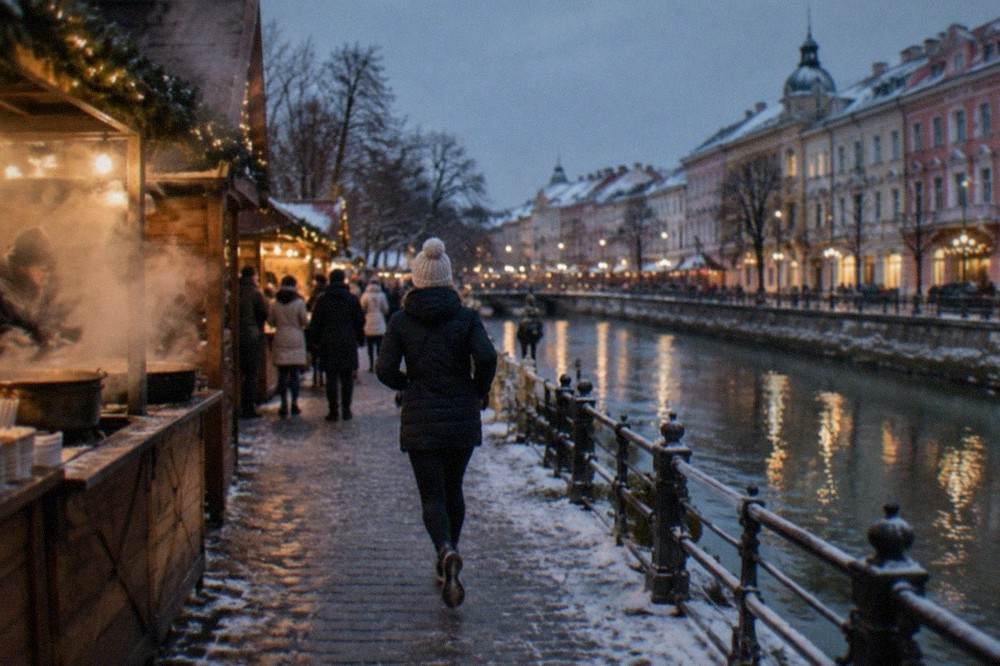
Plan three or four days, arriving in late November or early December if you want the market at full swing with thinner crowds, or in the week before Christmas for peak atmosphere. Book accommodation inside or bordering the Cetate district so the squares are a short walk, confirm the market dates for your year before locking in flights, and reserve one guided walking tour early in the stay. Leave the evenings free, because the market is the evening.
Give one afternoon to a museum for the short daylight hours. That daylight point is real: at this latitude in December the light is gone by late afternoon, which is exactly why the market works so well here. The rhythm of a good winter day in Timisoara is museums and squares while it is light, then food, then the market after dark. The things to do in Timisoara page is the full inventory for the daylight hours, and knowing what the city is known for explains why it looks the way it does.
For the guided walk, the classic option is the one most first-time visitors choose, and it can be reserved through the operator's live listing:
The final honest word on the ranking question: if your trip is only about the market, Sibiu's medieval squares are the most photogenic single setting in the country. If your trip is about the market plus a city worth a winter weekend, Timisoara is the stronger package, and the case has been building since the 2023 Capital of Culture year. People will keep mentioning the Little Vienna nickname when you tell them where you are going; it is common usage, not an official title, but it tells you how the city presents itself.
If this comparison has settled the question for you, the three guided walks below are the ones to have on your shortlist for the daylight hours, and all three can be reserved ahead with free cancellation while you wait for the market dates to be confirmed.
Common Questions About Christmas Markets In Romania
Which Christmas market is best in Romania?
There is no single official answer, but the strongest contenders are Timisoara, Sibiu, Brasov and Bucharest. Timisoara's market in Piata Victoriei pairs a historically loaded square with a walkable city and a strong post-2023 cultural calendar, which makes it the best package for a full winter break. Sibiu is the pick for medieval atmosphere alone.
Where is the Timisoara Christmas market held?
In Piata Victoriei, the city's ceremonial square, with stalls spreading into the surrounding squares in recent editions. The square is a few minutes' walk from Piata Unirii in the Cetate old town.
When does the Timisoara Christmas market open?
The 2026 dates had not been officially announced currently. The annual pattern in recent years is a late-November opening running into early January, so confirm the dates for your travel year with the city or the market's official channels before booking.
Is December a good time to visit Timisoara?
Yes, if you pack for winter. Climate normals for the city give a December mean of 1.5 C and a January mean of 0.0 C, so evenings at the market are genuinely cold. The payoff is the market, the Revolution commemoration in mid-December and a city that is at its most atmospheric after dark.
Do Romanian Christmas markets take cards?
Card acceptance is widespread in Romanian shops and restaurants, but individual market stalls vary and cash in Romanian lei is the safe assumption at a Christmas market. The euro is not adopted in Romania, so plan on lei for stall purchases.
How many days do you need for a Christmas trip to Timisoara?
Three or four days is the sweet spot: one for the squares and a guided walk, one for museums and the districts beyond Cetate, and evenings for the market. The city is compact, so nothing on that list requires more than a short walk or a tram ride.