What Are The Top 5 Largest Cities In Romania?
The five largest cities in Romania, where Timisoara ranks among them, and why the Banat's capital belongs on any Romania itinerary.
Bucharest, Cluj-Napoca, Timisoara, Iasi and Constanta are the five largest cities in Romania, and this page comes from Timisoara Travel Guide, a site devoted to Timisoara, the city in Timis County, in the Banat region of western Romania. Romania's urban map is dominated by its capital, but the country's regional capitals each carry a distinct identity, and Timisoara, known formally as Timișoara in Romanian and historically as Temesvár in Hungarian and Temeswar in German, holds a particular claim: it is the place where the 1989 Revolution began, the city that was a European Capital of Culture in 2023, and, per the 2021 census, a municipality of roughly 250,849 residents, a figure reported by the national statistics institute.
What Are The Top 5 Largest Cities In Romania?
The five largest cities in Romania are Bucharest, the capital; Cluj-Napoca in Transylvania; Timisoara in the Banat; Iasi in the Moldavia region; and Constanta on the Black Sea coast. Bucharest is in a category of its own, several times larger than any other Romanian city, while Cluj-Napoca and Timisoara contest second and third place depending on how the count is made. All five are regional capitals, university cities and transport hubs.
The ranking depends on the measure. Count residents within the city proper and one order emerges; count the wider metropolitan area and the gaps shift. Bucharest sits far ahead on any measure. Cluj-Napoca, the historic capital of Transylvania, and Timisoara, the largest city in western Romania, follow. Iasi, the cultural center of Moldavia in the northeast, and Constanta, the country's principal Black Sea port, complete the top five.
Timisoara's claim to a top-three position rests on the 2021 census, which reported 250,849 residents in the municipality, a figure the national statistics institute published and which should be treated as reported rather than re-checked here. The same census put Timis County at 650,533 residents, making it one of Romania's larger counties. What the raw number misses is the city's footprint: Timisoara anchors a cross-border region that reaches into Serbia and Hungary, both now internal Schengen neighbors since Romania's full accession on 1 January 2025.
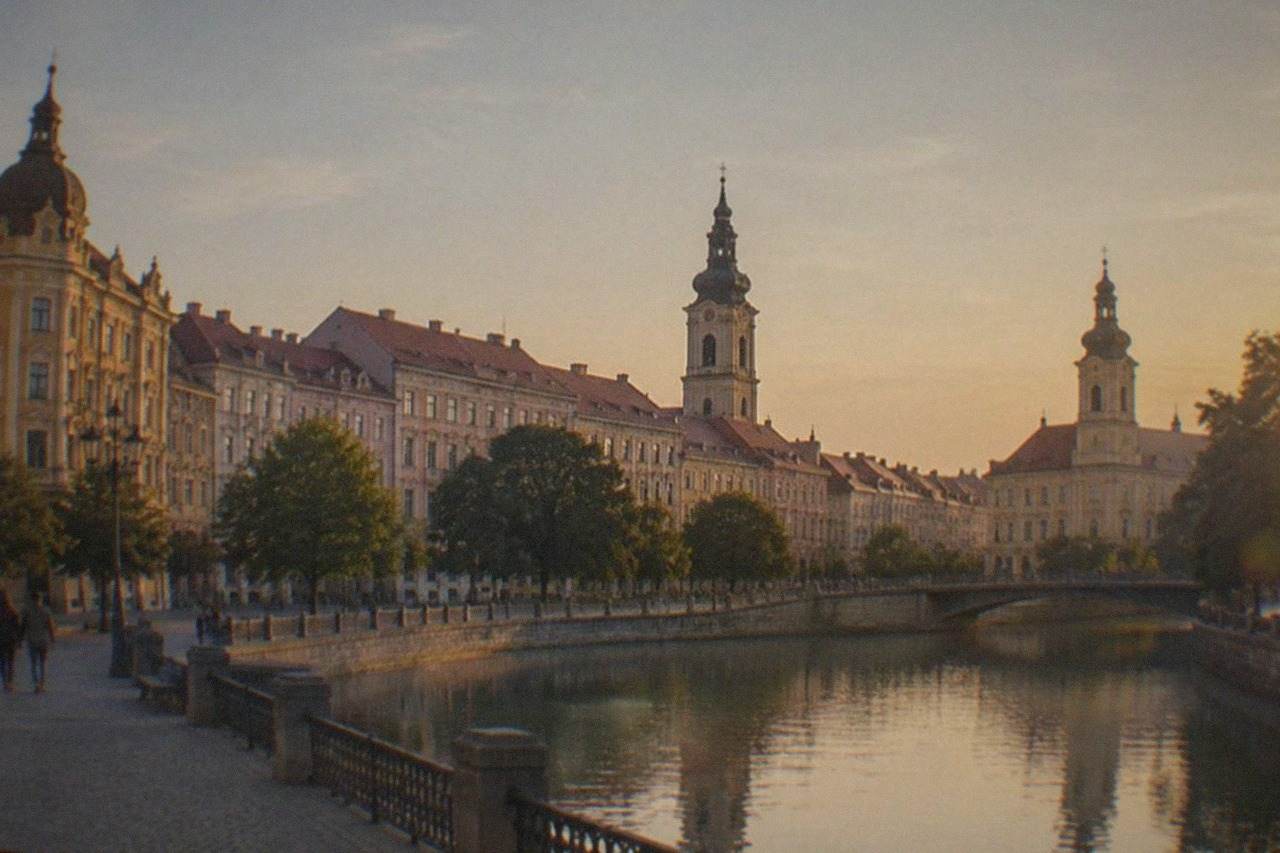
For travelers, the practical difference between these cities is character rather than size. Bucharest offers the Palace of the Parliament and a sprawling nightlife scene. Cluj-Napoca gives a Transylvanian base. Iasi is a city of monasteries and universities. Constanta is the summer coast. Timisoara is the Habsburg-flavored west, a compact city of squares, Secession facades and the Bega canal, where the first mainland European city to have electric street lighting, on 12 November 1884, still reads like an open-air museum of Central European history.
Where Does Timisoara Rank Among Romania's Largest Cities?
Timisoara is generally ranked third among Romania's largest cities, after Bucharest and Cluj-Napoca, with a 2021 census population reported at 250,849 for the municipality. The margin between Timisoara and Cluj-Napoca is small enough that the two cities trade places depending on whether the count covers the city proper or the metropolitan area, while Bucharest remains far ahead of both.
The city's scale is best understood through its region rather than a single number. Timis County, which Timisoara anchors, held 650,533 residents at the same census. The city serves as the economic and cultural capital of the Banat, a historically multiethnic region where Romanian, Hungarian, German and Serbian communities have coexisted for centuries. That heritage is visible in the city itself: three state theatres, in Romanian, Hungarian and German, have operated since 1953, a distinction the city hall notes as unique in Europe.
Timisoara's visitor economy has grown into that standing. Official figures compiled by the city from national statistics show tourist arrivals rising from 153,794 in 2021 to 283,256 in 2023, the European Capital of Culture year, and 285,190 in 2024.
| Year | Tourist arrivals in Timisoara |
|---|---|
| 2021 | 153,794 |
| 2022 | 212,785 |
| 2023 | 283,256 |
| 2024 | 285,190 |
| 2025 (Jan to Nov) | 268,699 |
The 2023 Capital of Culture year is the visible inflection point, and the city has worked to keep the audience it found. A city of a quarter million residents that draws close to 300,000 annual arrivals is, proportionally, one of Romania's more visited urban destinations, and the question of whether Timisoara is worth visiting now has a documented answer in the arrivals data.
How Does Timisoara Compare To Bucharest And Cluj-Napoca?
Timisoara is roughly a tenth the size of Bucharest in population terms, and it runs close to Cluj-Napoca, with the 2021 census reporting 250,849 residents in Timisoara's municipality. Bucharest concentrates Romania's political, financial and cultural weight in one place, while Timisoara and Cluj-Napoca are regional capitals of comparable scale, each anchoring its own half of the country, Cluj in Transylvania and Timisoara in the Banat.
The comparison that matters to a visitor is not the population count but what each city does with it. Bucharest is vast and can swallow a week. Timisoara is compact: its historic core of Cetate, with Piata Unirii, Piata Victoriei and Piata Libertatii, is walkable end to end, and the tram network, nine lines strong, stitches the old town to the Fabric, Iosefin and Elisabetin districts. The city was the first in the Habsburg monarchy with lamp-lit streets in 1760, and the first on the European mainland with electric street lighting in 1884, details that still shape how the city center feels in the evening. The rest of the planning pages sit on Timisoara Travel Guide.
Cluj-Napoca competes as a university and tech city. Timisoara's differentiators are its 1989 history, the revolution that began here in December 1989 and ended the Ceausescu regime, and its position as a western gateway. The city's airport, Traian Vuia International, reported 1,458,098 passengers in 2025, up 10.2 percent on the previous year, according to Romanian Airports Association figures, with new routes added through 2026 including Istanbul, Berlin, Birmingham and Prague.
For anyone weighing the two cities, the honest framing is this: Cluj is the capital of Transylvania, and Timisoara is the capital of the Banat. If your question is whether Timisoara is in Transylvania, the answer is no, and that distinction is exactly why the city feels different, more Central European than the cities to its east.
Getting between the big cities is straightforward. Romania's full Schengen membership since 1 January 2025 means no routine border checks on the Hungarian side, and the A1 motorway connects Timisoara toward Arad and the Nădlac crossing with Hungary. A new four-lane link road between Timisoara and the A1 opened to traffic on 22 September 2026, giving the city a third direct access point to the motorway. Direct trains also run from Timisoara Nord to Budapest in about five and a half hours, twice daily, which makes the city a practical base for combining Romania with Central Europe.
Why Do Romania's Largest Cities Look And Feel So Different From Each Other?
Romania's largest cities look different because they were shaped by different empires: Bucharest and Iasi grew as Wallachian and Moldavian capitals under Ottoman-era influence, Cluj-Napoca as the main city of Hungarian-ruled Transylvania, Constanta as an ancient Roman and later Ottoman port, and Timisoara as a Habsburg fortress city, which is why its squares and facades resemble Austria or Hungary more than the Romanian east.
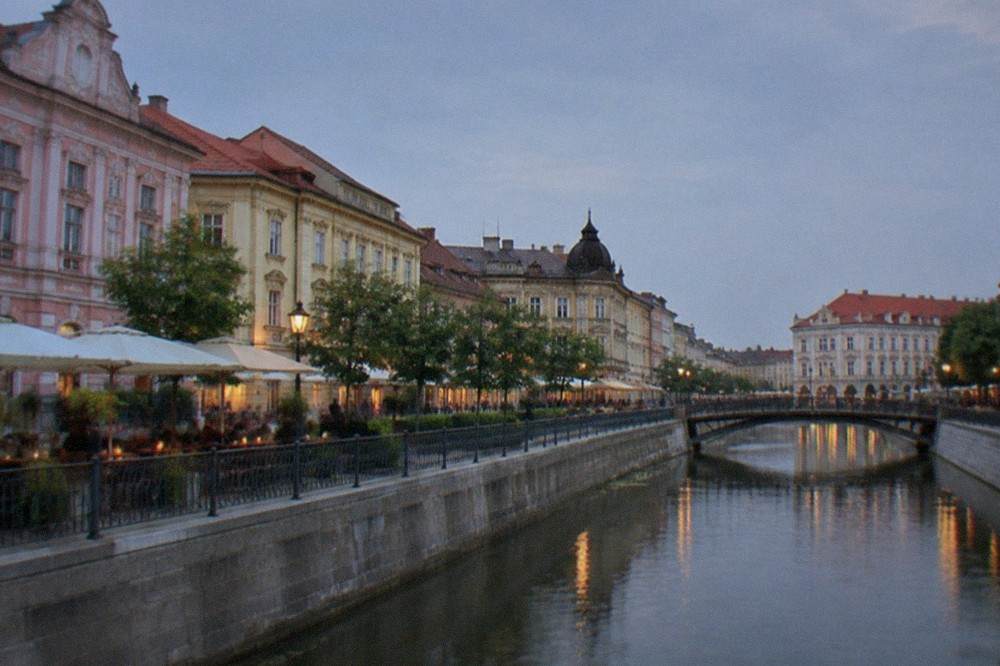
Timisoara's built identity comes from the Habsburg period. Under its Hungarian name, Temesvár, the city was a fortress of the empire, and its street grid, its baroque and Secession buildings and its canal, the Bega, made navigable starting in 1728 as the first navigable canal in Romania, all date from that era. The nickname "Little Vienna" is common usage among locals and guidebooks, but it is not an official designation, and the city hall does not use it that way.
The city's list of firsts explains its feel. The first newspaper printed in Romania appeared here in 1771. The first horse-drawn tram in the Habsburg Empire ran from Cetate to Fabric on 8 July 1869. The first electric tram in Romania followed in 1899. A walking tour is the efficient way to absorb this, and the Revolution story, covered in detail in what happened in 1989 in Romania, gives the same streets a second, modern layer of meaning.
Which Of Romania's Biggest Cities Should You Actually Visit?
Timisoara, Cluj-Napoca and Bucharest are the three of Romania's largest cities most international visitors prioritize, and Timisoara suits travelers who want a walkable, history-rich city with direct flights from across Europe. Bucharest rewards time and stamina, Cluj-Napoca pairs well with Transylvania's castles, and Timisoara pairs best with the Banat's countryside, the Danube gorges, and cross-border trips to Serbia and Hungary.
The decision usually comes down to geography. Flying into western Romania, Timisoara is the natural entry point, and the surrounding region, from the Nera Gorge to the Danube's Cazanele defiles to the Banat's village countryside, is the city's real hinterland. The city itself needs two comfortable days, which is why the itineraries on this site start at one day in Timisoara and stretch to a full week of western Romania.
Season matters more than size. The JMA climate normals for the Timisoara station give a January mean of 0.0 C and a July mean of 22.8 C, with precipitation peaking at 79.1 mm in June and bottoming at 34.1 mm in March, a continental pattern with warm summers and cold winters. May through September is the comfortable window for the squares and the Bega canal, and December brings the Christmas market to Piata Victoriei.
For a city of its size, Timisoara also offers a distinctive range of guided ways in. A history and 1989 Revolution walking tour is the anchor, and the options below widen that to the wider Banat.
Common Questions About The Largest Cities In Romania
What are the top 5 largest cities in Romania?
Bucharest, Cluj-Napoca, Timisoara, Iasi and Constanta are the five largest cities in Romania. Bucharest is by far the largest, Cluj-Napoca and Timisoara contest second and third place, and Iasi and Constanta complete the list.
Is Timisoara bigger than Cluj-Napoca?
It depends on the measure. The 2021 census reported 250,849 residents in Timisoara's municipality, and the two cities trade places in rankings depending on whether the city proper or the wider metropolitan area is counted. Both are regional capitals of comparable scale.
What is the largest city in Romania?
Bucharest, the capital, is by far Romania's largest city, several times larger than any other Romanian city on any population measure.
Which region of Romania is Timisoara in?
Timisoara is in Timis County, in the Banat region of western Romania, close to the borders with Hungary and Serbia. It is not in Transylvania, which begins further east.
Is Timisoara worth visiting compared to Bucharest?
Yes, for a different experience. Timisoara is compact and walkable, rich in Habsburg-era architecture and 1989 Revolution history, and served by an airport that reported 1,458,098 passengers in 2025. Official arrivals data shows the city drawing close to 300,000 visitors a year.
Romania's five largest cities each reward a different kind of traveler, and Timisoara's combination of scale, history and western position makes it the natural base for exploring the Banat.