How Cold Does It Get In Timisoara?
How cold does it get in Timisoara, Romania? JMA climate normals for station Timisoara 15247, month-by-month temperatures, snow, packing advice and winter planning.
Timisoara, the county seat of Timis County in the Banat region of western Romania, sits on the flat plains of the Timis-Bega lowlands at a station altitude of just 86 m, and its climate is fully continental. The JMA/WMO CLIMAT normals for station TIMISOARA 15247, the only temperature and precipitation series verified for this site, put the coldest month, January, at a mean of 0.0 C and the warmest, July, at 22.8 C, with 600.7 mm of precipitation spread across the year. So the honest short answer to how cold it gets is: cold enough for real winter, never Arctic, and far milder than the mountain cities that draw most of Romania's winter tourism.
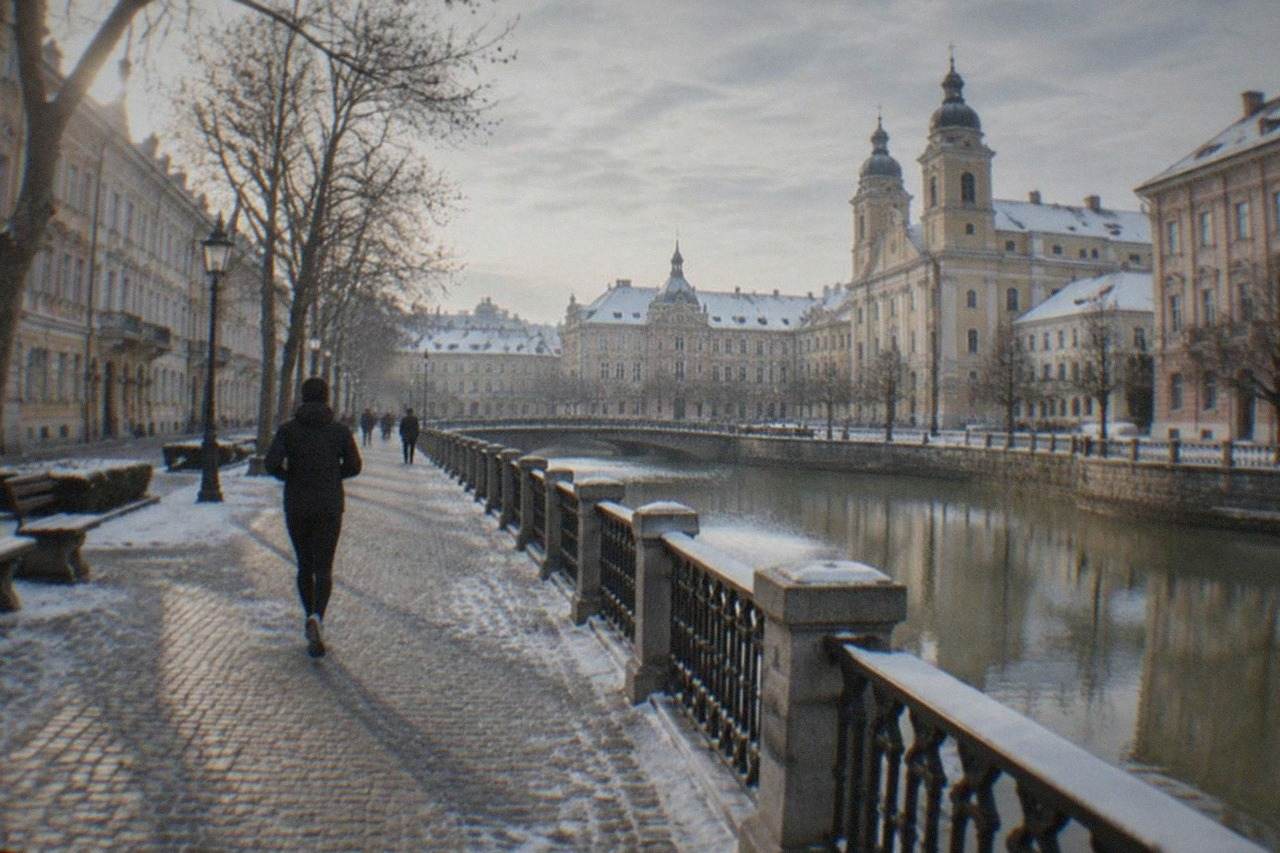
What Are The Coldest Months In Timisoara?
The coldest months in Timisoara are January, at a mean of 0.0 C, and February, at 2.1 C, with December close behind at 1.5 C; November's mean of 6.4 C marks the point where the city tips into proper winter. These figures come from the JMA/WMO CLIMAT normals for station TIMISOARA 15247, the published series for this exact location. Only mean temperature and precipitation are published for this station, so no mean daily high or low figure exists in the verified research.
That last point matters more than it sounds. Plenty of weather sites will quote you a "daily high" or "daily low" for Timisoara, but those numbers do not come from the station normals verified for this site, and borrowing them from a nearby city would be guesswork. What the station data does establish is the shape of the year: a hard three-month winter trough from December through February, a fast spring climb from 6.5 C in March to 12.3 C in April, and a long warm plateau from June through August where the means sit between 20.9 C and 22.8 C.
Because these are means rather than extremes, a January day can obviously run well below freezing, and individual cold snaps pushing the city several degrees under zero are a normal feature of the Banat plain. But the normals tell you what to plan around: a winter city break in Timisoara is built around squares, cafes, churches and museums, not around surviving the street. The historic core of Cetate is compact enough that a five-minute walk separates you from the next warm interior.
| Month | Mean temperature (C) | Precipitation (mm) |
|---|---|---|
| January | 0.0 | 37.3 |
| February | 2.1 | 35.5 |
| March | 6.5 | 34.1 |
| April | 12.3 | 50.6 |
| May | 17.3 | 57.2 |
| June | 20.9 | 79.1 |
| July | 22.8 | 61.9 |
| August | 22.5 | 54.6 |
| September | 17.2 | 50.4 |
| October | 11.5 | 50.0 |
| November | 6.4 | 45.3 |
| December | 1.5 | 44.7 |
Source for every figure in the table: JMA/WMO CLIMAT normals, station TIMISOARA 15247, altitude 86 m. March is the driest month of the year at 34.1 mm and June the wettest at 79.1 mm, which is a useful reminder that Timisoara's damp season is summer, not winter. Winter precipitation is moderate, between 35.5 mm and 44.7 mm a month.
Does It Snow In Timisoara?
Snow does fall in Timisoara, but the station normals suggest a modest winter precipitation total, between 35.5 mm and 44.7 mm per month from December through February, some of which arrives as rain rather than snow at a January mean of 0.0 C. The verified data does not break precipitation down by type, so no snow-day count or snow-depth figure can be honestly stated for this city. Expect occasional snow cover, not a guaranteed white winter.
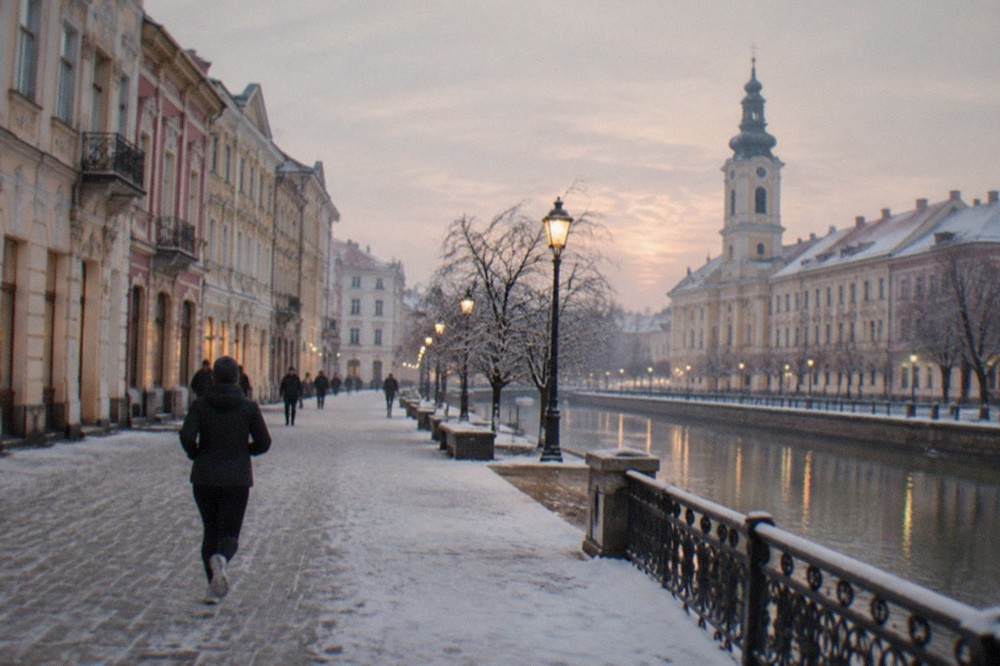
That is the practical reality of a lowland city sitting at 86 m. Timisoara is not the Carpathians, and anyone booking a December trip in hopes of deep snow should aim for Romania's mountain resorts instead. What Timisoara's winters reliably deliver is the atmosphere of a Central European city in the cold season: bare plane trees along the Bega, steam off a terrace coffee, and the Baroque facades of Piata Unirii looking their most photogenic under a low grey sky.
When snow does settle, it usually transforms the pedestrian core rather than disrupting it. The squares of Cetate, from Piata Unirii to Piata Sf. Gheorghe, are walkable territory, and the city's tram network, the oldest electric tram system in Romania since 1899, keeps running through ordinary winter weather. The seasonal vaporetto on the Bega is a different matter: the water bus operates on a seasonal schedule, withdrawn at the end of October and back on the water from 1 April, so a winter visitor should not plan around it.
For visitors who want the cold-weather version of the city rather than an escape from it, a guided walk is the most efficient use of short winter daylight. The ecumenical circuit of Timisoara's churches, Orthodox, Catholic, Serbian Orthodox and Reformed, is almost entirely indoors between stops, which makes it one of the better winter formats. The Check availability link shows the operator's live listing, and the tour's own page carries current pricing and schedule details.
How Cold Does It Get In Timisoara Compared With Other Romanian Cities?
Timisoara's January mean of 0.0 C places it among the milder of Romania's major cities, because the Banat plain at 86 m altitude lacks both the Carpathian elevation that chills Brasov and Sibiu and the stronger continental pull that drives colder averages deeper into the east of the country. The verified research holds figures only for the Timisoara station itself, so no city-to-city comparison table with matching station data can be printed here. Relative to the country's mountain destinations, Timisoara is the warmer winter choice.
That comparison is worth making carefully. Romania's famous winter image, snow-capped peaks and ice hotels, belongs to the Transylvanian highlands, and travelers sometimes assume the whole country shares that profile. Timisoara sits in the far west of the country, in the Banat, a region that historically looked toward the Habsburg cities of Central Europe, and its climate behaves accordingly: four honest seasons, a real but contained winter, and a summer that is warm without southern-Romanian intensity. The wider set of guides lives on Timisoara Travel Guide.
For trip planning, the useful framing is that December through February are the months when the city's squares belong to locals and the occasional hardy visitor. The 2023 European Capital of Culture year put Timisoara on the international map, and the cultural venues built or restored for that year, from the opera house to the museums around Piata Unirii, give winter visitors plenty of indoor anchors within a short walk of each other. More on what the city is known for is in what Timisoara is famous for.
What Should You Pack For Timisoara In Winter?
Pack for a lowland Central European winter with means around freezing: a proper insulated coat, hat, gloves and scarf for December through February, waterproof footwear for slush and rain in a city whose winter months each carry 35 to 45 mm of precipitation, and warm layers you can shed indoors, because cafes, museums and trams are heated. November and March sit at means of 6.4 C and 6.5 C, cold enough for a warm jacket but rarely for full winter kit.
The layering advice is not boilerplate. Timisoara's winter experience alternates sharply between cold streets and warm interiors, and the walkable core means you will move between them constantly. A coat you can open, and a bag you can stuff a scarf into, serves better than a single heavy parka worn all day. Footwear deserves real attention: with a January mean right at freezing, precipitation falls as snow, sleet or rain depending on the week, and the cobbles and tram rails of Cetate hold surface water.
One packing note specific to this city: the Christmas Market in Piata Victoriei is a signature winter draw, and the market squares are open-air, so an evening there in December means standing in the cold for hours. Hand warmers and a second pair of socks earn their place. For travelers weighing the whole country's festive options, the question of which Christmas market is best in Romania has a longer answer, but Timisoara's edition in Victory Square is the anchor of the city's winter season.
Is Winter A Good Time To Visit Timisoara?
Winter is a genuinely good time to visit Timisoara if the trip is built around the city's core strengths, indoor culture, cafe life, the Christmas Market in December, and the 1989 Revolution sites, because January's 0.0 C mean is cold but manageable and the historic center is compact enough to minimize outdoor time. Travelers whose priority is outdoor life, the Bega waterfront, parks and the seasonal water bus, should come between April and October instead.
The case for a cold-season visit is largely structural. Timisoara's attractions cluster tightly: the Memorial of the 1989 Revolution, the Art Museum in the Baroque Palace on Piata Unirii, and the cluster of churches around the old squares are all within a short walk of one another. The Memorial's own site lists adult admission at 20 lei and opening hours that run Monday to Friday from 08:00 to 17:00 and weekends from 10:00 to 18:00, so a full indoor day is easy to assemble even on the shortest days of the year.
The case against is equally honest. The Bega canal, one of the city's signature public spaces, is at its best in the warm months, and the vaporetto does not run in winter. The Banat Village Museum, an open-air site, keeps winter hours but is far more rewarding when the weather cooperates. February, with its 35.5 mm of precipitation and 2.1 C mean, is the least flattering month to visit, sitting in the dead zone between the Christmas Market and the spring cultural calendar.
Budget is the quiet argument in winter's favor. Romania's currency is the Romanian leu, and costs in Timisoara run below most of Western Europe year-round, but accommodation in the shoulder and low seasons is where the savings concentrate. A sense of what money buys across the country is covered in how far 100 dollars goes in Romania, and the same logic applies to a winter Timisoara trip, where the main costs are rooms and food rather than paid attractions.
Between them, those three options cover the two winter strategies that make sense from a climate standpoint: staying inside the compact city core on a guided walk, or trading the cold plain for the Carpathian villages and caves of the Banat and Apuseni mountains, where winter is a feature rather than a nuisance. The choice comes down to whether the trip is about the city itself or about the region around it.
Common Questions About Cold Weather In Timisoara
How cold does it get in Timisoara?
The January mean temperature is 0.0 C, the coldest month of the year, with February at 2.1 C and December at 1.5 C, according to the JMA/WMO CLIMAT normals for station TIMISOARA 15247. These are monthly means, so individual days can run colder, but the city's winter is a lowland Central European one, not a mountain climate.
What is the coldest month in Timisoara?
January, with a mean temperature of 0.0 C and 37.3 mm of precipitation. February follows at 2.1 C. The station normals are the only verified temperature series for the city, and they do not publish daily extremes.
Does it snow in Timisoara in winter?
Snow falls in Timisoara, but the verified data does not record snow days or snow depth, so no count can be stated. Winter precipitation runs between 35.5 mm and 44.7 mm per month, some of it rain at a January mean of 0.0 C. Expect occasional snow cover rather than a guaranteed white city.
Is Timisoara colder than other Romanian cities?
Timisoara is among the milder of Romania's larger cities in winter, sitting at 86 m altitude on the Banat plain. The verified research holds station data only for Timisoara, so no precise city-to-city comparison can be printed, but mountain destinations such as Brasov and Sibiu run colder in winter than this lowland city.
What is the wettest month in Timisoara?
June, at 79.1 mm, is the wettest month, and March, at 34.1 mm, is the driest. This surprises visitors who assume winter is the damp season; Timisoara's precipitation peak is actually midsummer, and annual precipitation totals 600.7 mm.
Is December a good month to visit Timisoara?
December works well for a city-break format: the mean is 1.5 C, the Christmas Market fills Piata Victoriei, and the compact Cetate district keeps walking distances short. Pack for freezing temperatures and 44.7 mm of December precipitation, and plan the days around the museums, churches and cafes of the historic core.
Timisoara's winter is real but civilized: a January mean of 0.0 C, modest precipitation, and a walkable old core that keeps the cold at arm's length. Plan around the verified station normals, pack layers, and the cold season becomes one of the city's more atmospheric times to visit.