Romanian Leu
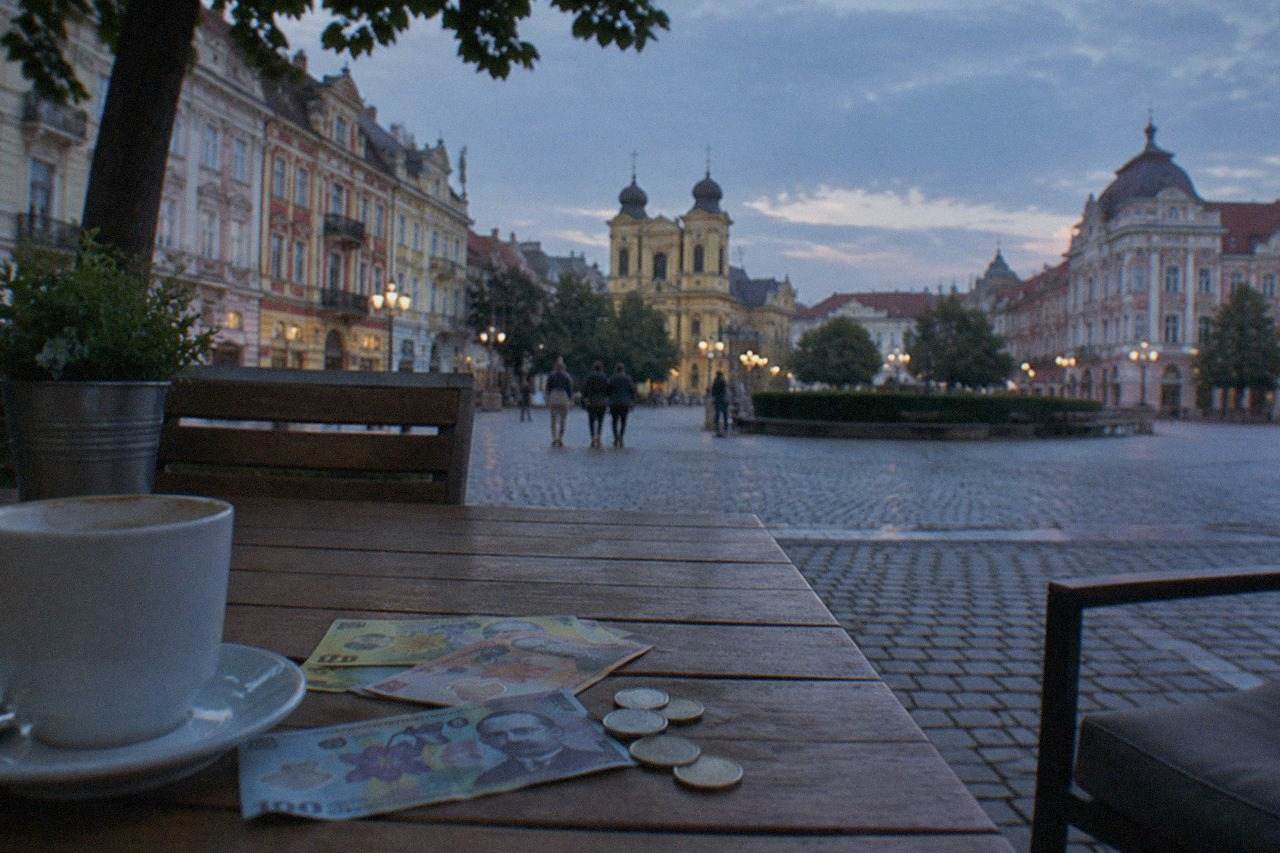
Romania has not adopted the euro, and every till in Timisoara, the main city of the Banat region in western Romania, settles in the national currency, the Romanian leu. This guide covers what the money looks like, how to get it, and what it buys.
Short answer
The Romanian leu (RON) is the only currency used at tills in Timisoara. The euro is not adopted. Exchange offices and card payments are widely available, a single 60-minute public transport ticket costs 5 lei, and the BNR reference rate on 23 September 2026 was 1 EUR = 5.2788 RON.
Timisoara, in Timis County in the Banat region of western Romania, runs on the Romanian leu, and nothing else. Romania is a full member of the European Union and, since 1 January 2025, of the Schengen Area with no routine land border checks, but it has not adopted the euro. Every hotel bill, cafe receipt and museum ticket in the city is priced in lei, the plural of leu, with the international code RON. Visitors arriving from eurozone countries sometimes assume otherwise, and the assumption costs them a detour to an exchange office on their first morning. This guide, from the Timisoara Travel Guide editorial desk, covers the currency end to end: what the notes look like, where to change money, what things cost, and how the small local tourist tax works.
The word leu means "lion" in Romanian, a name the currency shares with the Moldovan leu. Locals often say "lei" in conversation and prices are written with the word "lei" or the code RON after the figure. One leu divides into 100 bani, and coins called bani still circulate, though most day-to-day prices in Timisoara are rounded to the whole leu. Card payments are common in the city, but cash remains useful at markets, some kiosks and smaller establishments, so it pays to know both worlds.
What Is The Romanian Leu And Why Has Timisoara Not Adopted The Euro?
The Romanian leu (RON) is Romania's national currency, and Timisoara, like every other Romanian city, uses it at every till because Romania is an EU member that has not yet adopted the euro. One leu divides into 100 bani, and the plural is lei. The euro circulates nowhere as legal tender in the city, although exchange offices are easy to find and card payments are widespread in restaurants, hotels and shops.
The euro question comes up constantly. Romania joined the European Union in 2007, and it is a full Schengen member, with air and sea borders included since 31 March 2024 and land borders since 1 January 2025. Membership of the EU and membership of the eurozone are separate things, and Romania remains outside the eurozone with no adoption date in force. The leu is a freely floating currency managed by the National Bank of Romania, Banca Națională a României or BNR, which publishes a reference exchange rate every business day.
That daily reference rate matters to travelers because it is the benchmark exchange offices quote around. On 23 September 2026 the BNR reference rate was 1 EUR = 5.2788 RON, a figure to attribute to that date rather than treat as a standing rate, since it moves daily. Rates against other currencies are published the same way. If you are budgeting a trip, a rough working figure of a little over five lei to the euro has held through 2026, but check the current rate before you travel.
Historically the city, known as Temesvár under Hungarian rule and Temeswar in German, has seen several currencies come and go, from Habsburg-era coinage through the communist-era leu to the modern leu, which was redenominated after the communist era's inflation was squeezed out. The redenomination is why older guidebooks sometimes quote prices that look absurdly large; they describe the old leu before the reform. Nothing you will handle in Timisoara today predates that reform.
What Do Romanian Banknotes And Coins Look Like?
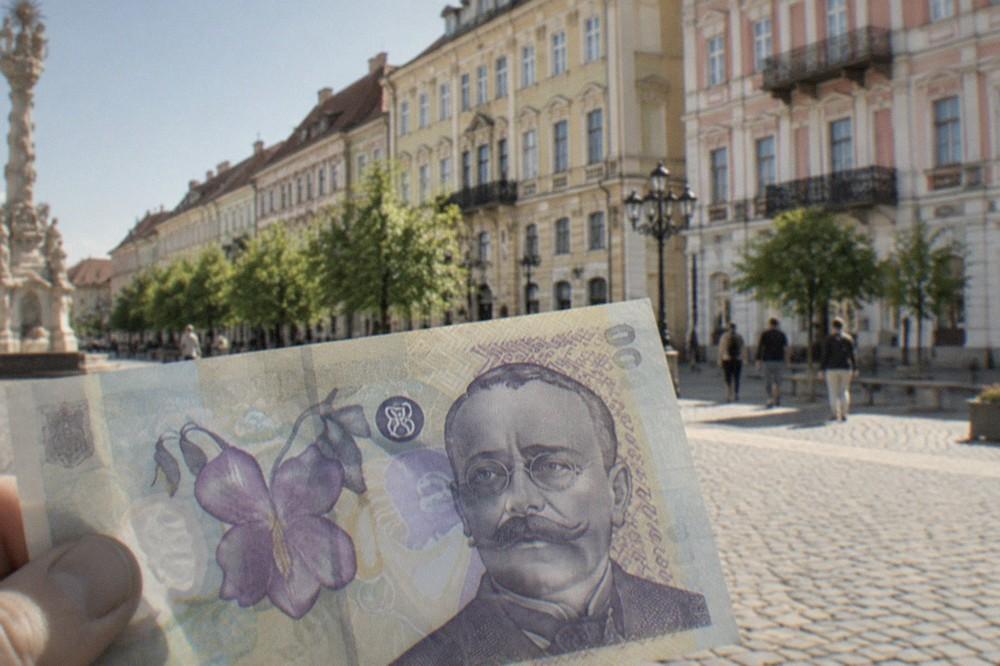
Romanian banknotes come in several denominations, including 1, 5, 10, 50, 100 and 200 lei, each printed in polymer rather than paper and each dedicated to a historical figure, while coins come in 1, 5, 10 and 50 bani plus 1 and 5 lei pieces. The notes are colorful, slightly slippery to the touch and carry a transparent window as their main security feature. In daily Timisoara life the 10, 50 and 100 lei notes do most of the work.
Polymer notes resist folding damage and water better than paper, which is why a note that has been through a washing machine still spends. The transparent window is the quickest authenticity check: hold any note up and confirm the embedded clear panel with the denomination. Counterfeits are rare but not unknown, and shops check larger denominations, particularly 100s and 200s, by feel.
| Denomination | Material | Everyday use in Timisoara |
|---|---|---|
| 1 lei | Polymer | Rare at tills, mostly replaced by coins |
| 5 lei | Polymer | Small purchases, coffee, pastries |
| 10 lei | Polymer | Lunches, drinks, museum entries |
| 50 lei | Polymer | Restaurant meals for two |
| 100 lei | Polymer | The workhorse note: hotel deposits, shopping |
| 200 lei | Polymer | Larger purchases, less commonly seen |
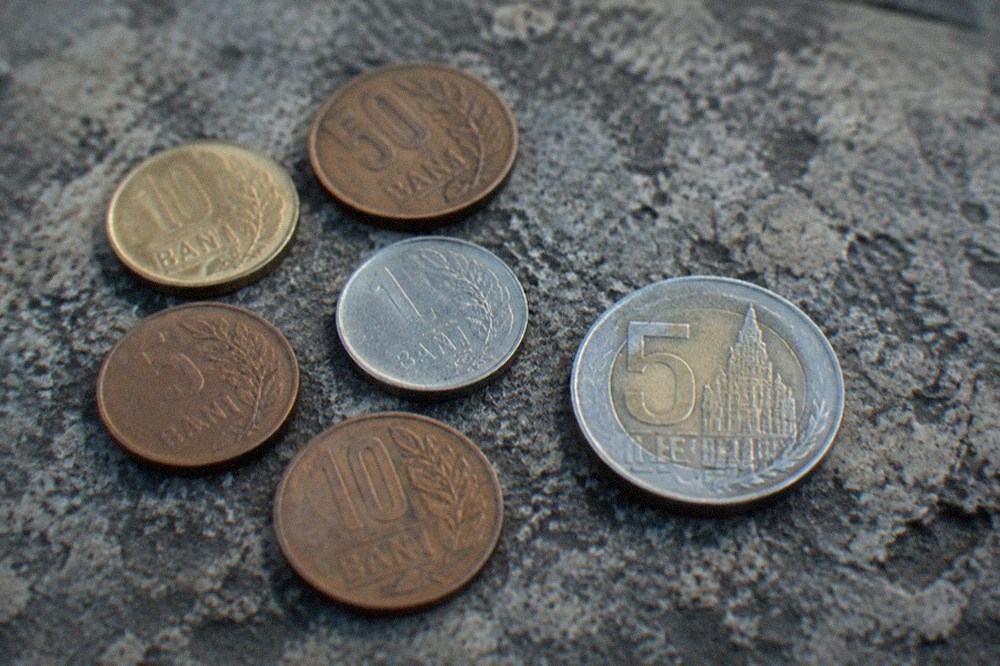
Coins matter less than you might expect. Most prices in Timisoara are quoted in whole lei, and rounding at tills is common, so the small bani coins accumulate and are best spent on public transport or left as modest tips. The 5 lei note and 5 lei coin circulate side by side, and both spend identically. If a note or coin looks worn beyond recognition, any bank branch will replace it.
A practical note on the notes: the featured portraits have shifted between print runs, so treat the person on the note as a detail rather than an identification test. The denomination, printed large in numerals on both faces, is what matters when you are checking change.
Where Should You Exchange Money In Timisoara?
Exchange offices (schimb valutar) in central Timisoara, especially around Piata Unirii and Piata Victoriei, generally offer better rates than airport kiosks and hotels, and the best posted deals carry zero commission with the buy and sell rates displayed openly in the window. Avoid any office that quotes a commission on top of the spread, and compare the posted rate against the BNR reference rate before handing over cash. Rates near the airport and train station are consistently worse than in the city center.
The golden rule is to read the window before you walk in. Romanian law requires exchange offices to display their rates clearly, and the honest ones show a rate within a small margin of the BNR reference. If a window shows a rate dramatically better than its neighbors, a commission is almost certainly added at the counter, and you should walk away. Card payment inside an exchange office is unusual; bring cash to change.
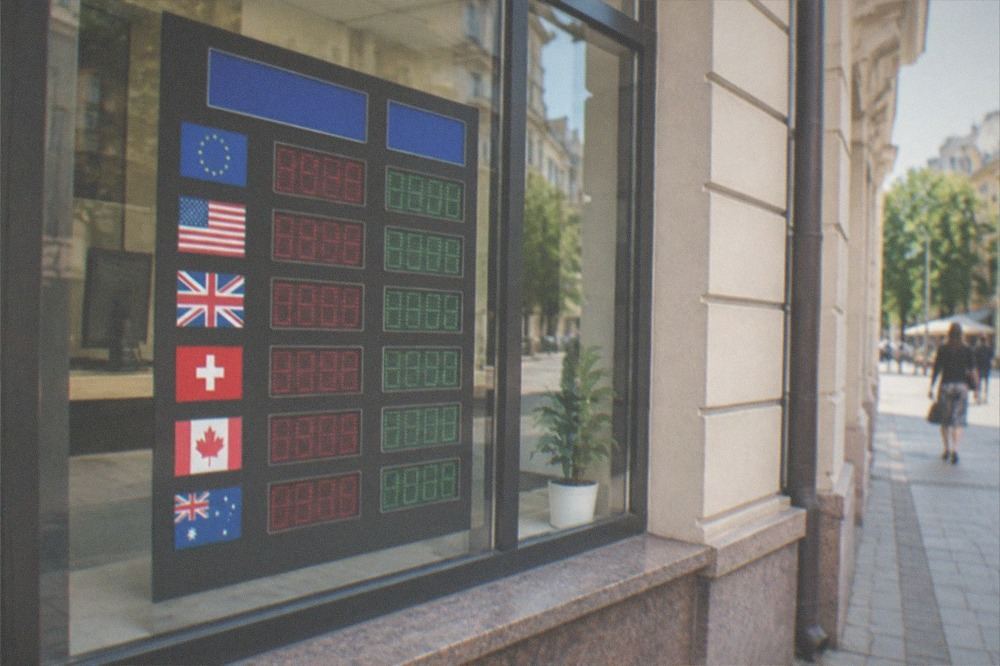
Bank ATMs are the other main route. Withdrawals in lei from a local ATM using a foreign card give you the interbank rate plus your own bank's fees, which for many travelers beats changing cash. Decline the ATM's offer to charge you in your home currency, the dynamic currency conversion prompt, and always choose to be billed in lei. That single choice typically saves several percent on every withdrawal.
The three main routes to lei each suit a different traveler, and the table below summarizes the trade-offs before you commit to one.
| Way to get lei | Best for | Watch out for |
|---|---|---|
| Bank ATM withdrawal | Most travelers, best effective rate | Decline home-currency billing, know your bank's fees |
| City-center exchange office | Changing cash you already hold | Commission added at the counter, stale window rates |
| Airport or station kiosk | Emergency top-ups only | Consistently worse rates than the city center |
Planning the rest of your trip around the city's squares and museums is easier with a guide in hand, and the overview of things to do in Timisoara is the natural next stop once the money question is settled.
How Far Does 100 Lei Go In Timisoara?
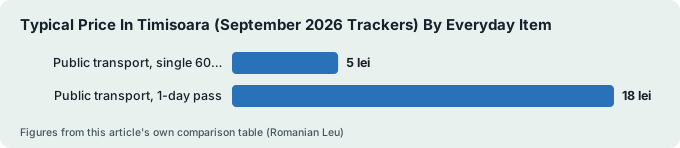
Roughly 100 lei covers a full day of modest spending in Timisoara: a cappuccino at 13 to 15 lei, an inexpensive restaurant lunch at around 45 to 50 lei, a 0.5 liter draft beer at 11 to 12 lei, and a 60-minute public transport ticket at 5 lei, with change left over. Cost-of-living trackers updated in September 2026 put the inexpensive meal near 50 lei and the neighborhood pub beer near 11 to 12 lei, matching what central venues post on their menus.
Timisoara is one of western Romania's more affordable cities for visitors, and the prices below, drawn from cost-of-living trackers updated in September 2026, are indicative averages rather than promises. A venue in the Baroque old town will sit at the top of each range, a neighborhood place in Elisabetin or Iosefin toward the bottom.
| Everyday item | Typical price in Timisoara (September 2026 trackers) |
|---|---|
| Cappuccino, regular | 13 to 15 lei |
| Draft beer, 0.5 liter, domestic | 11 to 12 lei |
| Inexpensive restaurant meal | about 45 to 50 lei |
| Fast-food combo meal | about 32 lei |
| Public transport, single 60-minute ticket | 5 lei |
| Public transport, 1-day pass | 18 lei |
| Mid-range hotel night | roughly 176 to 227 lei |
Museum entries are also payable in lei. The Memorial of the 1989 Revolution charges adults 20 lei, covering eight permanent and three temporary exhibitions plus a documentary screening. The Banat Village Museum lists an adult ticket reported at 20 lei, though that price is less firmly sourced and worth confirming on the museum's page before you go. For a fuller picture of eating costs, the Timisoara food guide and the restaurant guide break prices down by neighborhood and cuisine.
Tipping follows Romanian custom rather than a fixed percentage. Rounding a cafe bill up by a few lei is normal, and 10 percent in a sit-down restaurant is a generous, appreciated tip rather than an obligation. Service is usually included in the printed price, so nothing is added automatically at the till.
Should You Use Cash Or Card In Timisoara?
Card payments are widely accepted in Timisoara's restaurants, hotels, supermarkets and larger shops, with contactless terminals standard, so a card-first approach works for most of a visit, but cash remains necessary at markets, some kiosks, a few smaller cafes and for tips. Contactless bank cards even work directly on board trams and buses, where the STPT network sells a 60-minute ticket for 5 lei from the on-board POS terminal.
The transport detail is worth dwelling on because it removes the classic first-hour hassle. Timisoara's public transport operator STPT accepts contactless bank cards on board, alongside e-wallet cards, SMS payment, mobilPay, eTicket online purchase and kiosks. The single 60-minute ticket costs 5 lei and the 1-day pass 18 lei, both verified on the operator's tariff page, and both are valid across trams, trolleybuses, buses and the seasonal vaporetto on the Bega canal. The getting around Timisoara guide covers the network in full.
Where cash still wins: the Piata Traian area market stalls, some street food stands, public toilets, and splitting a bill with friends. A sensible split for a weekend is to pay by card wherever a terminal is offered and keep a few tens of lei in notes for the gaps. Do not arrive planning to pay in euros; no legitimate Timisoara business is obliged to accept them, and those that do will apply their own, unfavorable conversion.
How Does The Timisoara Tourist Tax Work?
Timisoara levies a tourist promotion tax, set by local council decision HCL 719/2025 for 2026, that is collected by hotels and other accommodation providers as part of your bill rather than paid separately, with the rate widely reported at 2 percent of the accommodation tariff excluding VAT. You do not pay it at a desk or a machine, and you will rarely notice it as a line item unless you read your receipt.
The tax exists and applies to tourists staying in paid accommodation in the municipality, that much is verified in the council decision. The 2 percent figure comes from secondary reporting of the annex rather than a primary document this site could re-check, so treat it as the reported rate rather than a printed official number. In practice, on a mid-range nightly rate it amounts to a small sum per night, folded into what the hotel charges.
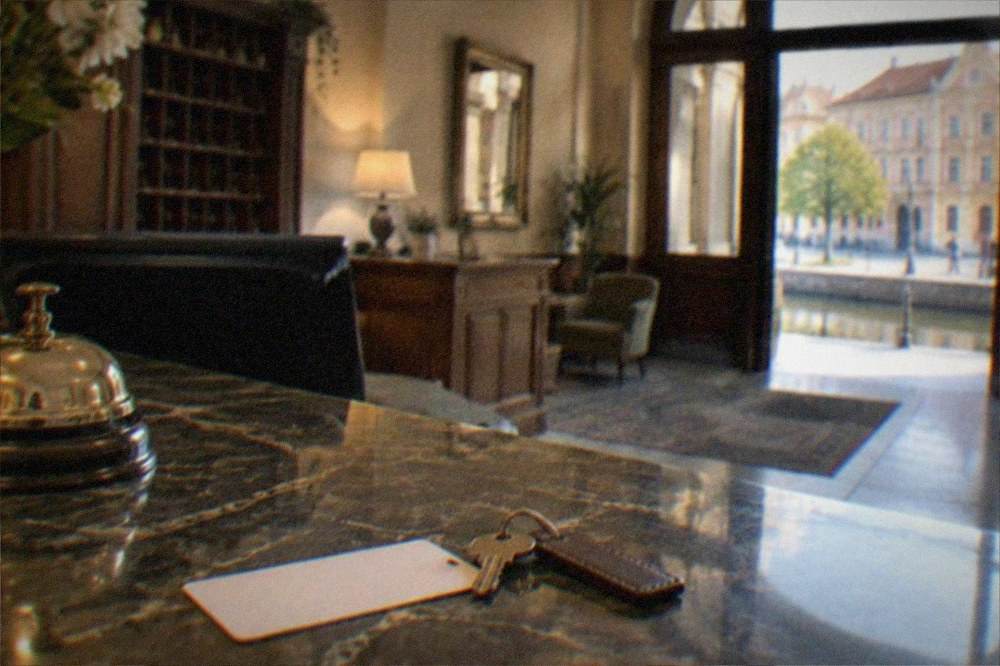
Booking platforms and hotels handle it differently: some fold it into the displayed nightly rate, others add it at checkout. If you are comparing hotels in Timisoara or choosing where to stay, read the fine print for "taxa de promovare turistica" so the total does not surprise you. The tax is per night of stay, remitted by the lodging to the city, and funds local tourism promotion.
What Should You Know About Paying For Tours And Tickets In Timisoara?
Bookable tours in Timisoara are priced by their operators in US dollars on their live listings, not in lei, and you pay the operator's platform at booking rather than in cash on the day, while museum entries and local services remain priced in lei. The two systems run in parallel: the leu is the currency of the street, the operator's own listing is the currency of pre-booked experiences. Never assume a tour can be paid for in cash on arrival.
This split confuses visitors more than any exchange-rate question. When you reserve a guided walk or a day trip through an operator's live listing, the price shown is what you pay at booking, in the listing's currency. On the day, you may want lei for the guide's tip, for museum entries along the route, or for lunch stops, but the tour itself is settled in advance.
A heritage walk is the clearest example: the booking is handled online, and the walk itself passes museums and cafes where lei are useful. Food experiences follow the same pattern.
And wine country west of the city works the same way for the tour component, while any bottles you carry home are bought in lei at the cellar door.
For entries you pay on the spot, keep small notes. The 20 lei Memorial ticket is easiest with exact change, and market stalls prefer it. If you are heading out of the city on a day trip into the Banat region, carry more cash than you would for a day in the center, since rural stops are less card-friendly than central Timisoara.

Common Questions About Using The Romanian Leu In Timisoara
Can I pay with euros in Timisoara?
No. The euro is not legal tender in Romania, and every till in Timisoara settles in lei. Some hotels may accept euros at their own conversion rate, but that rate will not favor you. Change money at a city-center exchange office or withdraw lei from a bank ATM.
Is Romania in the eurozone?
No. Romania is a full European Union member and a full Schengen member since 1 January 2025, but it has not adopted the euro. The national currency remains the Romanian leu (RON).
How many bani are in a leu?
One hundred bani make one leu. Bani coins circulate in small denominations, but most prices in Timisoara are rounded to whole lei, so coins matter less in daily practice than in some neighboring countries.
Should I exchange money before I fly to Timisoara?
There is no need to arrive with lei. Bank ATMs at Timisoara Traian Vuia airport and across the city dispense lei at the interbank rate plus your bank's fees, and central exchange offices offer competitive rates. Just decline any ATM offer to bill you in your home currency and always choose lei.
Are card payments accepted in Timisoara?
Yes, widely. Restaurants, hotels, supermarkets and shops take cards, and contactless terminals are standard, including on board trams and buses, where a contactless card buys a 60-minute ticket for 5 lei. Cash remains useful at markets and small stands.
What is the exchange rate for the Romanian leu?
The rate moves daily. The National Bank of Romania published a reference rate of 1 EUR = 5.2788 RON on 23 September 2026, which gives a working sense of the level, but check the current BNR rate or a live exchange office board before exchanging.
The leu is a straightforward currency once you have a note or two in hand: polymer, clearly numbered, and backed by an exchange infrastructure that is honest as long as you read the window before you walk in. Arrive with a card, withdraw lei from a bank machine, decline home-currency billing, and keep a handful of small notes for markets and museum desks, and the money side of a Timisoara trip takes care of itself.