Dome Cathedral Timisoara
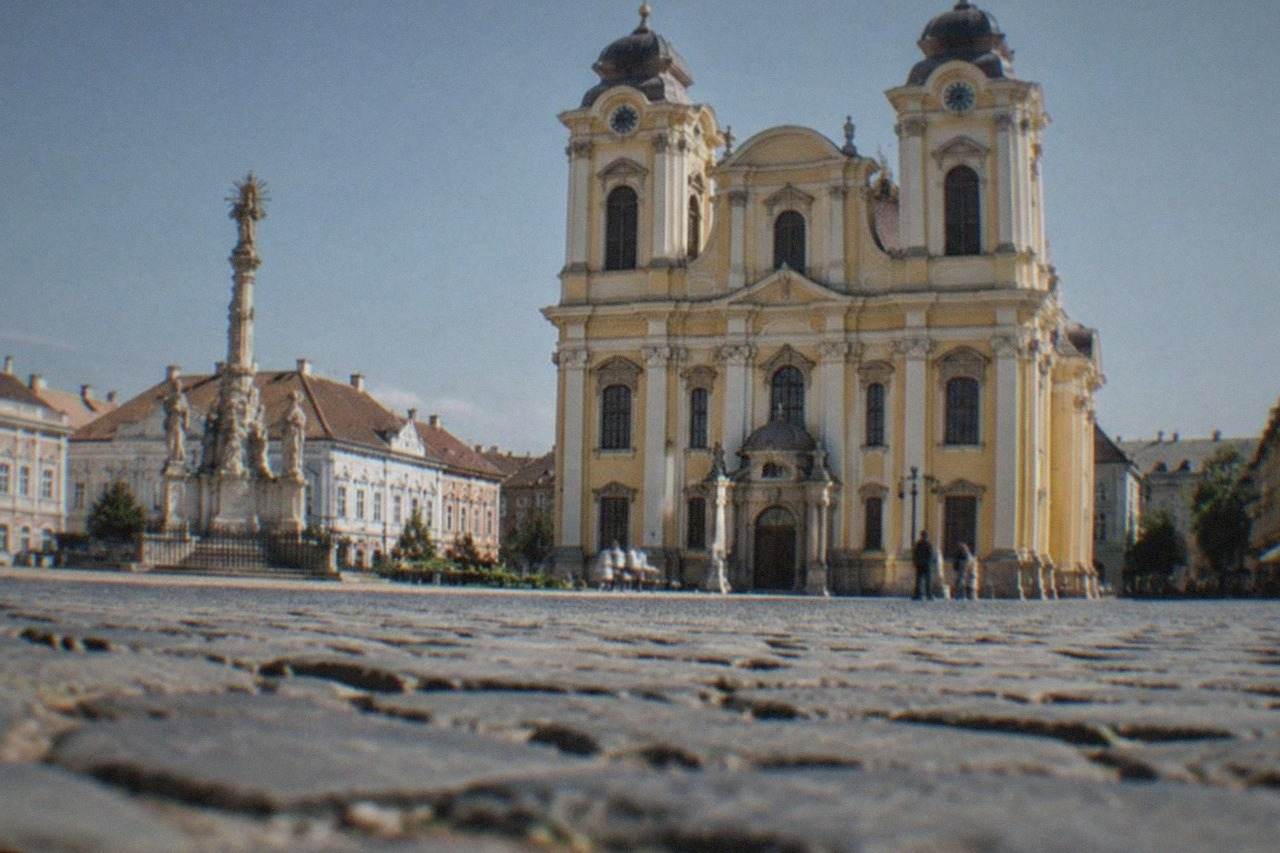
The Dome Cathedral, formally the St George Roman Catholic Cathedral, anchors the western side of Piata Unirii in the Cetate district of Timisoara, a city in the Banat region of western Romania.
Short answer
The Dome Cathedral Timisoara is the city's Roman Catholic cathedral, dedicated to St George, standing on Piata Unirii in the old Cetate district. It is one of the historic churches that made Timisoara famous for its multi-confessional character, alongside the Serbian Orthodox Cathedral on the same square.
The Dome Cathedral Timisoara, formally the St George Roman Catholic Cathedral, stands on the western edge of Piata Unirii in the Cetate district of Timisoara, a city in Timis County in the Banat region of western Romania. Locals call it the Dome Cathedral for the cupola that rises above its roofline, and it shares the city's grandest baroque square with the Serbian Orthodox Cathedral, a rare arrangement where two historic cathedrals face each other across one plaza. Under its Hungarian name, Temesvár, and its German name, Temeswar, the city grew as a Habsburg provincial capital, and this church was built to serve its Catholic community at the heart of that fortified town. Today it is one of the stops on almost every walking route through the old center, and this guide covers what the building is, what you can see inside, how to plan a visit, and what surrounds it.
What Is The Dome Cathedral Timisoara?
The Dome Cathedral Timisoara is the city's Roman Catholic cathedral, dedicated to St George, and it stands on Piata Unirii in the Cetate district of Timisoara, western Romania. It is the mother church of the local Catholic community, a landmark of the Habsburg-era city, and one of the two historic cathedrals that face each other across Union Square, a layout very few European cities can claim. The building gives the square its vertical accent: a heavy dome on a high drum, flanked by a classical facade that has watched over the plaza through the city's Austrian, Hungarian, Romanian and communist periods. For visitors it works as both an attraction in its own right and an orientation point, since almost every walk through the old town passes its frontage.
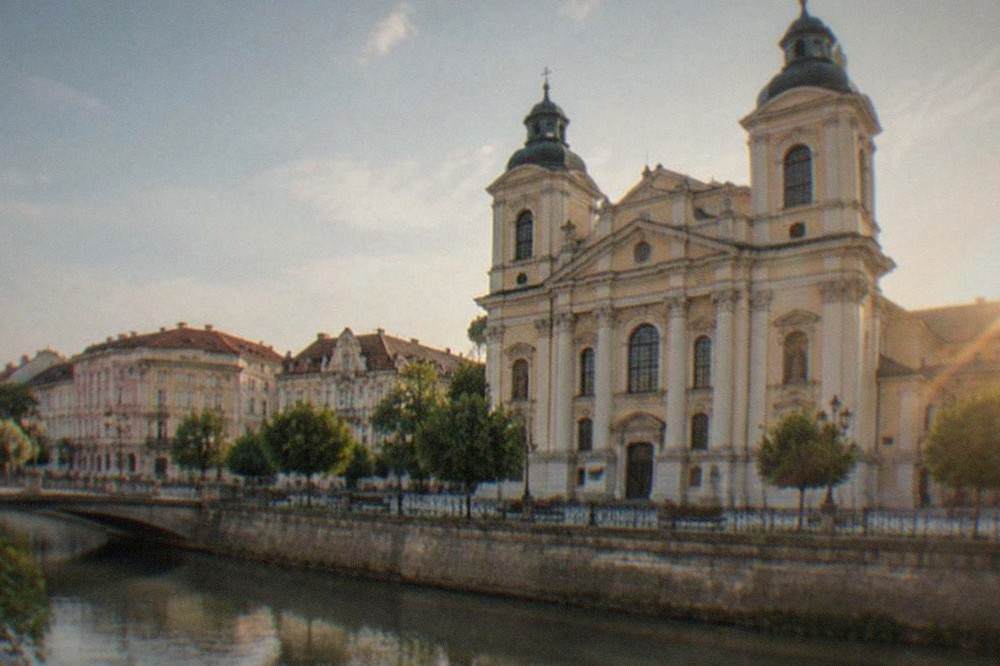
The cathedral belongs to the story of a deliberately multi-confessional city. Timisoara, known as Timișoara in Romanian orthography, was for centuries an administrative center where Catholic, Orthodox, Reformed, Lutheran and Jewish communities lived inside the same fortress walls. The Catholic cathedral on Piata Unirii, the Serbian Orthodox Cathedral across the square, and the baroque townhouses around them were all built within the same broad era of reconstruction after the fortress town was reshaped under Habsburg rule. That shared square is the clearest single expression of what the Banat region was: a borderland where empires and faiths overlapped rather than replaced one another.
This matters for how you read the building. The cathedral is not a isolated monument but half of a pair, and its architects worked in dialogue with the square around it. When you stand in the middle of Piata Unirii you are standing in one of the most coherent baroque urban ensembles in Romania, and the Dome Cathedral supplies its most solemn note. The rest of this guide unpacks the architecture, the interior, the practicalities of a visit, and the surrounding sights, but the core idea is simple: this is a working cathedral that doubles as the best orientation landmark in the old town.
Why Is St George's Cathedral Called The Dome Cathedral?
Timisoara locals and most visitor guides call the St George Roman Catholic Cathedral the "Dome Cathedral" (Catedrala Dome in Romanian) because of the large central cupola that rises over its crossing, a feature that makes it visible from many points around the old town. The dome is the building's signature element, more visually prominent than its facade, so the nickname stuck in everyday speech and now appears on maps, tour descriptions and search queries more often than the formal dedication to St George. It is a case where the city's working name for a building has effectively become its public identity, the same way the Serbian Orthodox Cathedral across the square is known simply by its community rather than its architectural details.
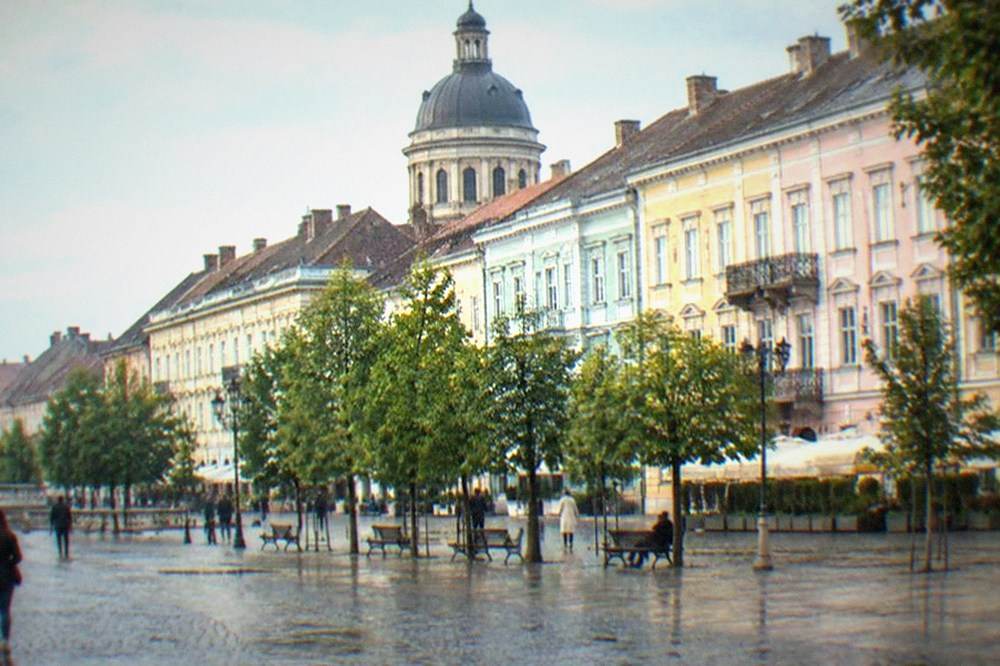
The cupola sits on a high drum pierced with windows, so from the square you see a sequence of masses: facade, roofline, drum, dome. That silhouette does real work for visitors, because it is one of the few old-town landmarks you can spot from a distance and steer toward. Several of the city's viewing points and rooftop terraces frame it, and photographers treat the dome as a fixed anchor when shooting the skyline of Piata Unirii.
The naming also reflects the city's layered languages. In a city where Romanian, Hungarian, German and Serbian were all spoken across the centuries, short descriptive names travel better than formal dedications. "Dome Cathedral" needs no translation and no confessional explanation, which is probably why it has become the term most international visitors search for. The formal name, the St George Roman Catholic Cathedral, still matters when you are looking at maps or church notices, so keep both in mind: search for the Dome Cathedral, but read signage for St George.
How Do You Visit The St George Roman Catholic Cathedral In Timisoara?
To visit the Dome Cathedral Timisoara, walk to Piata Unirii in the Cetate district, where the cathedral forms the square's western side, and enter from the square; it is a working Catholic church, so access revolves around services rather than fixed tourist hours, and the practical approach is to confirm opening times and mass schedules locally before you go, since no reliable published timetable can be quoted here. There is no ticket desk in the museum sense: this is a parish church, and visitors are welcome respectfully outside worship times. That makes it one of the easiest major sights in the old town to slot into a walk, with the caveat that a service, a wedding or a concert can close the interior at short notice.
Because the cathedral sits on the square rather than behind gates, the visit naturally combines with the rest of Piata Unirii. You can step in for ten quiet minutes between two cafes, or linger if the light through the dome's drum windows is doing something worth watching. Dress modestly by the standards of a functioning cathedral, keep voices low, and treat the confessional and altar areas as private even when the nave is open to sightseeing. Photography is generally tolerated when no service is running, but the courteous default in any working church is to ask or to follow what regular worshippers are doing.
The planning table below gathers the practical points. Note what it deliberately does not contain: hours and admission figures, which are not published in a form this site can verify, so the advice is to check locally on the day.
| Planning point | What to do | Why it matters |
|---|---|---|
| Location | Piata Unirii, Cetate district, western side of the square | The square is the old town's hub and hard to miss from any walking route |
| Access | Enter from the square; the church is a place of worship, not a ticketed attraction | No museum-style admission structure exists |
| Opening times | Confirm locally on the day of your visit | Service schedules, not tourist hours, govern access |
| Best light | Mid to late morning for light through the dome windows | The drum windows sit high and face the daylight arc |
| Etiquette | Modest dress, low voices, no flash during quiet moments | It remains an active Catholic parish church |
| Time needed | Roughly 15 to 30 minutes inside, more if you stay for a concert | The interior rewards slow looking, not a quick circuit |
One reliable way to see the cathedral with context, rather than alone, is a guided walk. The city's guided options include history-focused routes that use Piata Unirii as a starting or ending point, and a guide will place the cathedral inside the wider story of the Banat's mixed communities.
Each of those walks takes a different angle on the same square, and the choice between them comes down to what you want the cathedral to mean in your memory of the city: imperial architecture, living faith, or street food with a side of history. Whichever direction appeals, the booking itself is low-risk, since the operator's live listing carries the current schedule and cancellation terms.
If you prefer to go at your own pace, pair the cathedral with the surrounding square and let the architecture do the explaining. Either way, morning is the calmest window, before the square's restaurant terraces fill and before tour groups gather around the baroque facades.
What Can You See Inside The Dome Cathedral Timisoara?
Inside the Dome Cathedral Timisoara you find a single broad nave focused on the high altar, side chapels along the walls, a gallery level, and the interior of the dome opening above the crossing, with the light from the drum windows acting as the building's most theatrical feature; the decoration is restrained classical and baroque rather than heavily gilded, which keeps attention on the volume of the space itself. The effect is one of ordered calm: pale stone, regular columns, and a ceiling that climbs toward the dome. Visitors who have seen heavily ornate Central European churches often remark that this interior feels lighter and more architectural, closer to the Habsburg classical taste of the city's rebuilding era than to exuberant counter-reformation decoration.
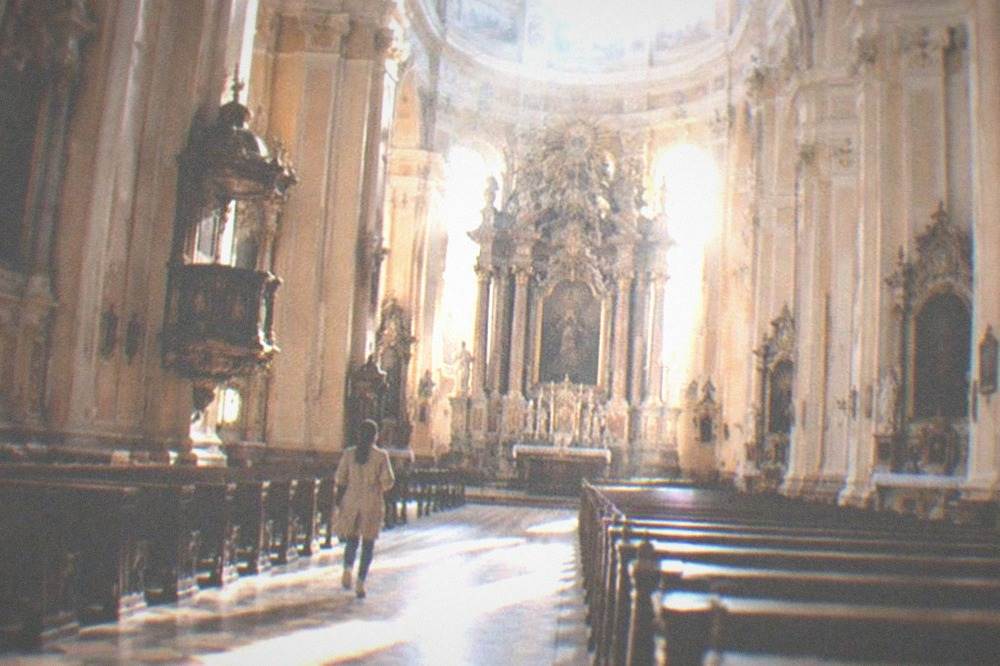
The dome is the interior's payoff. From the nave you look up through the crossing into the drum, and on a bright day the ring of windows throws a moving pattern of light down the columns. Stand near the entrance and let your eyes travel the full vertical sequence: floor, gallery, cornice, drum, dome. That single view is the reason many photographers put the interior on their list even when the exterior shots are the easier ones to get.
The church also carries the city's musical life. Timisoara has a serious organ and sacred-music tradition, and cathedral spaces like this one host concerts, particularly around the Christmas season, when the square outside hosts the Christmas market. If your visit falls in December, ask at the local tourist information point whether any sacred-music events are scheduled: hearing the interior used as it was designed to be used is a different experience from walking through it in silence.
For a sense of how the interior compares with the city's other major churches, the table below places them side by side without inventing figures: it lists what each is and where each stands, all of which you can verify on arrival.
| Church | Community | Where it stands | Character |
|---|---|---|---|
| St George Roman Catholic Cathedral (the Dome Cathedral) | Roman Catholic | Piata Unirii, Cetate | Classical-baroque interior under a large dome |
| Serbian Orthodox Cathedral | Serbian Orthodox | Piata Unirii, opposite side | Baroque exterior, ornate Orthodox interior with iconostasis |
| Orthodox Metropolitan Cathedral | Romanian Orthodox | Piata Victoriei | The city's largest 20th-century landmark, neo-Byzantine in style |
| Millennium Church | Roman Catholic | Fabric district | A neo-Romanesque parish church serving the Fabric community |
| St George is complemented by | Reformed and Lutheran churches | Scattered across Cetate and Iosefin | Reminders of the Banat's Protestant German and Hungarian heritage |
What History Does The Dome Cathedral Timisoara Carry?
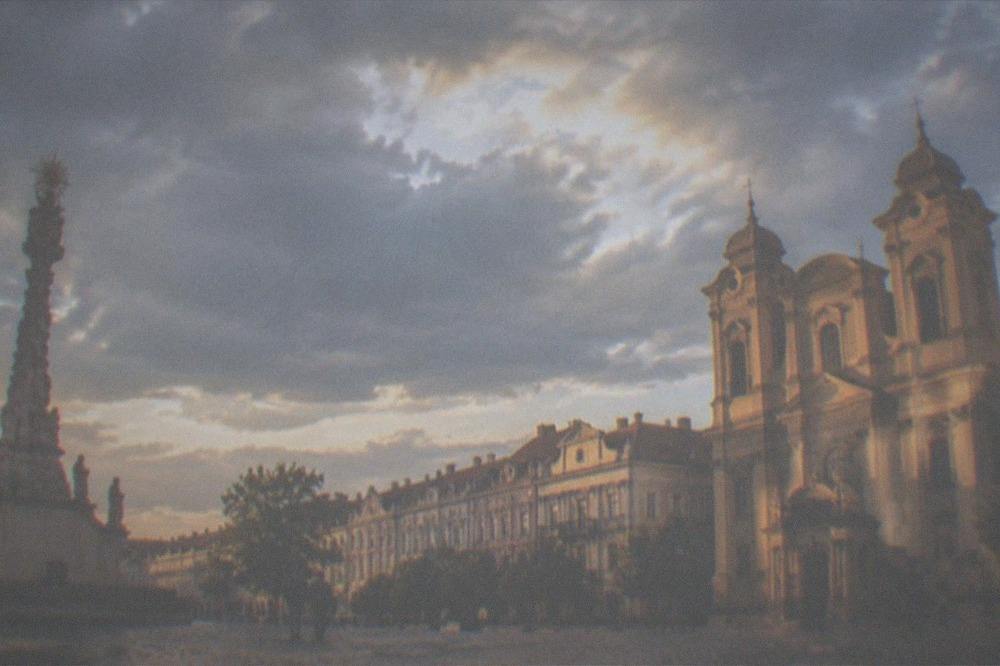
The Dome Cathedral carries the history of Habsburg Timisoara, a fortress city rebuilt from the early eighteenth century onward where the Catholic church stood at the center of civic life; it survived the end of Hungarian administration, the union with Romania, the bombing and upheavals of the Second World War, and four decades of communist rule that treated religion with suspicion, and it emerged after 1989 as a restored working cathedral at the heart of a rediscovered old town. The building's deepest meaning is not any single event but continuity: the same square, the same facade, and the same dome appearing in photographs from wildly different political eras. Few objects in the city illustrate the long arc from imperial provincial capital to European Capital of Culture as plainly.
The city around the cathedral is one of documented firsts, which the city hall itself lists as its "Premierele Timisoarei." They explain why a church of this standing was built here at all: this was no provincial backwater but a city that adopted new technologies early and proudly. The wider set of guides lives on Timisoara Travel Guide.
| Year | First recorded in Timisoara |
|---|---|
| 1718 | The oldest attested brewery in Romania |
| 1728 | Start of canalising the Bega, the first navigable canal in Romania |
| 1760 | First city of the Habsburg monarchy with lamp-lit streets |
| 1771 | First newspaper printed in Romania, the Temeswarer Nachrichten |
| 1884 | First city on mainland Europe with electric street lighting |
| 1899 | First electric tram in Romania |
The twentieth century gave the square its hardest test. In December 1989 the Revolution that ended communist rule in Romania began in Timisoara, and the city's central squares, including those a few minutes' walk from the cathedral, became the stage of the protests that brought the country's change of regime. The cathedral itself belongs to the older, imperial layer of the story, but standing on Piata Unirii you are within a short walk of the sites commemorated by the Memorial Museum of the Revolution, which documents those December days in detail. Visitors who want the full arc of the city's history usually pair the baroque square with the revolution sites, and the guided walks that cover the communist decades make that connection explicit.
For the deeper background on the city's story, see the guide to Union Square (Piata Unirii) and the walk-through of the Cetate old town, which place the cathedral in its urban context.
What Stands Around The Cathedral In Piata Unirii?
Around the Dome Cathedral, Piata Unirii gathers the densest cluster of historic sights in Timisoara: the Serbian Orthodox Cathedral directly opposite, the baroque palaces that house museums and cafes along the square's flanks, the Roman Catholic and Serbian church towers framing the skyline, and, a few minutes away, Liberty Square, Victory Square and the Bega canal promenade, all within an easy walk of the cathedral steps. The square is the old town's living room, and the cathedral is its most formal piece of furniture. Practically everything a first-time visitor wants to see in central Timisoara is either on this square or visible from it.
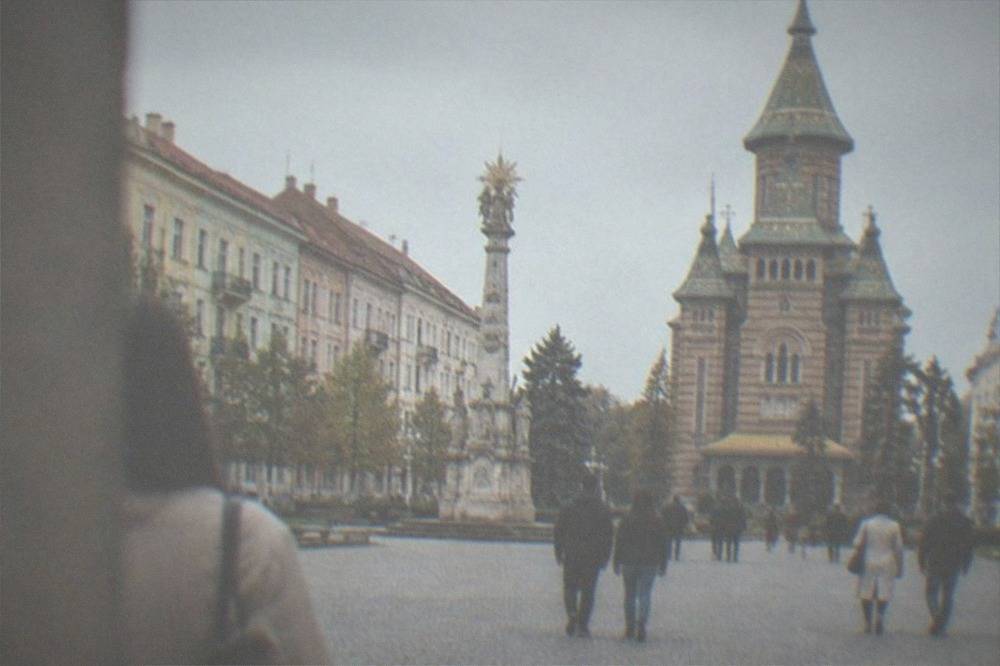
The pairing with the Serbian Orthodox Cathedral is the square's signature. Two cathedrals, two rites, one plaza: the arrangement is the clearest physical statement of the Banat's multi-confessional history, and it gives photographers a composition that exists almost nowhere else in Europe. Between the two churches, the baroque facades house museums, including the National Museum of Art in the Baroque Palace, alongside restaurant terraces that make the square as much a place to sit as to sightsee.
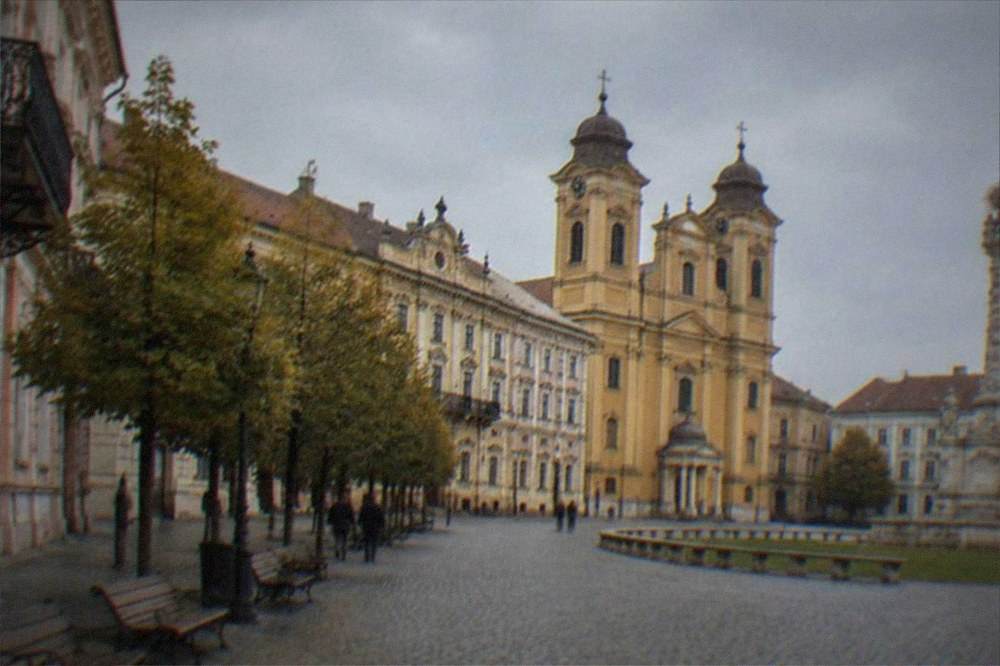
From the square, the rest of the center unfolds in a compact sequence. The table below lays out the walkable cluster.
| Sight | Relation to the cathedral | What it offers |
|---|---|---|
| Serbian Orthodox Cathedral | Directly opposite on Piata Unirii | Ornate Orthodox interior, the square's second tower |
| National Museum of Art (Baroque Palace) | On Piata Unirii itself | Painting collections inside a baroque palace |
| Liberty Square (Piata Libertatii) | A short walk north | A quieter historic square with cafes and the Dicasterial Palace nearby |
| Victory Square (Piata Victoriei) | A short walk northeast | The Orthodox Metropolitan Cathedral, the Opera and the 1989 protest sites |
| Theresia Bastion | A short walk northwest | Restored fortress segment with shops, cafes and cultural spaces |
| Bega canal | South of the old town | Waterside promenade and the seasonal water bus |
The square also anchors the city's culinary and social life, which is why food-focused walks start here. If your cathedral visit leaves time in the afternoon, the terraces on Piata Unirii are the natural place to plan the next leg of the day, and the things to do in Timisoara overview collects the full menu of options, from the Orthodox Metropolitan Cathedral to the Romanian National Opera.
Which Guided Tours Include The Dome Cathedral Timisoara?
The Dome Cathedral appears on Timisoara's guided walking routes because almost every old-town walk passes Piata Unirii, and the tours that treat it most directly are the history walks covering the city's imperial and communist layers, the ecumenical tours that visit the city's churches across confessions, and the food tours that use the square as a starting point for the city's culinary traditions. A general city tour will point out the cathedral and move on; the specialized walks give it real attention. The choice between them is really a choice of angle: architecture and empire, faith and community, or food and street life.
The ecumenical angle suits the Dome Cathedral better than any other, because its whole point is that it never stood alone. The ecumenical walk connects the Catholic cathedral with the Serbian Orthodox Cathedral, the Orthodox Metropolitan Cathedral and the city's other historic churches, explaining how so many confessions ended up inside one fortress town. For travelers whose main interest in Timisoara is its religious architecture, that is the most efficient few hours available.
The communist-history angle sounds like a mismatch for a baroque church, but it is not. The Grand Tour of Communist Ages, this site's related tour pick, walks the city's twentieth-century layers, and a guide on that route explains what happened to churches, congregations and public faith under four decades of official atheism, which is essential context for understanding why the cathedral's continued life matters. The Grand Tour of Communist Ages has its own page here with the full details.
The food angle is the loosest fit but the most fun. The street food walk uses the old town's squares, including Piata Unirii, as its stage, and it pairs the city's history with its kitchens, which is a fair summary of how the square is actually experienced: look at the cathedral, then sit down and eat.
For a broader comparison of the city's walking options, including free and tip-based walks, see the overview of things to do in Timisoara, which groups the tours by theme and length. The trio below collects the three walks most likely to put you on Piata Unirii with a guide at your side.
When Is The Best Time To See The Dome Cathedral Timisoara?
The best time to see the Dome Cathedral Timisoara is late spring through early autumn, when Piata Unirii is fully alive, the terraces are open, and the cathedral's interior gets its best daylight through the dome windows; within any day, mid to late morning is the calmest window, and December brings a special case, since the Christmas market fills the square around the church and sacred-music events often use the interior. Timisoara has a continental climate, with JMA climate normals for the city's weather station giving a January mean of 0.0 C and a July mean of 22.8 C, so summer visits are warm and winter visits are genuinely cold, and the square's open expanse makes that felt.
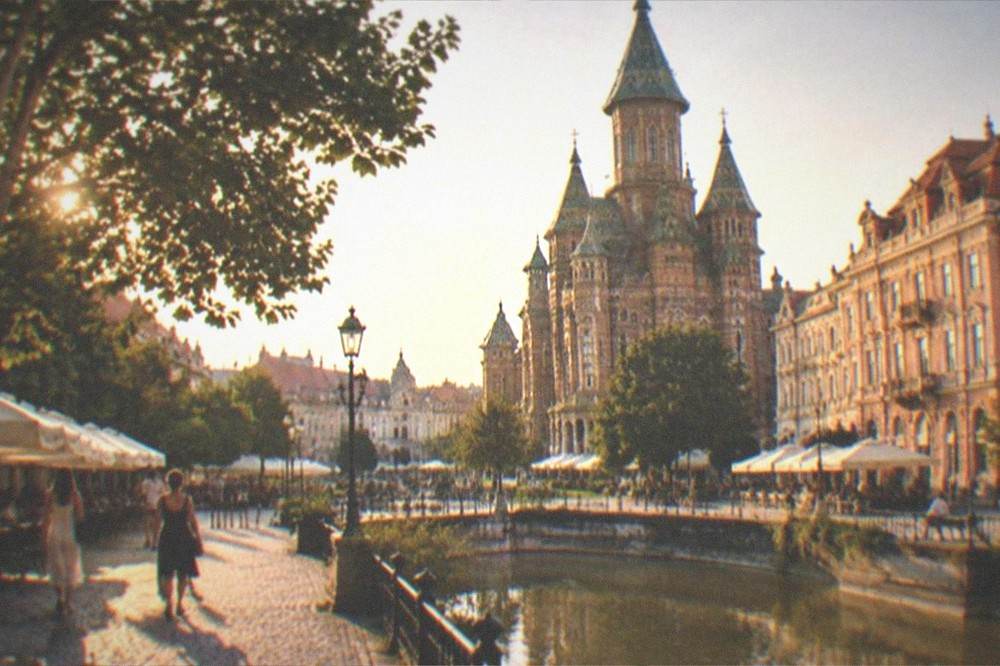
The monthly picture below comes from the verified climate normals for station TIMISOARA 15247, and it is worth reading before you pick travel dates: the warm months are also the wetter ones, with June the wettest month of the year.
| Month | Mean temperature (C) | Precipitation (mm) |
|---|---|---|
| January | 0.0 | 37.3 |
| February | 2.1 | 35.5 |
| March | 6.5 | 34.1 |
| April | 12.3 | 50.6 |
| May | 17.3 | 57.2 |
| June | 20.9 | 79.1 |
| July | 22.8 | 61.9 |
| August | 22.5 | 54.6 |
| September | 17.2 | 50.4 |
| October | 11.5 | 50.0 |
| November | 6.4 | 45.3 |
| December | 1.5 | 44.7 |
May stands out on the visitor calendar as well as the weather chart: the city's own tourism data record May 2025 as the peak month for arrivals, at 30,664, and spring generally combines mild temperatures with the square at its most photogenic. September is the connoisseur's pick, warm enough for terraces but past the July peak. Winter has its own argument: the Christmas market, expected around Piata Victoriei and the surrounding squares in the late-November-to-early-January window based on prior years, though the 2026 dates had not been officially confirmed and a baroque square under festive lights with the dome rising behind the stalls is one of the city's best scenes.
Whatever month you choose, the cathedral itself asks for very little planning: check locally that it is open, walk to Piata Unirii, and give the interior the slow look its dome deserves. The rest of the square will take care of your afternoon.
Common Questions About The Dome Cathedral Timisoara
What is the Dome Cathedral Timisoara?
The Dome Cathedral is the St George Roman Catholic Cathedral, the Catholic mother church of Timisoara, standing on Piata Unirii in the city's Cetate district in western Romania. It takes its nickname from the large cupola above its crossing, which makes it one of the most visible landmarks of the old town.
Is the Dome Cathedral the same as St George's Cathedral?
Yes. The St George Roman Catholic Cathedral and the Dome Cathedral are the same building; "Dome Cathedral" is the everyday and search-friendly name, while St George is the formal dedication. Look for either name on maps and signage around Piata Unirii.
Where is the Dome Cathedral located in Timisoara?
It stands on the western side of Piata Unirii, the main baroque square of the Cetate district, facing the Serbian Orthodox Cathedral across the plaza. The square is the hub of the old town and lies within a short walk of Liberty Square, Victory Square and the Bega canal.
Can you go inside the Dome Cathedral Timisoara?
Yes, when no service is running. It is a working Catholic parish church rather than a ticketed museum, so access revolves around mass schedules, and the practical advice is to confirm opening times locally on the day of your visit, since no reliably published timetable can be quoted here.
What else should you see near the Dome Cathedral?
Piata Unirii itself holds the Serbian Orthodox Cathedral and the National Museum of Art in the Baroque Palace, and the surrounding walkable cluster includes Liberty Square, Victory Square with the Orthodox Metropolitan Cathedral, Theresia Bastion and the Bega canal promenade, so the cathedral fits naturally into a half-day circuit of the old town.
When is the best time to visit the Dome Cathedral?
Late spring through early autumn offers the best weather and the liveliest square, with mid to late morning the calmest time of day inside the church. December is a special case, when the festive season fills the square and sacred-music events often use the cathedral interior.