Piata Unirii Timisoara
Piata Unirii is the Baroque heart of Timisoara's Cetate old town, ringed by the Art Museum, St George's Cathedral, the Serbian Orthodox Cathedral and café terraces. This guide covers what to see, when to go, how to get there, and which guided tours pass through.
Short answer
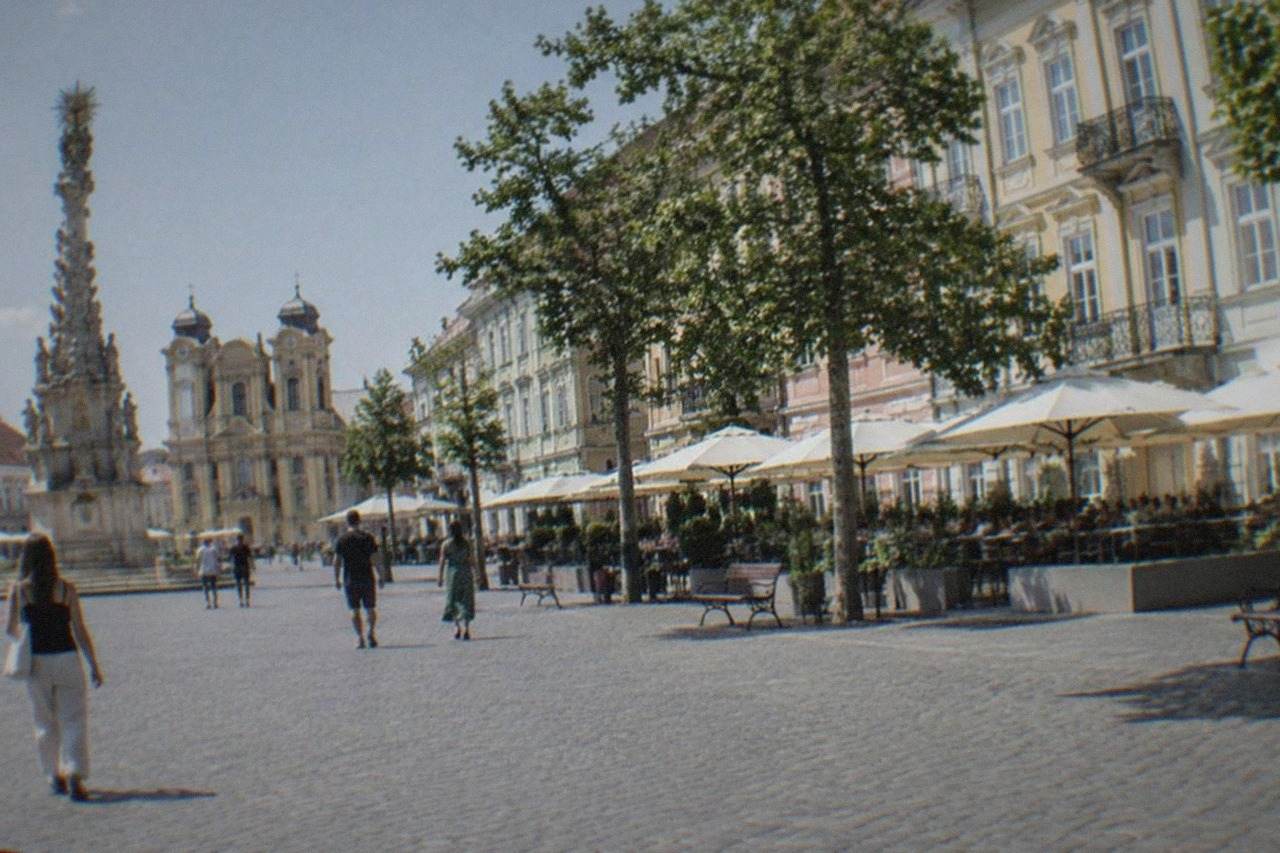
Piata Unirii is the main square of Timisoara's Cetate old town, lined with Baroque and Art Nouveau buildings and home to the National Museum of Art, St George's Roman Catholic Cathedral and the Serbian Orthodox Cathedral. It sits at the center of the historic Habsburg-era city, a short walk from Piata Victoriei and the Bega canal.
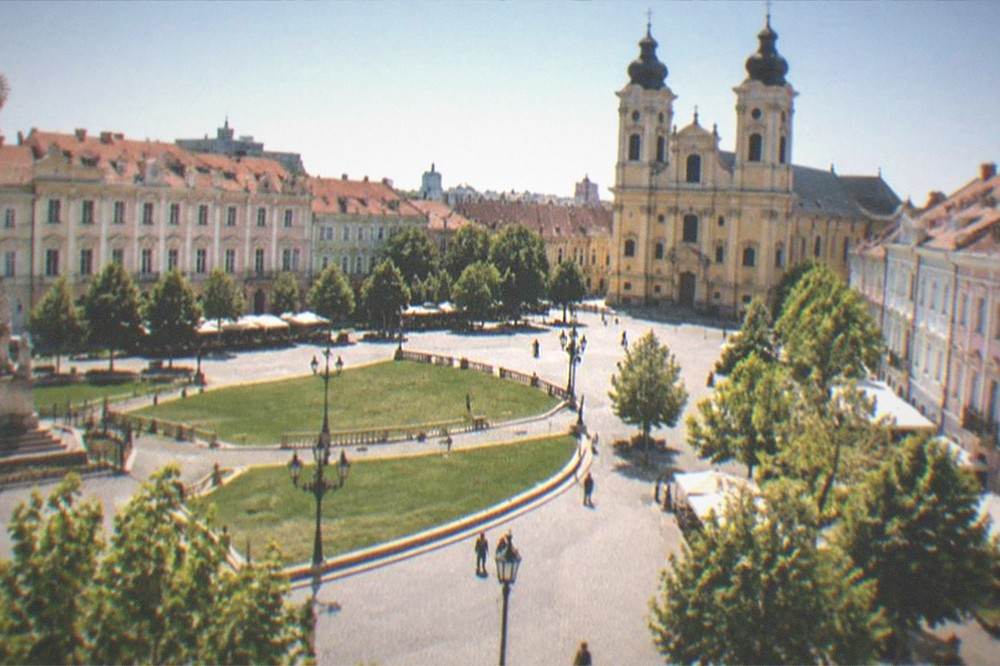
Piata Unirii is the great Baroque square at the center of Timisoara, the county seat of Timis County in the Banat region of western Romania. Under its Hungarian name, Temesvár, and its German name, Temeswar, the city grew into one of the Habsburg monarchy's most modern urban centers, and this square was its showpiece. Today Timișoara's largest old-town space is a natural place to start: the National Museum of Art fills the Baroque Palace on the north side, St George's Roman Catholic Cathedral and the Serbian Orthodox Cathedral face each other across the paving, and café terraces run along the arcaded houses. The square belongs to the Cetate district, the old walled core of the city, and everything worth seeing in central Timisoara sits within an easy walk of it.
What Is Piata Unirii In Timisoara?
Piata Unirii is the main historic square of Timisoara's Cetate old town, a broad open space laid out in the Habsburg period and ringed by Baroque and later buildings, including the Baroque Palace that now houses the National Museum of Art, the Roman Catholic Cathedral of St George, and the Serbian Orthodox Cathedral. It is the symbolic center of the Banat region's capital city and the natural first stop for any visit.
The square's character comes from its layered history. Timisoara was a fortress town for centuries, and when the walls came down at the end of the nineteenth century the open space inside Cetate became the city's living room. The buildings around the square are a mix of Baroque palaces, 19th-century corner houses, and Art Nouveau façades, several of them carrying ornate decoration that rewards a slow lap of the block. The city's own "premieres" list records how early this city adopted modernity: the first city of the Habsburg monarchy with lamp-lit streets in 1760, the first telegraph service in Romania in 1854, and, on 12 November 1884, the first city on mainland Europe with electric street lighting, 731 incandescent lamps over 59 km of streets.
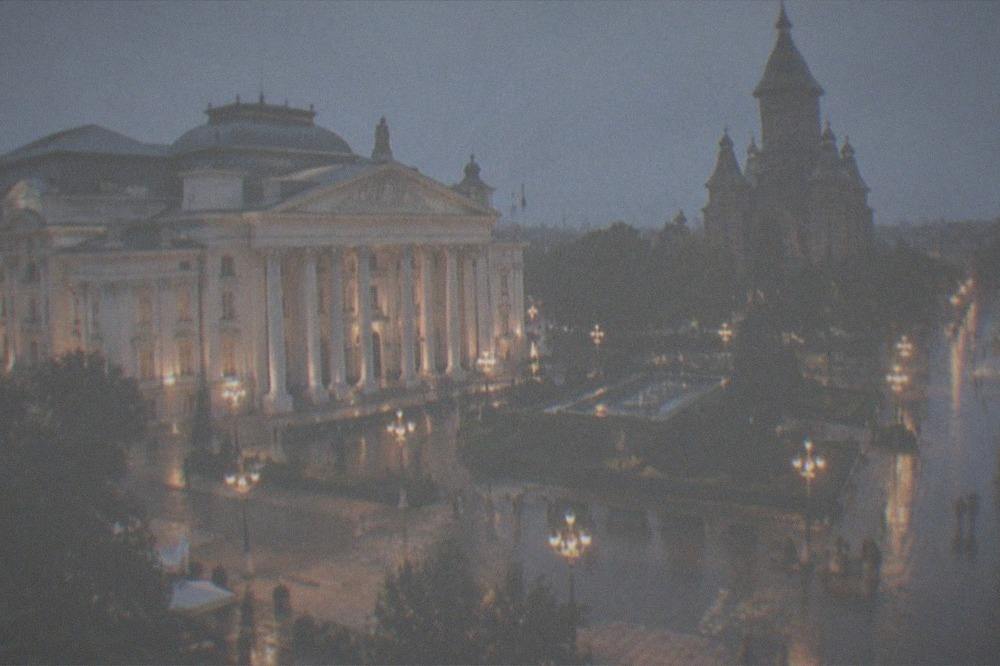
That electric-lighting premiere is worth holding in mind as you stand in the square at dusk. The terraces fill, the façades light up, and you are looking at the descendant of the first electrically lit public space network on the European mainland. The square is pedestrian-friendly, flat, and compact, which makes it equally workable for a quick photo stop, a long museum afternoon, or an evening out. For a fuller picture of the city that grew around this square, the Timisoara Travel Guide homepage collects the essentials in one place.
What Should You See Around Piata Unirii?
The unmissable sights around Piata Unirii are the National Museum of Art in the Baroque Palace, the Roman Catholic Cathedral of St George, and the Serbian Orthodox Cathedral, with the Serbian Episcopal Palace, the arcaded corner houses, and the plague-column monument completing the circuit of the square. All of them face directly onto the square, so a full lap takes under an hour at walking pace.
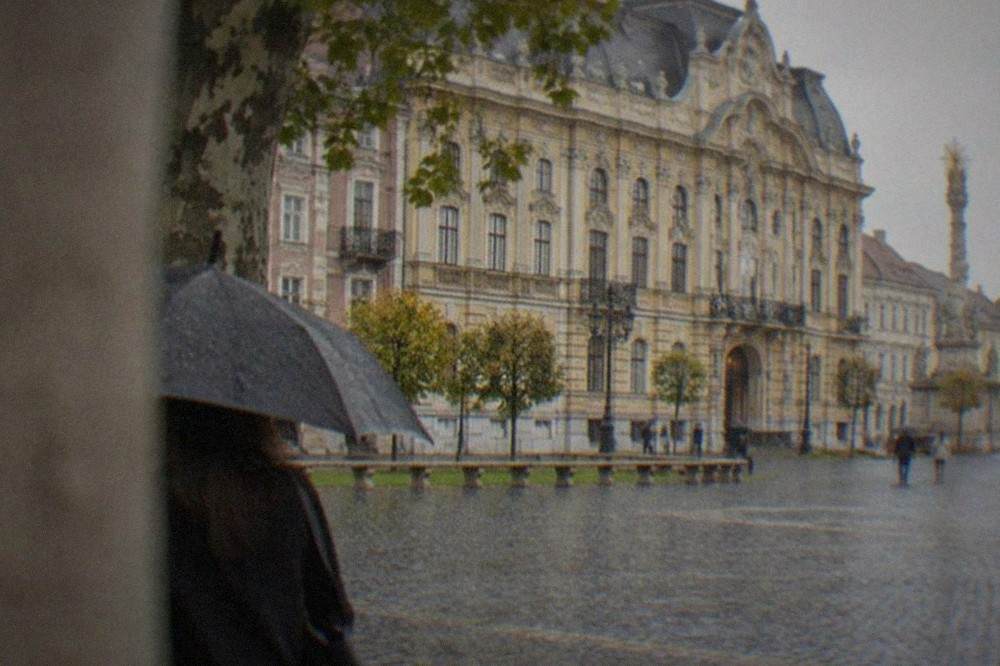
Start with the Baroque Palace. It dominates the north side and holds the National Museum of Art, whose collection spans Banat regional painting, European old masters, and contemporary Romanian work. The museum also hosts major temporary exhibitions; in late 2025 it opened a Pompeii-themed show that ran into early May 2026, and the county council announced in March 2026 that a full building rehabilitation, estimated at 9 million euros, is being prepared, with the museum remaining open in the meantime.
Then cross to the two cathedrals. The Roman Catholic Cathedral of St George is the city's Catholic mother church, while the Serbian Orthodox Cathedral across the square anchors the historic Serbian community of the Banat, one of the region's defining minorities. The Serbian Episcopal Palace beside it is one of the square's oldest surviving structures. Both cathedrals are working places of worship, so dress modestly and time your visit around services.
| Building on the square | What it is | Why it matters |
|---|---|---|
| Baroque Palace | National Museum of Art | The square's grandest building; Banat and European art collections |
| St George's Roman Catholic Cathedral | Catholic mother church | The religious anchor of the Catholic community |
| Serbian Orthodox Cathedral | Serbian Orthodox mother church | Center of the historic Serbian Banat community |
| Serbian Episcopal Palace | Historic palace | One of the oldest buildings facing the square |
| Arcaded corner houses | Cafés, restaurants, shops | The terraces that make the square an evening destination |
| Plague-column monument | Historic monument | The traditional centerpiece of a Habsburg main square |
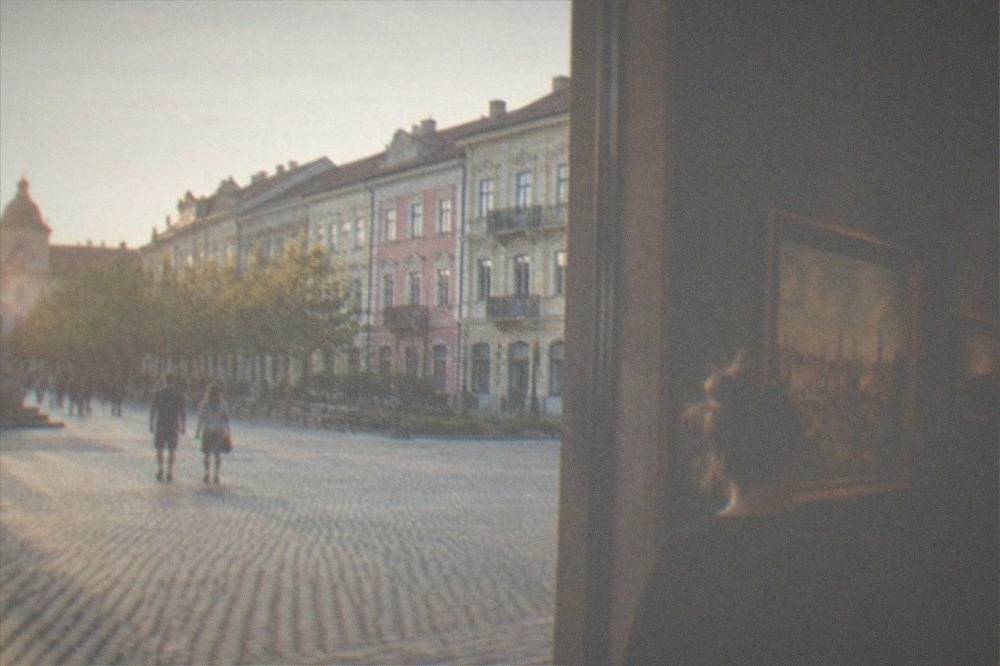
A few practical notes finish the circuit. The square is fully paved and step-free at street level. The terraces are busiest from late afternoon onward, and the light for photography is best either early in the morning, when the square is nearly empty, or in the evening, when the façades are lit. If your visit falls on a Monday or Tuesday, plan around the museum's closed days and spend that time on the exteriors and the cafés instead.
Which Guided Tours Cover Piata Unirii In Timisoara?
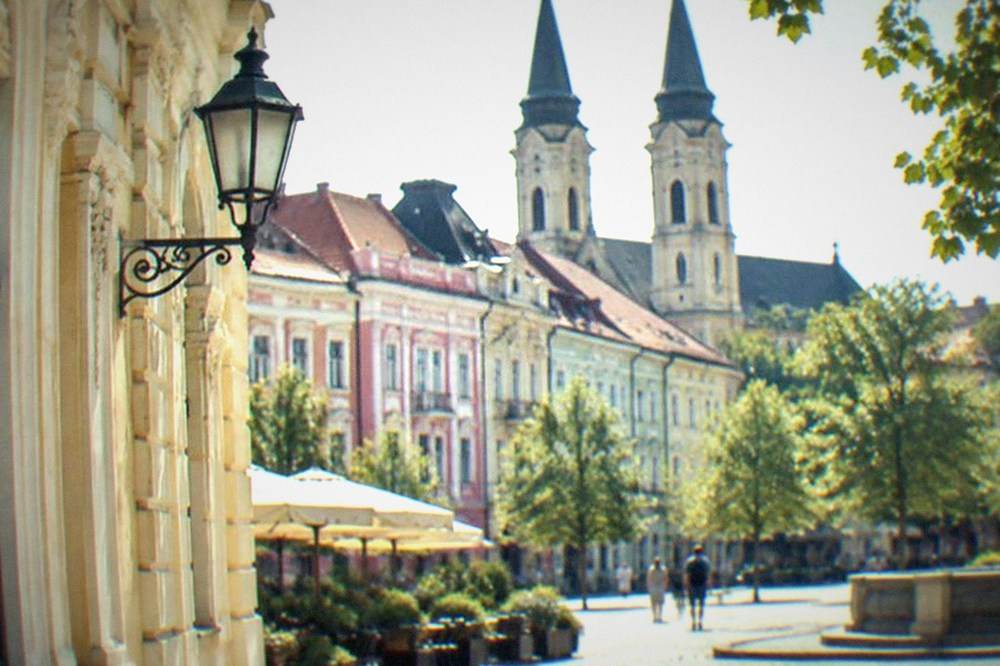
Most old-town walking tours in Timisoara include Piata Unirii as a core stop, because the square concentrates the city's Baroque architecture, its two cathedrals, and its museum in one place. Options range from a classic city walk to a longer tram-and-walking combination, plus a budget weekly English-language tour, so the choice comes down to depth, schedule, and price rather than coverage.
The classic walk is the natural fit for a first visit centered on this square. It has a very large review base, and covers the main historic core, which means the square itself plus the surrounding Cetate streets. The weekly English-language tour runs on set days, Tuesday, Thursday and Saturday, and is the most affordable structured option; check the operator's live listing for the current schedule before you plan around it. The tram-and-walking combination suits visitors who want both the old town and the wider city in one outing, pairing the square with districts like Iosefin and Fabric that most short walks skip.
If the 1989 Revolution is your main interest, note that several history-focused walks cover the square too, since the events of December 1989 unfolded in the squares and boulevards of central Timisoara. The Memorial Museum of the Revolution makes a strong pairing with any of these tours, and its permanent and temporary exhibitions plus a documentary film are covered by a single adult ticket.
Booking a guided walk is the one decision on this page that benefits from locking in early, especially in festival season when the old town fills up. The classic tour runs daily in practice, but the operator's live listing is the only place that shows today's departures and current availability.
What Are The Art Museum's Hours And Tickets At Piata Unirii?
The National Museum of Art in the Baroque Palace is open Wednesday to Sunday, with summer hours from 1 June to 30 September running 13:00 to 21:00 with last entry at 20:15, and winter hours from 1 October to 31 May running 10:00 to 18:00. It is closed on Mondays and Tuesdays and on public holidays, and guided tours cost 175 lei per group.
Those hours come from the museum's own information page, and the seasonal split matters when planning a visit. In summer the museum opens only in the afternoon and evening, which pairs perfectly with a morning spent outdoors in the square and the surrounding streets. In winter the morning opening lets you flip the order: museum first, then lunch on a terrace. The standard adult ticket price is not published in the information we hold, so check the museum's own site before your visit.
The guided tour fee of 175 lei is per group, not per person, which makes it economical for families or small groups of friends traveling together. The building itself is part of the experience: the Baroque Palace is one of the most significant secular Baroque buildings in Romania, and its state rooms frame the collection. The rehabilitation announced in March 2026 targets degradation in parts of the building such as the attic and basement, but no closures have been reported and the museum remained fully active through 2026.
| Period | Days open | Hours | Last entry |
|---|---|---|---|
| Summer (1 Jun to 30 Sep) | Wednesday to Sunday | 13:00 to 21:00 | 20:15 |
| Winter (1 Oct to 31 May) | Wednesday to Sunday | 10:00 to 18:00 | Not stated on listing |
| Mondays and Tuesdays | Closed | Closed | Closed |
| Public holidays | Closed | Closed | Closed |
When Is The Best Time To Visit Piata Unirii?
The best time to visit Piata Unirii is late spring through early autumn, ideally May, June, September or early October, when Timisoara's continental climate gives warm days and the square's terraces are in full swing. July and August are the warmest months with means of 22.8 and 22.5 degrees C, while winter brings a January mean of 0.0 C but a Christmas season that fills the squares with lights and markets.
The climate numbers come from the JMA/WMO CLIMAT normals for Timisoara station 15247, and they describe a classic continental pattern: cold winters, warm summers, and rainfall spread across the year. June is actually the wettest month at 79.1 mm, while March is the driest at 34.1 mm, with 600.7 mm falling annually. Rain rarely ruins a day here, but a compact umbrella earns its place from late spring onward.
| Month | Mean temp (C) | Precipitation (mm) | Square conditions |
|---|---|---|---|
| January | 0.0 | 37.3 | Cold, quiet, Christmas lights early in the month |
| February | 2.1 | 35.5 | Cold, few crowds |
| March | 6.5 | 34.1 | Driest month, terraces reopening |
| April | 12.3 | 50.6 | Pleasant, spring flowers |
| May | 17.3 | 57.2 | Excellent, peak comfort |
| June | 20.9 | 79.1 | Warm but the wettest month |
| July | 22.8 | 61.9 | Warmest month, full terrace season |
| August | 22.5 | 54.6 | Warm, busy evenings |
| September | 17.2 | 50.4 | Excellent, festival season |
| October | 11.5 | 50.0 | Mild, autumn light |
| November | 6.4 | 45.3 | Cool, Christmas market setup late month |
| December | 1.5 | 44.7 | Cold, Christmas market in full swing |
Two seasonal notes shape the calendar. September brings the Timisoara Jazz Festival, whose 2026 edition ran 25 to 27 September, plus the SIMULTAN festival of experimental art, so early autumn combines comfortable temperatures with a real cultural program. December turns the nearby squares festive: the Christmas Market is expected around Piata Victoriei from late November into early January, though 2026 dates were only estimated currently and should be confirmed before you travel. For a deeper dive into the calendar, see the site's seasonal guides, and for the full month-by-month breakdown, Timisoara Weather by Month carries the complete table.
Where Should You Eat And Drink Near Piata Unirii?
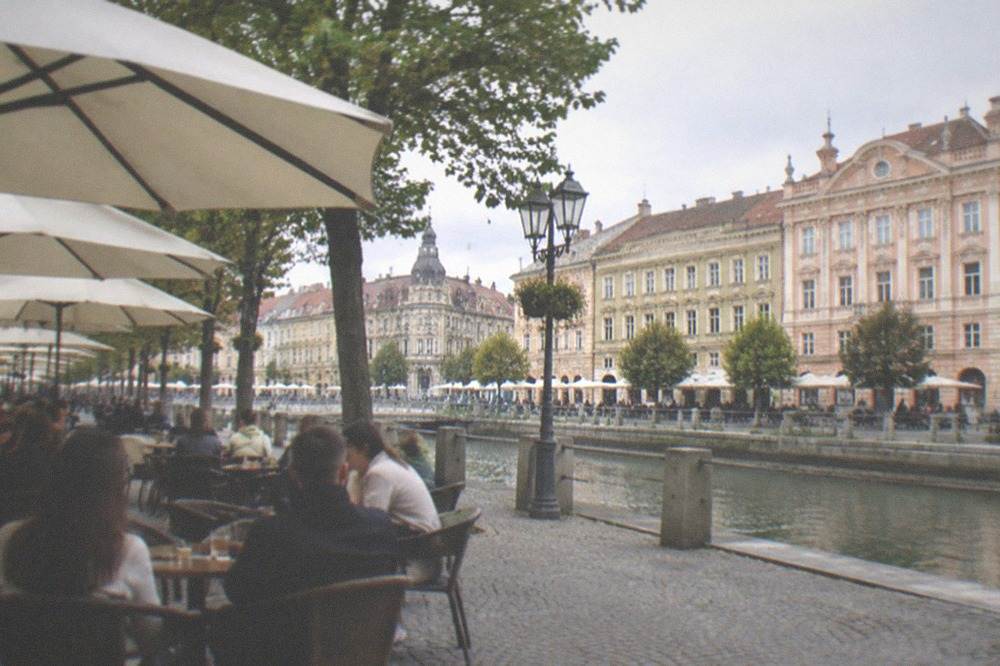
Eating near Piata Unirii means choosing between the arcaded café terraces directly on the square, the restaurants tucked into the side streets of Cetate, and the livelier scenes a few blocks away around Piata Victoriei and along the Bega. Costs are moderate by European standards: recent cost-of-living trackers put a cappuccino at roughly 13 to 15 lei, a draught beer in a neighborhood pub at 11 to 12 lei, and a meal in an inexpensive restaurant at about 45 to 50 lei.
Those price figures come from cost-of-living aggregators updated in September 2026, and they describe typical venues rather than any single address, so treat them as planning ranges and check the menu at the door. The square itself skews toward the terrace experience: coffee, cake, aperitifs, and people-watching. For a proper meal, the side streets of Cetate hold the densest concentration of restaurants, and the Timisoara Restaurants guide maps the standout options by cuisine and budget.
| Item | Typical price (RON) | Notes |
|---|---|---|
| Cappuccino | 13 to 15 | Regular/expat-area venues |
| Draught beer, 0.5 L | 11 to 12 | Neighborhood pub |
| Inexpensive restaurant meal | 45 to 50 | Lunch or simple dinner |
| Fast-food combo | about 32 | Business-district trackers |
| Basic lunchtime menu | about 46 | Business-district trackers |
For local flavor, look for Banat dishes on the menus: the region's cuisine blends Romanian, Hungarian, Serbian, and Swabian German traditions, a direct legacy of the multiethnic city that built this square. The Timisoara Food guide covers what to order, and the coffee scene, which is genuinely good and mostly terrace-based from spring to autumn, deserves an afternoon of its own. If you would rather taste your way through the old town with a guide, a street-food walking tour is the structured option.
How Do You Get To Piata Unirii In Timisoara?
Piata Unirii sits in the pedestrianized heart of Cetate, reachable on foot from anywhere in central Timisoara in a short walk, and by public transport using the city's trams, trolleybuses and buses with a single 60-minute ticket costing 5 lei or a 1-day pass at 18 lei. You can pay with a contactless bank card directly on board, by e-wallet card, SMS, mobilPay, eTicket, or at STPT kiosks.
The ticket and payment details come from STPT, the city transport operator, whose integrated ticketing covers trams, trolleybuses, buses, and even the seasonal vaporetto water bus on the Bega canal. The day pass is the better deal if you plan to hop between the old town, Iulius Town, and the Banat Village Museum in one day. Real-time arrivals are available at live.stpt.ro, and STPT also partners with the Transit app, so checking the next tram before you leave the terrace takes seconds.
| STPT ticket | Price | What it covers |
|---|---|---|
| Single ticket, 60 minutes | 5 lei | All modes, including the vaporetto |
| 1-day pass | 18 lei | All modes, including the vaporetto |
| 30-day general pass | 160 lei | All modes |
| Annual general pass | 1,320 lei | All modes |
From Timisoara Traian Vuia International Airport, the express bus line E4 connects the Bastion area with the airport, and the square is a straightforward connection from there. Note one 2026 detail if you are flying: the airport's runway is closed for essential repairs from 2 to 22 November 2026, a full closure announced in July 2026, so flights in that window are affected and your route to the city may change. The Timisoara Airport to City Center guide covers the transfer options in detail, and the city's wider network of trams, trolleybuses and buses is easy to master once you have a ticket in hand.
Walking remains the best way to arrive. From Piata Victoriei, follow the pedestrian axis through Cetate; from the Bega canal, cross into the old town and head for the domes and spires. The whole historic core is compact, flat, and signposted, and the walk itself passes several of the façades that make the district worth seeing.
What Else Is Within A Short Walk Of Piata Unirii?
Within a short walk of Piata Unirii you can reach Piata Libertatii and Piata Victoriei along the old town's main axis, the Metropolitan Orthodox Cathedral and the Romanian National Opera near Victory Square, Theresia Bastion at the edge of Cetate, and the Bega canal promenade, with the Memorial Museum of the Revolution and Huniade Castle a little further out. The historic core is compact enough that all of these fit into a single day of unhurried walking.
The three squares form a natural route. Liberty Square is the middle one, smaller and quieter, with its own mix of historic façades. Victory Square is the grand boulevard square where the 1989 Revolution played out in front of the Opera, and it is flanked by the Opera house and the Metropolitan Orthodox Cathedral, whose domes define the city's skyline. This was the square where the Christmas Market sets up each winter.
Theresia Bastion, the old fortress remnant at the western edge of the old town, now holds shops, cafés, and cultural spaces, including the MIC children's interactive museum that opened in May 2026 in Bastionul Maria Theresia, the first new museum for children in western Romania in decades. Huniade Castle, the city's oldest surviving secular monument, has been closed to the public for roughly two decades, and a major restoration contract signed in August 2025 targets a partial reopening in 2027 and full rehabilitation in 2028, so admire it from outside for now. The Bega canal promenade rounds out the walk, and the seasonal vaporetto water bus runs on it from April to the end of October, with 9 stops per direction and the same 5 lei ticket as the trams.
For the full city picture, Things to Do in Timisoara collects the complete sight list, and One Day in Timisoara strings these squares into a ready-made route.
Why Does Piata Unirii Matter To Timisoara's Story?
Piata Unirii matters because it is the physical record of Timisoara's central place in European urban history: the square of a Habsburg fortress city that became mainland Europe's first electrically lit city in 1884, a European Capital of Culture in 2023, and the birthplace of the 1989 Revolution that ended communist rule in Romania. The buildings around it carry every layer of that story.
The city's own "premieres" list, published by the city hall, reads like a history of modern Europe compressed into one provincial capital: the first brewery in Romania in 1718, the first navigable canal with the canalisation of the Bega from 1728, the first newspaper in 1771, the first telephone network in Romania in 1881, the first electric tram in 1899. The first horse-drawn tram in the Habsburg Empire started running on 8 July 1869, connecting Piata Sf. Gheorghe in Cetate to Fabric, and its route passed close to where you now stand. Since 1953 Timisoara has also been the only European city with three state theatres, performing in Romanian, Hungarian and German, a direct expression of the multiethnic Banat.
In 2023 the city was a European Capital of Culture alongside Elefsina in Greece and Veszprem in Hungary, with the opening weekend held 17 to 19 February 2023, and the legacy projects continue: in 2026 the mayor signed an EU funding contract of roughly 150 million lei for MultipleXity, a cultural and technology hub transforming the former tram depots on Take Ionescu Boulevard, with completion targeted around February 2029. In May 2026 the city was named Romania's Destination of the Year at a national awards gala decided by roughly 450,000 public votes plus a jury.
The 1989 chapter belongs to December, when the revolution against the Ceausescu regime began in Timisoara, and the annual commemorations around 15 to 20 December bring ceremonies and cultural programs to the central squares. The story of that December, and the longer arc from Habsburg fortress to European city, both begin at the square where you are standing.
Common Questions About Piata Unirii Timisoara
Is Piata Unirii the same as Union Square in Timisoara?
Yes. Piata Unirii is Romanian for Union Square, and the two names refer to the same Baroque square in Timisoara's Cetate old town. It is the city's main historic square, home to the National Museum of Art, St George's Roman Catholic Cathedral, and the Serbian Orthodox Cathedral.
How much time should I spend at Piata Unirii?
Plan on one to two hours for the square itself, including a lap of the buildings and a coffee on a terrace, plus an additional one to two hours if you want to visit the National Museum of Art. The museum is closed on Mondays and Tuesdays, so check its hours before you go.
Is Piata Unirii free to visit?
Yes, the square itself is a public open space and free to enter at any time. The only paid attractions on the square are the National Museum of Art, whose standard adult ticket price is not published in the sources we hold, so check the museum's own site, and its guided tours at 175 lei per group.
Can you reach Piata Unirii by public transport?
Yes. Timisoara's trams, trolleybuses and buses serve the edges of the pedestrianized old town, and a single 60-minute STPT ticket costs 5 lei, with a 1-day pass at 18 lei. You can pay with a contactless bank card on board. From the airport, express line E4 connects the Bastion area to the terminal.
What is the best time of day to photograph Piata Unirii?
Early morning gives you the emptiest square and the softest light on the Baroque façades, while evening delivers the lit terraces and illuminated buildings, a fitting tribute to the city that was mainland Europe's first with electric street lighting in 1884. Avoid midday in summer, when the square is at its busiest and the light is flat.
Are there guided tours of Piata Unirii and the Old Town?
Yes, several. The Classic Tour of Timisoara covers the historic core in about two hours, a weekly English-language tour runs on set days at the lowest price point, and a tram-and-walking combination tour adds the districts beyond the center. There is also a free, tip-based essentials walk listed on GuruWalk.
Piata Unirii rewards slow travelers: a museum afternoon, a cathedral or two, a terrace as the façades light up, and the whole multiethnic, electrically-lit history of the Banat's capital within one square's reach. Start there, and the rest of Timisoara unfolds outward in every direction.