Timisoara Bike Rental
Timisoara, in the Banat region of western Romania, is flat, crossed by the Bega canal, and compact enough that a bicycle covers more of it in one afternoon than any other way of moving. This guide covers how bike rental works in the city, what the ride itself is like, and where the wheels can take you.
Short answer
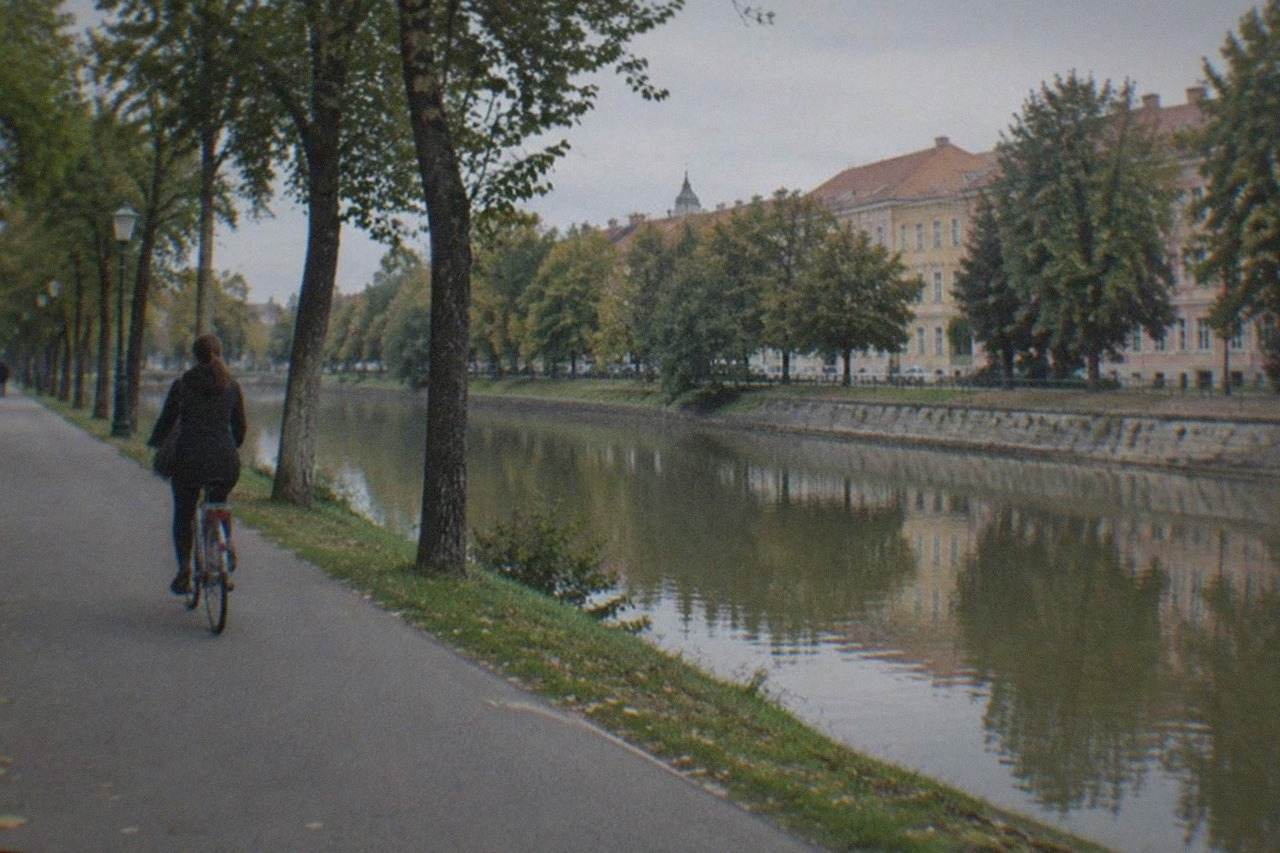
Bike rental in Timisoara works through the municipal VeloTm share system run alongside STPT public transport, plus private rental shops in and around the old town. The city is flat, the Bega canal banks carry long traffic-free paths, and a single 5 lei STPT ticket or 18 lei day pass covers the tram network if you want to combine cycling with transit.
Timisoara, in Timis County in the Banat region of western Romania, is one of the most naturally bikeable cities in the country. The terrain is flat, the street grid of the historic quarters, Cetate, Iosefin, Fabric and Elisabetin, sits tight together, and the Bega canal cuts straight through the middle with riding along its banks. Under its Hungarian name, Temesvár, the city was already experimenting with urban transport earlier than almost anywhere in the region, and that legacy shows in how the modern network is laid out. This guide from Timisoara Travel Guide covers how bike rental works here, what it costs to move around the city, where the worthwhile routes go, and when in the year the riding is best.
Where Can You Rent A Bike In Timisoara?
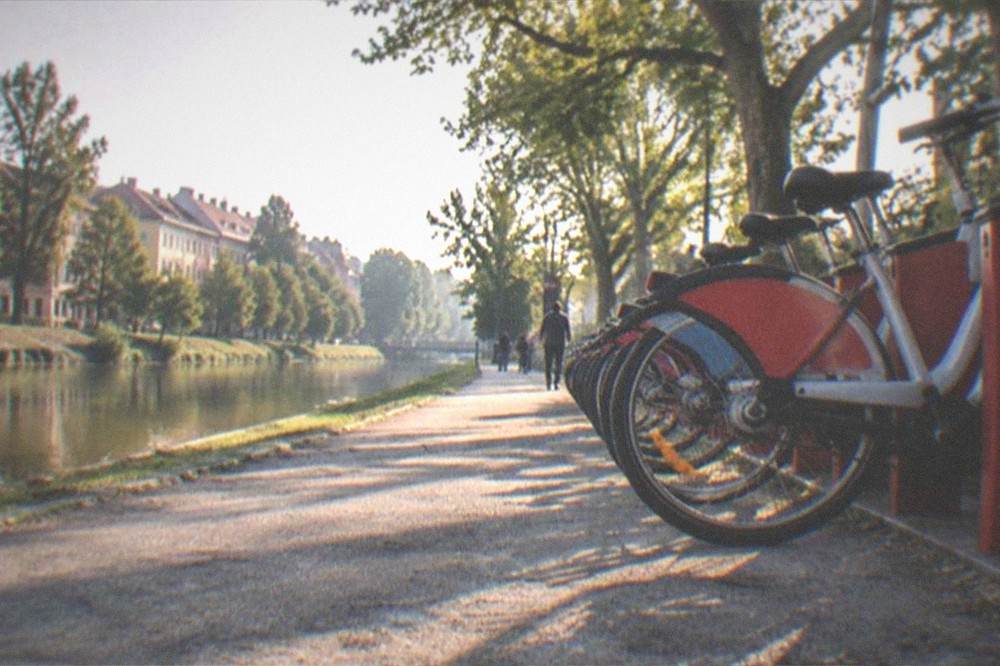
Bike rental in Timisoara comes in two forms: the municipal VeloTm bike-share system, operated alongside the city's STPT public transport network, and a small number of private rental shops concentrated in and around the central districts. VeloTm is a convenient option, because its docking stations sit near the squares and parks you will already be passing. Private shops suit riders who want a specific type of bike, a child seat, or a machine for several consecutive days.
VeloTm is the city's own share scheme, run by STPT, the same operator that runs the trams, trolleybuses and the vaporetto on the Bega. That matters for planning: the share stations tend to sit where the transit network already carries people, so a bike is rarely more than a short walk from a tram stop. The operator's own site is the place to check the current station map and any membership steps before you arrive, because the practical details of the scheme are managed there.
Private rental is the second route. Shops of this kind in Timisoara tend to cluster in the central districts and near the bigger hotels, and most handle standard city bikes, sometimes with helmets and locks included. Because no individual shop had its address, hours or prices verified, this guide deliberately does not name one or quote a rate: check the listing or shop site directly when you book. What you can count on is that a city of this size and this much riverside path supports a steady rental trade.
A bicycle also pairs well with the wider transport picture. If you are arriving by air, the guide to Timisoara Airport and the airport to city center run-down cover the transfer options, and none of them prevents you from collecting a bike the same afternoon in the center.
How Much Does Getting Around Timisoara Cost Without A Car?
A single STPT ticket valid for 60 minutes on every mode, trams, trolleybuses, buses, express lines and the Bega vaporetto, costs 5 lei, and a 1-day pass covering the same network costs 18 lei. A 30-day general pass is 160 lei and an annual pass 1,320 lei. Bike rental itself is priced separately by the operator, so treat transit fares as the benchmark a rental has to beat for your stay.
These fares come from STPT's own ticketing page, and one detail is worth flagging: the day pass was 15 lei before August 2025 and is 18 lei now, so any older guide quoting 15 is out of date. Payment is flexible. You can tap a contactless bank card on board, use an e-wallet card, pay by SMS, mobilPay or eTicket, or buy from STPT kiosks. One method, 24pay, was suspended in April 2026 according to recent reporting, so do not plan around it.
| STPT ticket | Price | What it covers |
|---|---|---|
| Single, 60 minutes | 5 lei | All modes, including the vaporetto |
| 1-day pass | 18 lei | Unlimited rides, all modes, same day |
| 30-day general pass | 160 lei | Full network for a month |
| Annual general pass | 1,320 lei | Full network for a year |
For a visitor, the arithmetic is simple. If you plan two or more transit rides in a day, the 18 lei pass wins. If the bike is your main mode and the tram is only a fallback, single 5 lei tickets bought as needed are cheaper than any pass. Many riders do exactly this: pedal the riverside stretches, then hop a tram when the weather turns or the legs tire.
The network you would be falling back on is broad. Trams run on lines 1, 2, 4, 5, 6a, 6b, 7, 8 and 9, trolleybuses on lines 11, 14, 15, 16, 17 and 18, express buses on E1 through E8, and the vaporetto on line V1 along the Bega. Real-time arrivals are published at STPT's live site, which is useful when you are standing at a stop with a bike you would rather not carry.
One dated disruption matters if you are mixing wheels and rails: Piata Traian is closed to trams from 3 August 2026 to the end of 2026 for works, with lines diverted. Treat that as a 2026 closure, not a permanent state, and check the live alerts before relying on a Traian Square tram connection.
If your trip is longer and a car is on the table at all, the Timisoara car rental guide covers that trade-off; for a stay inside the city, a bike plus the occasional tram ticket beats a rental car on both cost and convenience.
Is Timisoara Actually Good For Cycling?
Timisoara is genuinely good for cycling, and the reasons are structural: the city sits on flat plain terrain, the Bega canal carries a long waterside corridor through the center, and the historic districts are compact enough that rides between them take minutes, not hours. The climate is continental, with JMA normals giving a July mean of 22.8 C and a January mean of 0.0 C, so the riding season is long but not year-round.
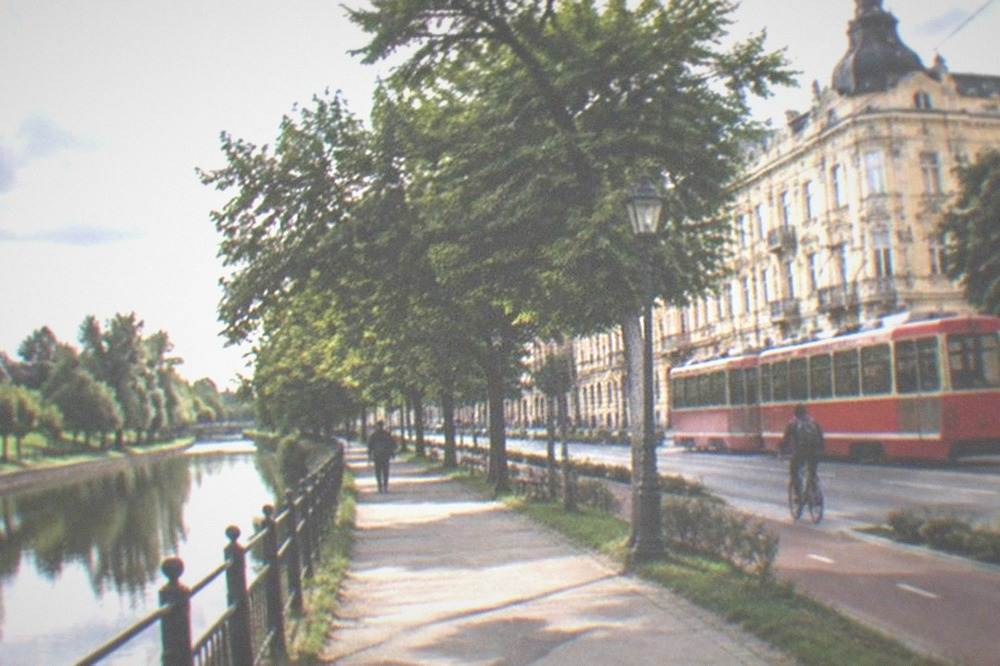
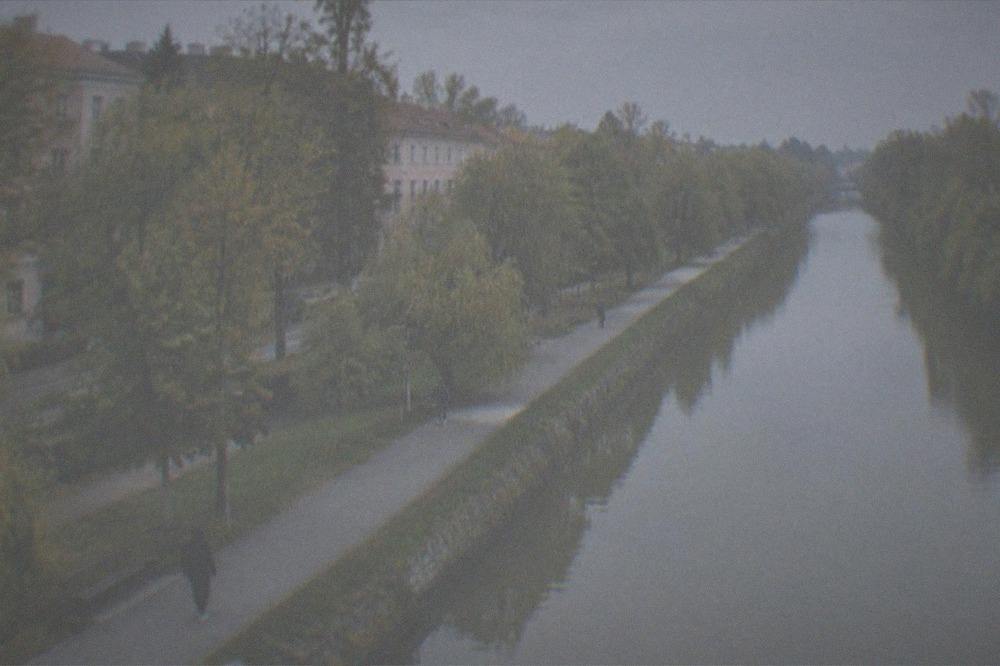
The Bega is the spine of cycling life here. The canal was straightened for navigation starting in 1728, making it the first navigable canal in Romania, and today its banks function as the city's main leisure corridor. The municipal agenda keeps pushing the riverside further: works announced in 2026 freed more than 2,000 square meters of bank on Bulevardul Vasile Parvan for park use, and the Fabric district plan approved in late 2025 includes completing the south-bank promenade between two of the canal bridges. None of that requires a guide to enjoy; the existing paths already connect the central districts in a continuous line.
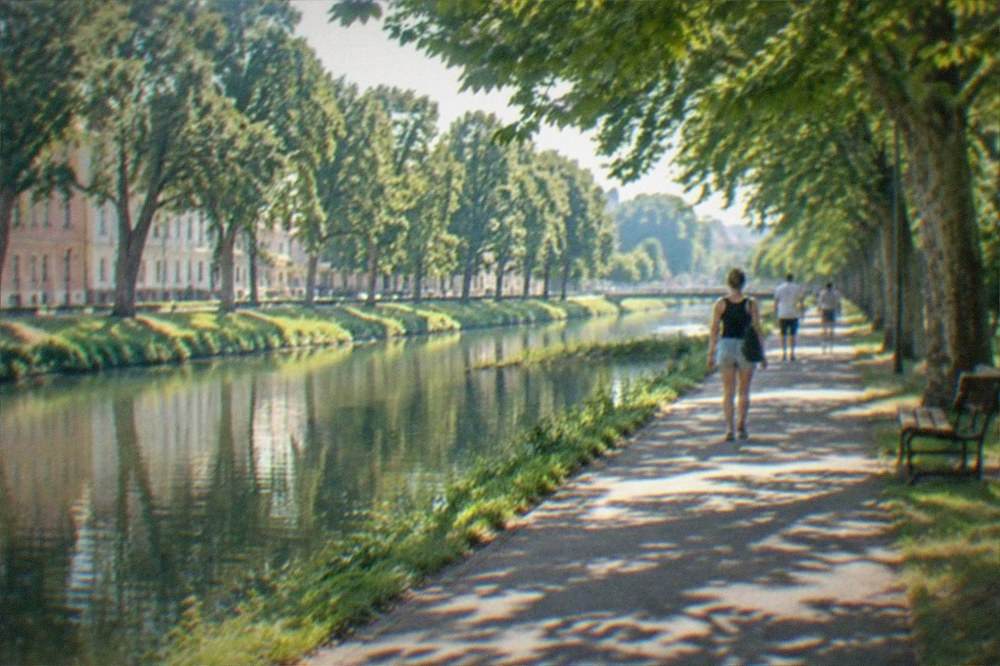
The flatness deserves emphasis. The Banat plain around the city means no grinding climbs between sights, which is why families and casual riders manage the city easily. The squares of the old town, Piata Unirii, Piata Victoriei and Piata Libertatii, are close together, and the distances between the central districts are short enough that a bike turns a day of walking into a day of gliding.
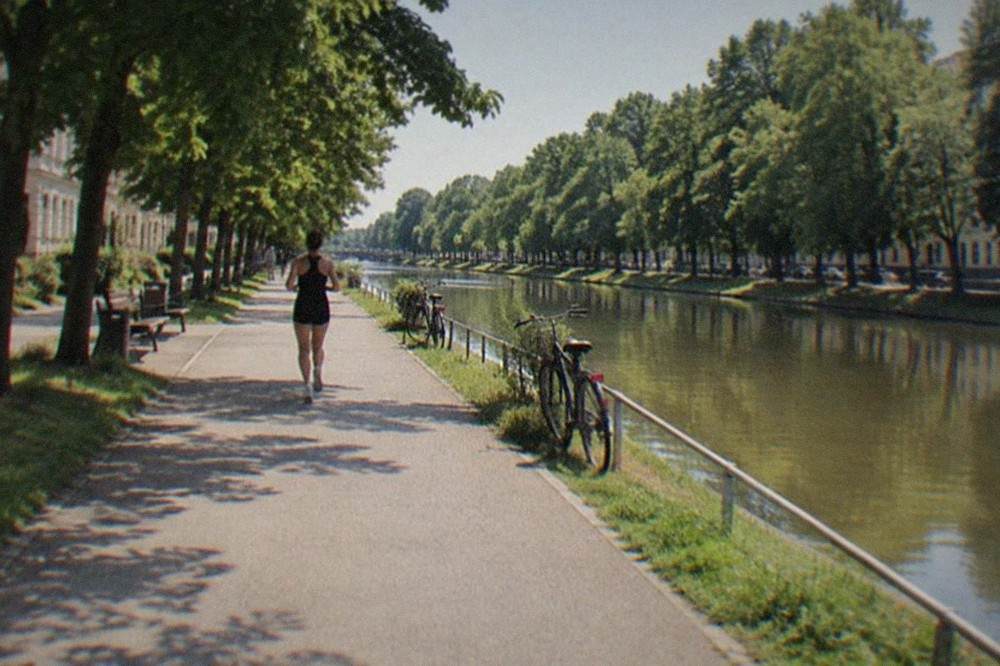
The season question is real, though. This is not a Mediterranean city, and winter riding in January, with a mean of 0.0 C, is a local's pursuit rather than a visitor's. The best time to visit Timisoara guide goes deeper on this, but the short version for cyclists is that April through October is the comfortable window, matching almost exactly the vaporetto season on the canal.
There is one honest limit to all this flat, riverside riding, and it is worth naming early: the landscapes people travel to the Banat for, the gorges and waterfalls south of the plain, sit far outside the range of a city bike. That is the moment to switch tools, and the day trip below is the one most riders end up booking once the canal has been ridden end to end.
What Are The Best Bike Routes In Timisoara?
The best bike routes in Timisoara follow the Bega canal banks from Iosefin through the center toward Fabric, loop through the central parks, and trace the ring of the historic squares. The canal corridor is the anchor ride, the parks make an easy green circuit, and the old town squares sit close enough together to string into a single short loop. All of it is flat, and almost none of it requires sharing a lane with fast traffic.
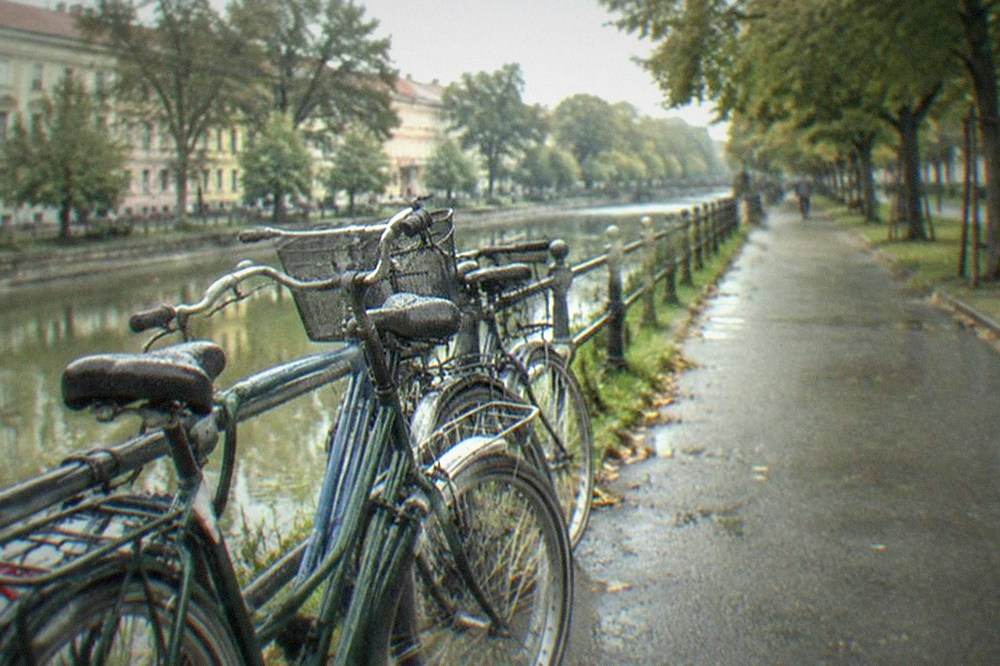
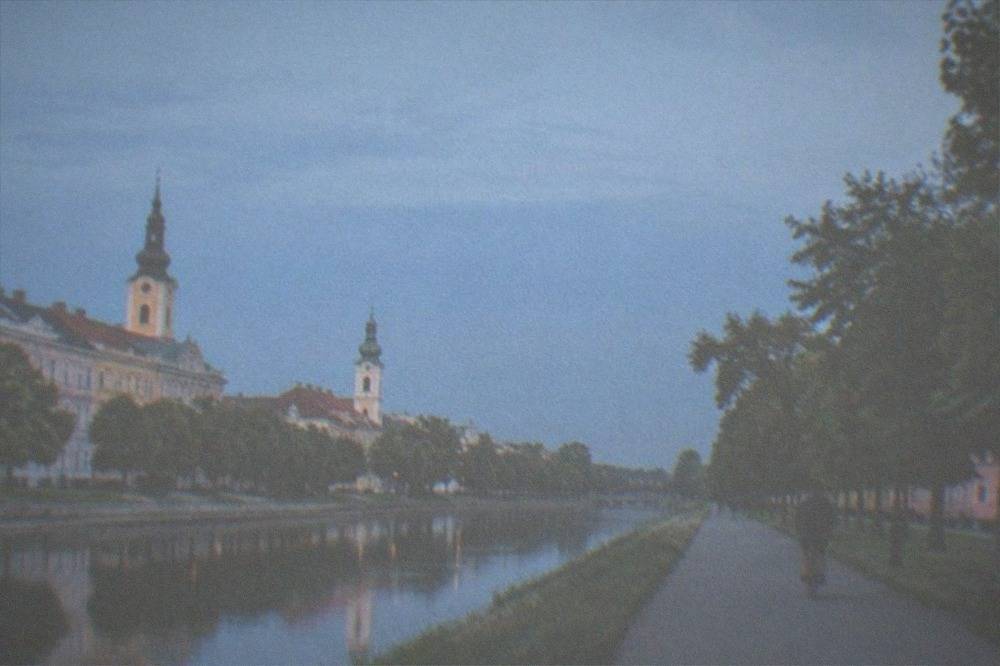
Start with the Bega. A ride along the canal passes under the city's bridges and links the Iosefin water tower end with the eastern districts, with the green banks doing the work a riverside promenade does in any great cycling city. The vaporetto's 9 stops per direction, reported by the operator for its April-to-October season, give you a natural set of waypoints: ride one bank, cross a bridge, come back on the other.
The parks circuit is the second ride. Central Park, Roses Park and the Children's Park sit in a band near the center, and the Botanical Park extends the green chain further out. This guide does not publish opening hours or fees for the individual parks, but as riding terrain they are the pleasant, traffic-calmed heart of the city.
The squares loop is the shortest and the most rewarding per kilometer. Cetate, the old town core, holds Piata Unirii with its cluster of cathedrals and baroque facades, and from there Piata Victoriei, the grand avenue square where the 1989 Revolution played out, is a brief pedal away. The 1989 Revolution guide covers what happened on those streets; on a bike you simply notice how rideable the distances between the history actually are.
For riders who want a guide rather than a map, the city's walking tours translate surprisingly well to cyclists planning a route, because the landmarks they string together are the same ones you will pedal past. The Revolution-themed walks in particular concentrate on a compact set of central sites.
When Is The Best Time Of Year To Cycle In Timisoara?
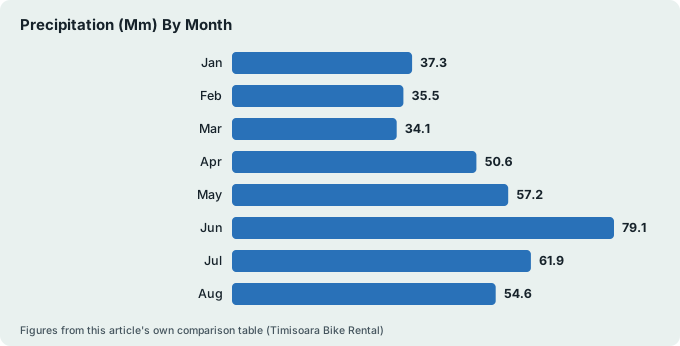
The best cycling months in Timisoara are April through October, with the warmest means in July at 22.8 C and August at 22.5 C, and the driest riding in March at 34.1 mm of precipitation against June's 79.1 mm, the wettest month. The JMA climate normals for station Timisoara 15247, at 86 m altitude, show a continental pattern: cold winters, warm summers, and 600.7 mm of precipitation spread across the year.
The monthly picture tells you when the bike earns its keep. Spring comes on fast, with the mean climbing from 6.5 C in March to 17.3 C in May, and early autumn holds its warmth, September still averaging 17.2 C. Midsummer is warm rather than scorching, but June is the month to watch for showers, so a light rain layer matters more then than in high summer.
| Month | Mean temp (C) | Precipitation (mm) |
|---|---|---|
| Jan | 0.0 | 37.3 |
| Feb | 2.1 | 35.5 |
| Mar | 6.5 | 34.1 |
| Apr | 12.3 | 50.6 |
| May | 17.3 | 57.2 |
| Jun | 20.9 | 79.1 |
| Jul | 22.8 | 61.9 |
| Aug | 22.5 | 54.6 |
| Sep | 17.2 | 50.4 |
| Oct | 11.5 | 50.0 |
| Nov | 6.4 | 45.3 |
| Dec | 1.5 | 44.7 |
Crowds follow a pattern of their own. Official arrivals data cited by the city hall show the Capital of Culture year 2023 pulling 283,256 tourist arrivals, 2024 holding at 285,190, and the strongest single month on record being May 2025 with 30,664. May, in other words, is both a lovely riding month and the busiest one, so book accommodation and any rental gear early if that is your window.
| Year | Tourist arrivals, Timisoara |
|---|---|
| 2021 | 153,794 |
| 2022 | 212,785 |
| 2023 | 283,256 |
| 2024 | 285,190 |
| 2025 (Jan to Nov) | 268,699 |
For month-by-month detail, the Timisoara weather by month guide carries the full breakdown, and the winter rider should read the Christmas market guide before deciding whether December cycling is worth it. Short version: the market is the reason to come, and you will enjoy it more on foot or by tram than on two wheels at 1.5 C.
How Does Bike Rental Compare To Transit And Driving In Timisoara?
A bike beats transit in Timisoara on flexibility and beats a car on cost and parking, while transit wins on rain days and a car wins only on out-of-town trips. The 18 lei day pass is the transit benchmark, the tram network covers every central district, and driving adds parking costs and the Piata Traian works to route around. For a city stay, the practical stack is a bike plus a handful of 5 lei tram tickets.
| Mode | Cost benchmark | Best for | Weakness |
|---|---|---|---|
| Bike (rental or VeloTm) | Set by the operator, check before booking | Riverside rides, park circuits, district hopping | Winter and heavy-rain days |
| Tram or trolleybus | 5 lei single, 18 lei day pass | Rain days, tired legs, exact schedules | Fixed routes, 2026 Traian diversions |
| Vaporetto V1 | 5 lei, standard ticket | The Bega experience from the water | Seasonal, April to end October |
| Rental car | See the car rental guide | Day trips beyond the region | Parking, city works, cost |
The comparison is not close inside the city. Timisoara's center is compact, the canal corridor is traffic-free, and the tram network means you are never stranded when the bike option falls through. A car only starts to pay for itself when the destination is the Banat hills, the Danube gorges or Transylvania, and even then guided day trips remove the driving entirely.
For longer regional plans, the getting around Timisoara guide covers the full toolkit, and the cost and prices guide puts everyday spending, coffee, meals, a beer, in context. The one-line summary: this is an affordable city to move around, and the bike is the cheapest pleasant way to do it.
Can A Bike Take You Beyond Timisoara, And When Should You Not Try?
A city bike can carry you along the Bega and into the Banat plain around Timisoara, but the region's headline landscapes, the Danube gorges, the Nera gorge and the forested hills south of the city, are not realistic cycling day trips for a visitor on rental wheels. Distances, climbing and trail surface all argue for a guided day trip instead, and the same goes for the long Transylvania circuits. Ride the city, and let a van or a guide handle the mountains.
The geography explains why. The Banat's dramatic scenery sits where the plain meets the Carpathians, and the roads that reach it involve sustained climbing on routes that reward a full day in a vehicle, not a morning on a hybrid. The waterfalls and gorges that make the region famous are exactly the kind of place where the journey is part of the point, and where a guided trip with a driver turns a long day into a relaxed one.
That is not a dismissal of the bike, it is a division of labor. The bicycle owns the city: the canal, the parks, the squares, the café-to-café drift through Cetate and Elisabetin. The guided day trip owns everything beyond a comfortable radius. Visitors who try to stretch a rental bike into the hills usually end up spending the day watching traffic rather than scenery.
If you are building a longer western Romania trip around this, the Banat region guide and the western Romania itinerary pages map out what fits together, and the things to do in Timisoara page is the full index of city options for the days when the bike stays parked.
What Should You Know Before Riding In Timisoara?
Before riding in Timisoara, know four things: the city is flat and the canal corridor is the main route, transit fares are 5 lei per single and 18 lei per day if you need a fallback, the riding season runs roughly April to October against a continental climate, and the practical details of the VeloTm scheme, stations, membership and any fees, live on the operator's own site and should be checked there before you ride.
Beyond that, the practicalities are ordinary European city cycling. Ride on the marked paths where they exist, expect shared space along the canal promenades, and lock the bike at the docking points or wherever the rental shop instructs. Helmets are not universally worn locally, but a shop that rents to tourists will normally offer one.
Money is simple. Romania uses the leu, not the euro, and the Romanian currency guide covers the details, including the official BNR reference rate. A reported local tourist tax of 2 percent of the accommodation tariff, collected by lodging providers, appears in the city's 2026 tax decisions, but that figure is reported rather than primary-sourced, so expect it on the hotel bill rather than at the bike counter.
Safety, for what it is worth, is a subject the is Timisoara safe guide treats in full. For cycling specifically, the risks here are the ordinary ones of any mid-sized European city: tram tracks when crossing at a shallow angle, and cobblestones in the old core. The emergency number in Romania is 112, and the riding is calm enough that visitors rarely need to think about it.
Common Questions About Timisoara Bike Rental
Is Timisoara a good city for cycling?
Yes. The city is flat, the Bega canal carries long traffic-free banks through the center, and the historic districts sit close together. The continental climate gives a comfortable riding season from roughly April to October, with July means of 22.8 C.
How much does bike rental cost in Timisoara?
Pricing is set by the operator and is not published in a verified form, so check the operator's live listing or the VeloTm pages on the STPT site before booking. For comparison, a single 60-minute STPT transit ticket costs 5 lei and a 1-day pass 18 lei.
Is there a bike-share system in Timisoara?
Yes. VeloTm is the municipal bike-share scheme operated alongside STPT public transport, with docking points around the city. Its fleet size and tariff are not published in verified form here, so check the operator's own site for current details.
Can I take my bike on the tram in Timisoara?
The STPT fare rules cover all modes with the same tickets, but carriage rules for bicycles on trams are not confirmed, so check with STPT directly before planning a bike-on-tram day. In practice, the network is dense enough that most riders simply park and ride.
When is the worst time to cycle in Timisoara?
Winter. January has a mean of 0.0 C per the JMA climate normals, and December sits at 1.5 C. June is the wettest month at 79.1 mm of precipitation, so early summer rides deserve a rain layer more than a warm one.
Can I cycle from Timisoara to the Danube gorges?
Not realistically on a rental city bike. The gorges and waterfalls of the Banat involve distance and climbing that suit a guided day trip or a car, and the region's operators run exactly those trips from the city.
The short version of all of it: rent the bike for the city, ride the Bega, keep a 5 lei tram ticket in your pocket for the rain, and let a guided day trip carry you to the gorges when the plain runs out.