Timisoara Vs Sibiu
This guide compares them honestly, using hard figures for Timisoara and qualitative character for both.
Short answer
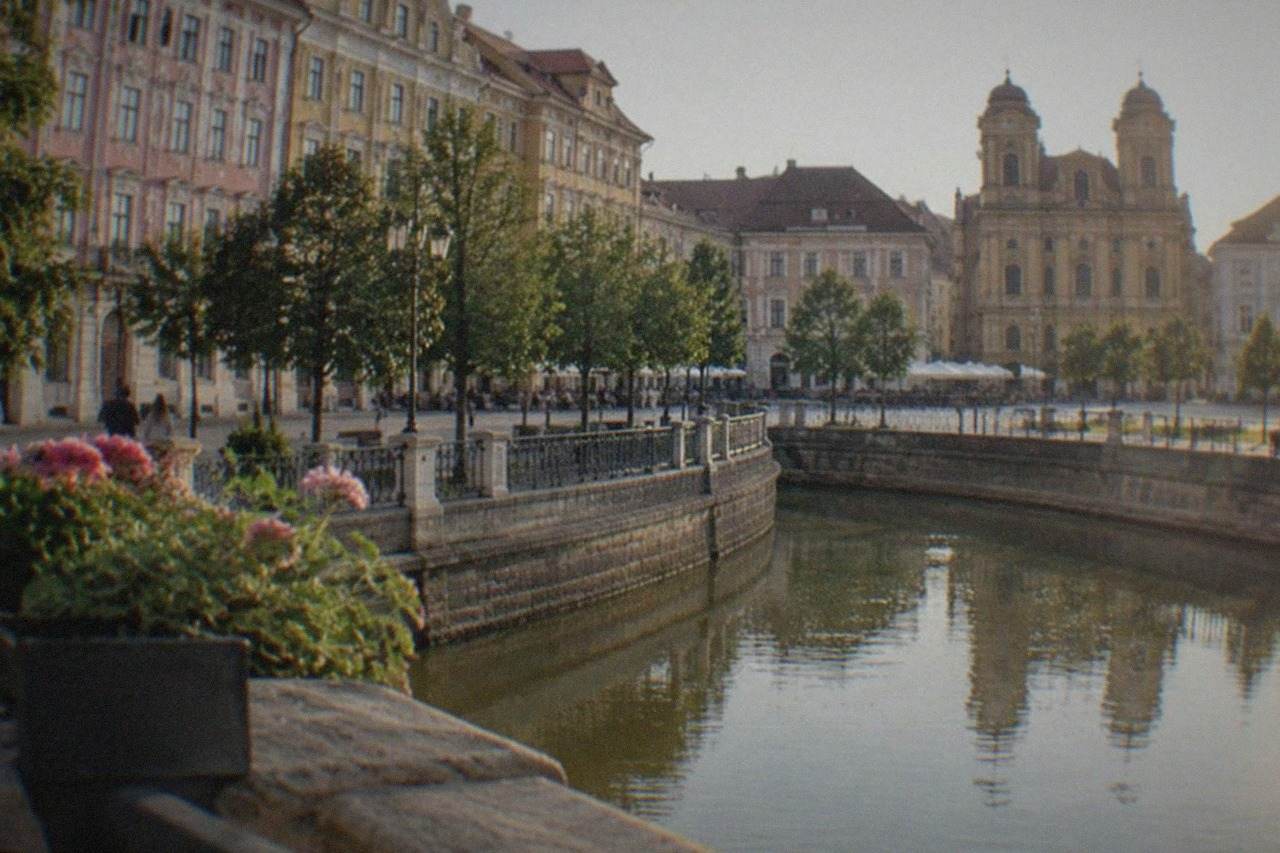
Choose Timisoara for a relaxed western-Romania city break built around squares, the Bega canal and 1989 Revolution history, with an airport served by low-cost routes. Choose Sibiu for a denser medieval old town in Transylvania with a famous bridge and a big Christmas atmosphere. Both can be combined, since a day trip links Corvin Castle and Sibiu from Timisoara.
Timisoara, in Timis County in the Banat region of western Romania, gets compared to Sibiu more often than to any other Romanian city, and the comparison is fair: both are walkable, both have beautifully restored historic centers, and both carry big historical weight. The two cities are not interchangeable, though. Timisoara is a laid-back western city of squares and water, while Sibiu is a Transylvanian Saxon town famous for its medieval walls, its Bridge of Lies and its rooftop-window "eyes". This guide compares them honestly, and one rule applies throughout: every number on this page belongs to Timisoara, because that is the city this site verified. Where Sibiu is concerned, the comparison sticks to character a visitor can check for themselves.
Which City Should You Choose: Timisoara Or Sibiu?
Choose Timisoara if you want a low-pressure western city break with grand squares, riverside walks and a pivotal place in modern European history, and choose Sibiu if your priority is a dense, fairy-tale medieval core inside one compact walk. Timisoara spreads its charm across several distinct neighborhoods, from Cetate to Fabric to Iosefin, and rewards slow exploration. Sibiu concentrates almost everything into a single old town you can cross on foot in under an hour, which makes it feel more immediately postcard-perfect.
Neither choice is wrong, and plenty of travelers do both. The practical difference comes down to rhythm. Timisoara, the city where the 1989 Romanian Revolution began, invites you to wander between Union Square, the Bega canal and the leafier districts beyond the center, stopping often. Sibiu, a former European Capital of Culture like Timisoara was in 2023, front-loads its impression: the first hour in its old town delivers the big views, and everything after that deepens rather than surprises.
There is also a geography point that matters more than most guides admit. Timisoara sits in the Banat, close to the Hungarian and Serbian borders, which makes it a natural base for exploring western Romania and even cross-border trips. Sibiu sits in southern Transylvania, closer to the Carpathian scenery, the fortified churches and the castles that region is famous for. If your dream trip involves Dracula-adjacent castles and mountain roads, Sibiu is the better pivot. If you want an easy arrival by air and a city that feels lived-in rather than staged, Timisoara wins.
How Do Timisoara And Sibiu Compare On History And Character?
Timisoara's identity was shaped by the Habsburg monarchy and the multicultural Banat: it was the first city in mainland Europe with electric street lighting on 12 November 1884, it opened the monarchy's first horse-drawn tram line on 8 July 1869, and it started the revolution that ended communist rule in Romania in December 1989. Sibiu's identity is Saxon and medieval, built around guilds, walls and a German-speaking merchant class. Timisoara is a city of firsts and modern revolutions; Sibiu a city of walls and the Middle Ages.
The historical record for Timisoara is unusually rich, and the city hall's own list of "premieres" documents a remarkable run of firsts. The oldest attested brewery in Romania dates to 1718 here, the Bega became the country's first navigable canal starting in 1728, the first newspaper printed in Romania appeared in 1771, and the first electric tram in Romania ran in 1899. The city even claims the first asphalted street and the first film projections in the country. That inventiveness left a physical legacy: a baroque core in Cetate, grand public buildings, and a street pattern that still follows the old fortress outline.
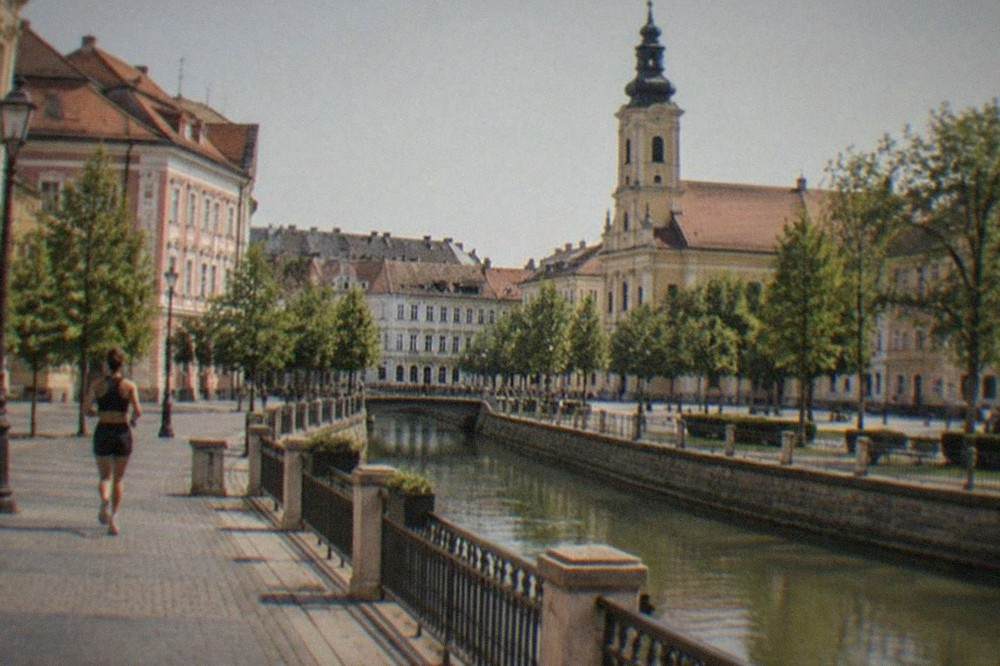
The 1989 Revolution is the chapter that separates Timisoara from every other Romanian city, Sibiu included. The protests that began here in December 1989 spread nationwide and toppled the Ceausescu regime within weeks. The Memorial Museum of the Revolution preserves that story, and the 1989 Revolution trail through Victory Square gives the city a layer of recent, raw history that Sibiu simply does not have. Sibiu's emotional register is older and softer: medieval towers, the Council Tower's view, and the Lutheran cathedral at the heart of its Saxon heritage.
Character-wise, the two cities feel different even at dinner. Timisoara is famously multicultural, historically Romanian, Hungarian, German, Serbian and Jewish at once, and it is the only European city with three state theatres in three languages, Romanian, Hungarian and German, a status it has held since 1953. Sibiu is more uniformly Saxon-medieval in its tourist identity. Timisoara's nickname "Little Vienna" is common usage rather than an official designation, but it captures the Habsburg boulevards and the coffee-house culture that a visitor notices immediately.
Those fresh figures matter for the comparison more than they might seem, because they show a city whose tourism momentum is still climbing rather than plateauing after its Capital of Culture year. Sibiu had its own Capital of Culture moment back in 2007, and its old town has been on the international circuit longer, which cuts both ways: more name recognition, but also a more trodden path. Timisoara's rising arrival numbers with a short average stay of under two days also tell you something practical, that the city is still being treated as a short break destination, so it rarely feels overrun even in peak months. For anyone deciding between the two, that crowd profile is a real point in Timisoara's favor during the busy shoulder seasons.
What Can You Actually See And Do In Timisoara, Romania?
Timisoara's core sights are its three great squares, Union Square, Liberty Square and Victory Square, linked by walkable baroque streets, plus the Metropolitan Orthodox Cathedral, Theresia Bastion, the Bega canal promenade and a cluster of worthwhile museums including the National Museum of Art and the Memorial of the Revolution. Almost everything sits within a 20-minute walk of anything else, so the city rewards a two-day visit rather than a rushed one.
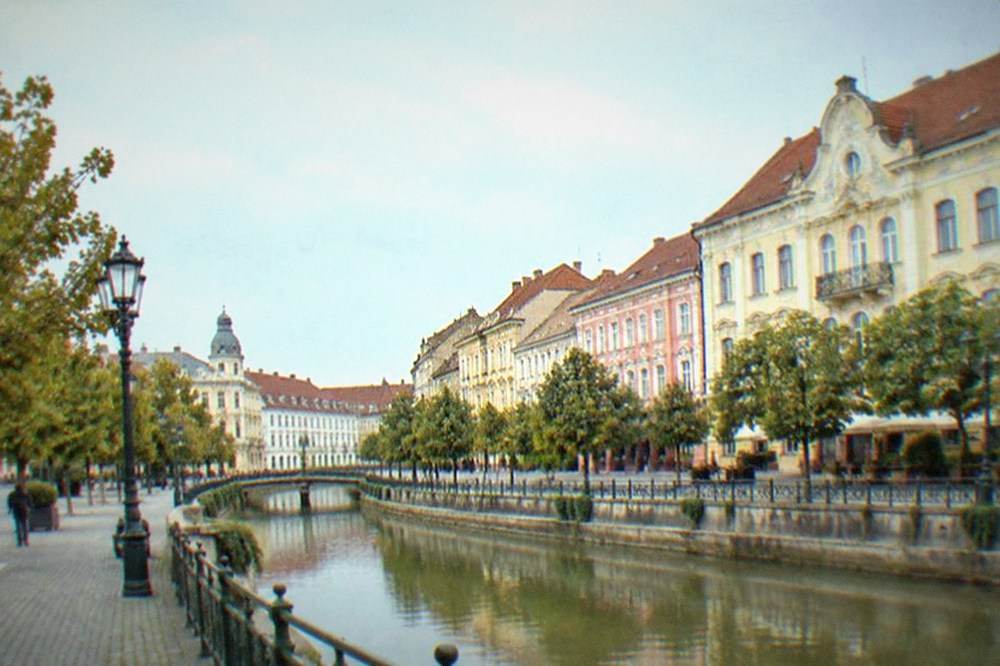
Union Square is the postcard heart: pastel baroque facades, the Serbian Orthodox Cathedral, St George's Roman Catholic Cathedral and the Art Museum in the Baroque Palace all face onto it. A few minutes north, Liberty Square is smaller and quieter, and Victory Square, flanked by the Opera and the Metropolitan Cathedral, is where the 1989 Revolution unfolded and where the Christmas market sets up each winter. The Orthodox Metropolitan Cathedral, with its green-and-gold tiled spires, closes the view.
The museum layer runs deeper than it first appears. The National Museum of Art keeps summer hours of 13:00 to 21:00, Wednesday to Sunday, from June through September, and winter hours of 10:00 to 18:00 for the rest of the year, closed Mondays and Tuesdays. The Memorial of the Revolution charges 20 lei for adults, covering eight permanent and three temporary exhibitions plus a documentary screening. The Banat Village Museum, an open-air collection of regional houses and churches, opens Wednesday to Saturday 10:00 to 18:00 and Sunday 12:00 to 20:00. Huniade Castle, the city's oldest surviving monument, has been closed for years and is only now under a restoration contracted in August 2025, with partial reopening targeted for 2027.
| Timisoara sight | Type | Verified practical detail |
|---|---|---|
| Union Square (Piata Unirii) | Baroque square | Art Museum, two cathedrals on the square |
| Victory Square (Piata Victoriei) | Historic square | 1989 Revolution site, Opera, Metropolitan Cathedral |
| National Museum of Art | Museum | Summer Wed-Sun 13:00-21:00, winter Wed-Sun 10:00-18:00 |
| Memorial of the Revolution | Museum | Adults 20 lei, Mon-Fri 08:00-17:00, Sat-Sun 10:00-18:00 |
| Banat Village Museum | Open-air museum | Wed-Sat 10:00-18:00, Sun 12:00-20:00, closed Mon-Tue |
| Bega canal | Waterfront | Vaporetto water bus runs 1 April to end of October, 5 lei per ride |
| Theresia Bastion | Restored bastion | Houses shops, cafes and exhibition spaces |
Sibiu's sight list is comparable in length but compressed: the Big Square and Small Square, the Council Tower, the Bridge of Lies, the medieval walls with their towers, and the Brukenthal art collection. The honest contrast is that Sibiu's sights photograph better in a shorter visit, while Timisoara's spread wider and pair better with cafe stops, park time and riverside walking. For a fuller rundown of the western city, the things to do in Timisoara page covers the ground in detail, and the museums guide goes deeper on the cultural stops.
A guided walk is the most efficient way to absorb Timisoara's story, and the roster here includes several strong options. The weekly guided tour in English runs on a set schedule of Tuesdays, Thursdays and Saturdays, which suits travelers who like a fixed timetable and a group atmosphere. It is the dependable pick if you want history delivered properly without planning anything yourself.
If your time in the city is tighter, a shorter option keeps the focus on the squares and the stories between them. The downtown dream tour compresses the center into a lighter loop, which suits travelers with only a single afternoon or a long layover before a flight out of Traian Vuia. Between the two, the weekly tour is the deeper history session and the downtown tour the quick orientation.
How Do The Two Cities Compare On Food, Drink And Prices?
Timisoara is one of Romania's better eating cities, with a genuine cafe culture, a growing craft beer scene and restaurants spanning Banat classics to modern European cooking, and its prices are moderate: a cappuccino runs about 13 to 15 lei, a half-liter of domestic draught beer about 11 to 12 lei, and an inexpensive restaurant meal about 45 to 50 lei, per September 2026 cost-of-living data. Sibiu's food scene is solid but more conventionally tourist-oriented in the old town.
The price figures above are Timisoara's, drawn from cost-of-living aggregators updated in September 2026, and they should be read as planning ranges rather than promises: check the menu before you sit down. What the numbers say is that the city is affordable by western European standards without being bargain-baseline. A single public transport ticket costs 5 lei, a day pass 18 lei, and both are valid on trams, trolleybuses, buses and even the Bega vaporetto in season, which is an unusually generous bundle.
| Everyday item in Timisoara | Typical price (RON) | Notes |
|---|---|---|
| Cappuccino | 13-15 | Regular coffee shop range, Sep 2026 data |
| Draught beer, 0.5 L domestic | 11-12 | Neighborhood pub range |
| Inexpensive restaurant meal | 45-50 | Main course, no drinks |
| Public transport, single 60-min ticket | 5 | All modes including vaporetto |
| Public transport, day pass | 18 | All modes including vaporetto |
| 30-day general pass | 160 | For longer stays |
| Tourist tax | 2% of room rate (reported) | Collected by the lodging, per local council decision |
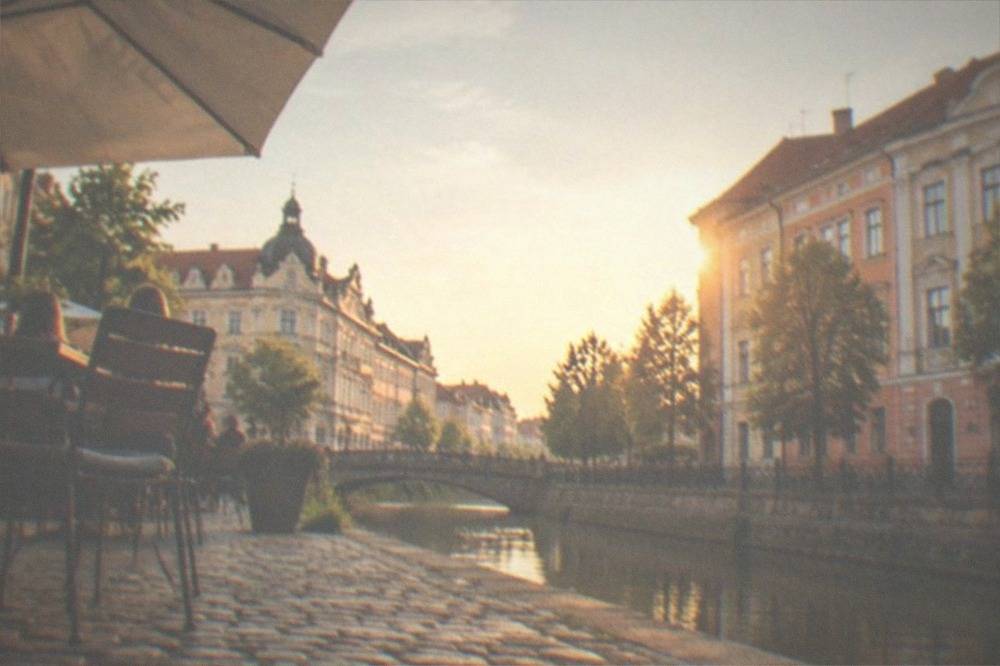
On character, Timisoara's food identity leans on its multicultural past: Banat cuisine carries Hungarian, German and Serbian fingerprints, and the city's cafe terraces around Union Square and along the Bega do a fair impression of the Habsburg leisure the "Little Vienna" nickname gestures at. The restaurants guide and the food guide cover where to eat, and the cost and prices guide gives the fuller budget picture. Sibiu, by contrast, is at its food best in its old-town courtyards, pleasant but priced for tourists in the prime squares.
When Is The Best Time To Visit Each City?
The best months for Timisoara are May, June and September, when the JMA climate normals for the city's weather station show means of 17.3, 20.9 and 17.2 degrees Celsius with moderate rainfall, and the same window suits Sibiu, though Sibiu's mountain-adjacent position runs a few degrees cooler in every season. December is a special case: both cities stage major Christmas markets, and Timisoara's fills Victory Square. Winter visitors should expect a January mean of 0.0 degrees in Timisoara.
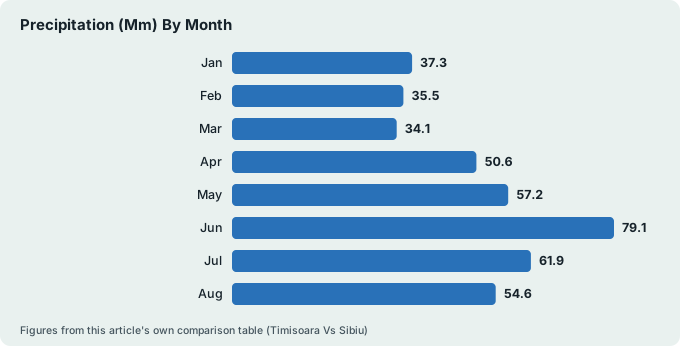
The climate table below is Timisoara's own, from the verified JMA normals for station TIMISOARA 15247. Only mean temperature and precipitation are published for that station, so no daily-high figures appear here. The pattern is continental: a warm summer peak in July at 22.8 degrees mean, a cold but not brutal winter, and June as the wettest month at 79.1 mm with March the driest at 34.1 mm.
| Month | Mean temp (C) | Precipitation (mm) |
|---|---|---|
| Jan | 0.0 | 37.3 |
| Feb | 2.1 | 35.5 |
| Mar | 6.5 | 34.1 |
| Apr | 12.3 | 50.6 |
| May | 17.3 | 57.2 |
| Jun | 20.9 | 79.1 |
| Jul | 22.8 | 61.9 |
| Aug | 22.5 | 54.6 |
| Sep | 17.2 | 50.4 |
| Oct | 11.5 | 50.0 |
| Nov | 6.4 | 45.3 |
| Dec | 1.5 | 44.7 |
Crowd timing is where Timisoara's data helps. The city's arrivals peaked in its 2023 European Capital of Culture year at 283,256 and have stayed high since, 285,190 in 2024 and 296,199 in 2025, with May 2025 the single busiest month on record at 30,664 arrivals. Practically, that means late spring weekends are the busiest, and September offers the best balance of warmth and calm. The best time to visit guide and the weather by month guide expand on this. For a December trip, the Christmas market guide covers the Victory Square market, whose 2026 dates had not been officially confirmed.
How Do You Get To Timisoara And Between The Two Cities?
Timisoara is the easier city to fly into: Traian Vuia International Airport handled 1,458,098 passengers in 2025, is served by Wizz Air, Ryanair, Lufthansa, TAROM, Turkish Airlines and AnimaWings, and connects to the center by the E4 express bus on the city's 5 lei integrated ticket. Direct trains link Timisoara to Budapest twice daily, while Bucharest is roughly 11 to 12 hours away by direct train. No verified public-transport figure exists for the Timisoara to Sibiu route, so that road is best done by guided day trip.
The Budapest rail link is worth a sentence of its own: the direct trains cover the route in about five and a half hours, which puts a second country within comfortable day-trip range and is something Sibiu cannot match. The airport detail matters for the comparison too, because Timisoara's air links are a genuine strength: Wizz Air added Berlin, Birmingham and Prague routes for summer 2026, and Turkish Airlines started an Istanbul route in April 2026. The airport guide and the airport to city center guide cover arrival logistics, and one dated caveat belongs here: the runway is fully closed for repairs from 2 to 22 November 2026, so anyone flying in that window should confirm their flight.
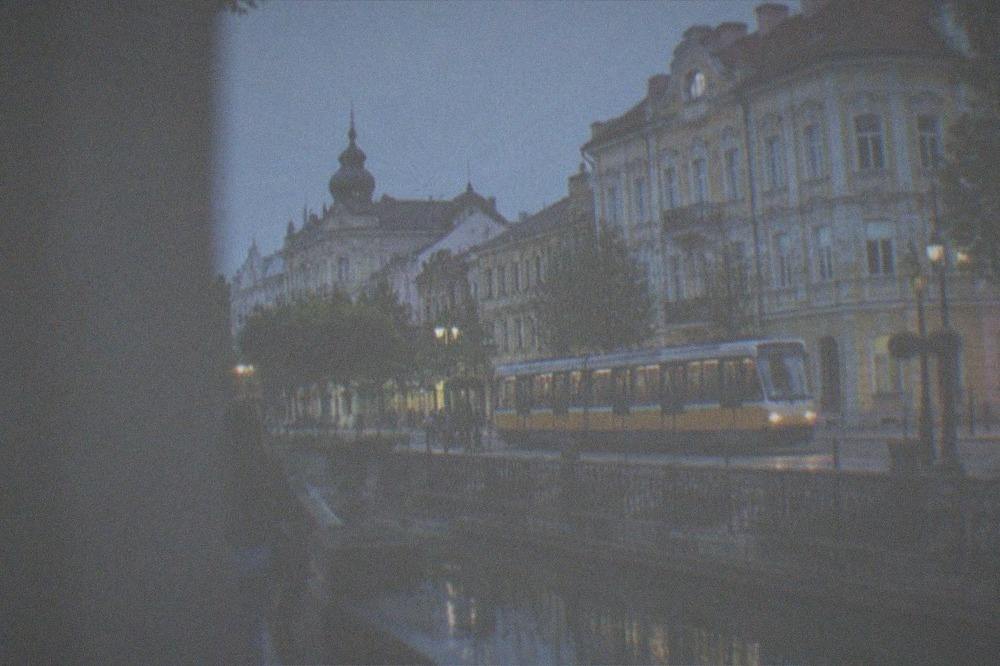
Getting around Timisoara itself is simple. The STPT network runs nine tram lines, six trolleybus lines, express buses and the seasonal Bega vaporetto, all on one 5 lei ticket with contactless payment accepted on board. The getting around guide has the full picture. Overland connections are decent westward: trains to Budapest run direct twice daily, and the Bucharest route is an overnight-scale journey. Eastward toward Sibiu, no distance or driving time is confirmed, so the honest advice is to let a tour operator handle the road or to check current rail options, since Romanian regional rail is slow and schedules change.
Can You Visit Sibiu As A Day Trip From Timisoara?
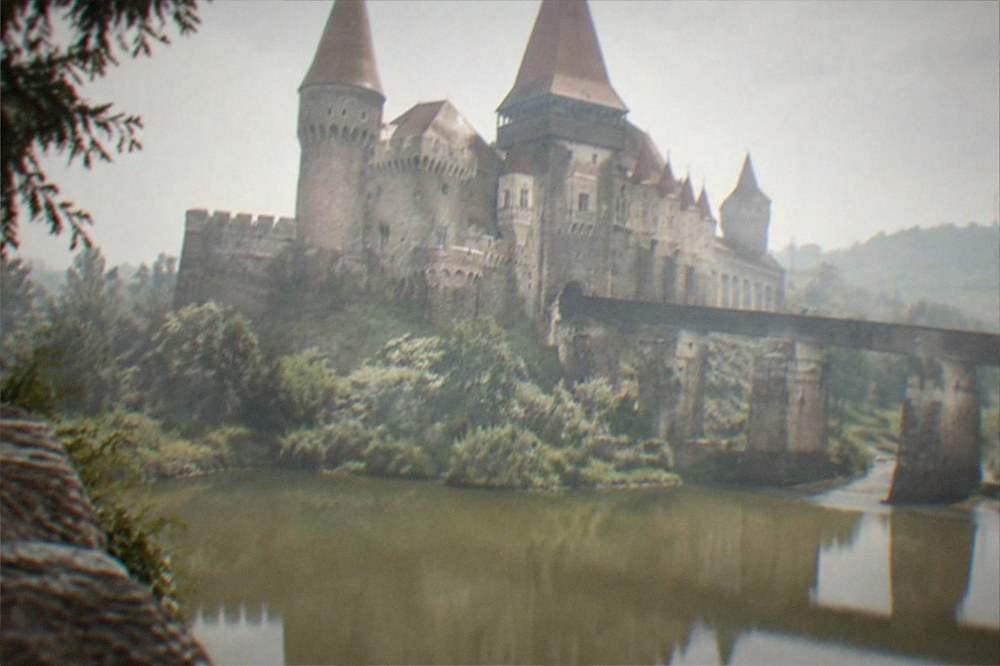
Yes, and it is one of the most popular day trips on this city's tour roster: a guided option pairs Corvin Castle in Hunedoara with Sibiu's old town in a single long day, handling all the driving, and it is the realistic way to see both highlights without changing hotels. Independent travel is possible but slower, and no verified public-transport timing exists for the route, so a guided trip is the low-friction choice.
The geography discipline matters here: Corvin Castle and Sibiu both sit in Transylvania, a separate historical region east of Timisoara's Banat, so this is a genuine cross-region excursion rather than a suburban hop. That is exactly why the pairing works: the road out of the Banat crosses into Transylvania, and a tour that stacks Corvin Castle's Gothic towers with Sibiu's Council Tower view delivers two of Romania's signature sights in one day. The tour's own listing carries the current price, rating and duration, so check the live listing for those figures.
For travelers weighing a full Sibiu stay against a day trip, the honest trade-off is depth versus base convenience. A day trip samples Sibiu's squares and the castle; an overnight stay adds Transylvania's evening pace and its surrounding fortified churches. Since Timisoara's own hotel and food costs are moderate and its airport links are strong, many travelers base in Timisoara and treat Sibiu as the excursion, then return to a familiar city for dinner. The where to stay guide helps with the base decision.
If the one-day pairing appeals, availability is worth checking early, since this is among the most-booked excursions from the city and the day is a long one. Travelers who would rather stay on foot in Timisoara itself have options too: the weekly English-language walking tour and the shorter downtown dream tour both cover the center well, and the trio below gathers the full range, from the castle-and-Sibiu excursion to the two city walks, so you can compare formats and prices side by side before committing to a day of Transylvania.
Common Questions About Timisoara Vs Sibiu
Is Timisoara or Sibiu better for a first trip to Romania?
For a first trip focused on medieval Transylvania, Sibiu is the more concentrated introduction. For a first trip that mixes history, cafe culture and easy low-cost flights, Timisoara is the better entry point, and its 2023 European Capital of Culture legacy means the cultural calendar stays full.
Can you visit Sibiu from Timisoara in one day?
Yes. A guided day trip combines Corvin Castle and Sibiu in a single day and covers all the driving. Independent day travel is possible but slower, and no verified public-transport timing exists for the route, so check current schedules or let a tour handle the road.
Which city is cheaper, Timisoara or Sibiu?
Timisoara gives the reference point: a cappuccino about 13 to 15 lei, an inexpensive meal about 45 to 50 lei, and a 5 lei public transport ticket valid on all modes. No verified price figures exist for Sibiu, so treat both cities as broadly similar Romanian price levels and budget from Timisoara's numbers.
Which city has better weather?
Both have continental climates. Timisoara's verified JMA normals show a July mean of 22.8 degrees and a January mean of 0.0 degrees, with June the wettest month. Sibiu, closer to the mountains, generally runs cooler, but no verified station data for Sibiu appears on this site.
Do they speak English in Timisoara?
English is widely spoken in Timisoara's tourism sector, restaurants and among younger residents, and the city's tourist information center reported that roughly 70 percent of the visitors it served in 2025 were international.
Is Timisoara or Sibiu better at Christmas?
Both are strong Christmas cities. Timisoara's market fills Victory Square each winter, though its 2026 dates had not been officially confirmed. Sibiu's market is one of Romania's most famous. The safest plan is to check current dates for both before booking.
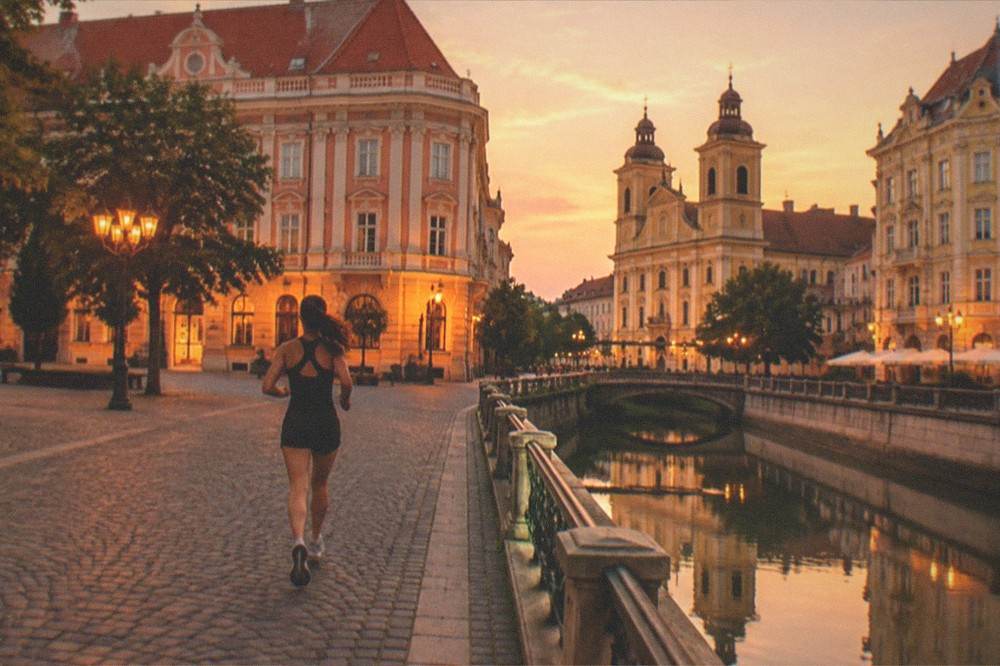
The short version: base yourself in Timisoara if you value an easy arrival, a relaxed western pace and layered history you can walk through at cafe speed, and give Sibiu at least a day, ideally via the Corvin Castle pairing, to see what Transylvania's most polished old town is about. More comparison ground, including how Timisoara stacks up against Cluj, Oradea, Brasov and Novi Sad, sits elsewhere on Timisoara Travel Guide, alongside the practical guides linked through this page.