Bigar Waterfall
Bigar Waterfall, in the Anina Mountains of Caraș-Severin county, is one of the strangest and most photographed waterfalls in Romania, and it sits close enough to Timisoara to fill a memorable day trip into the Banat uplands.
Short answer
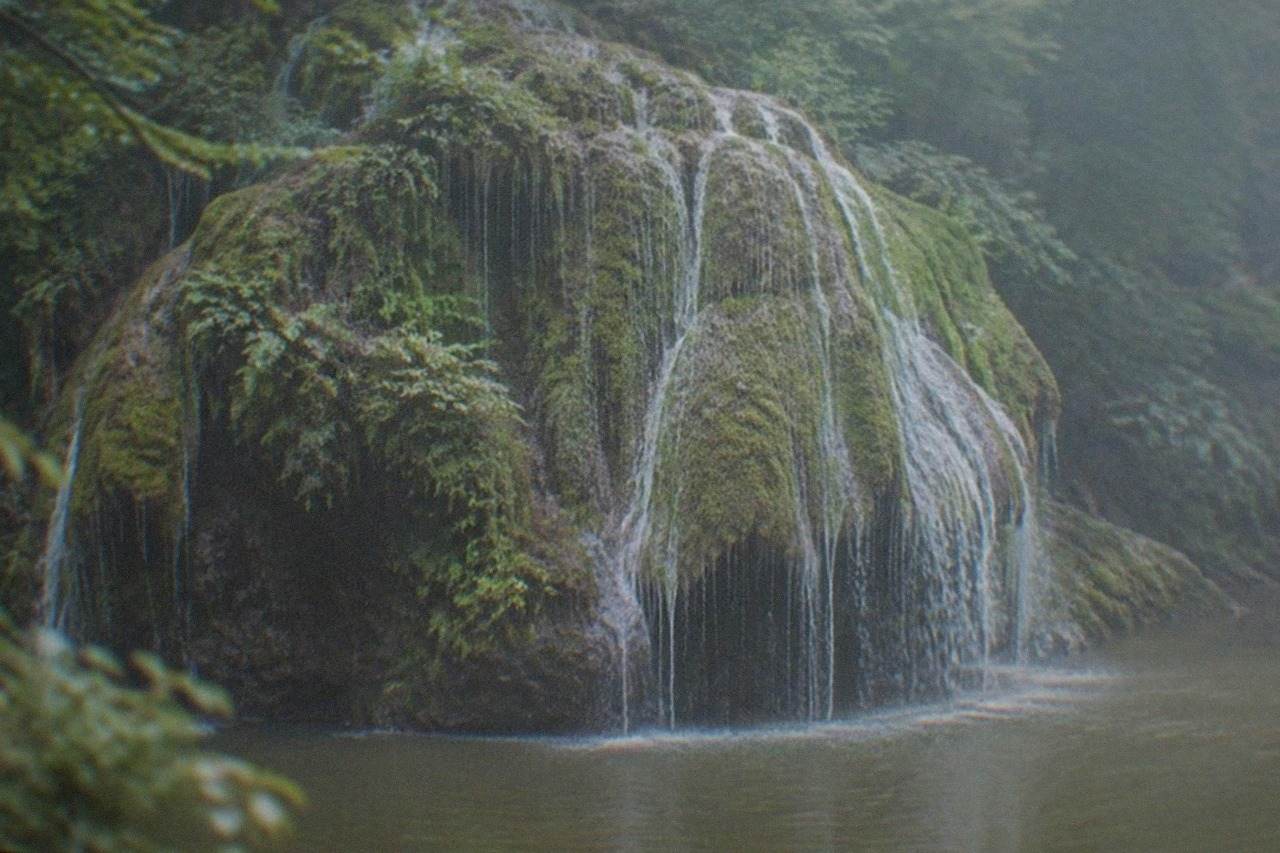
Bigar Waterfall lies in Cheile Nerei-Beusnita National Park near Bozovici, in Caraș-Severin county south of Timisoara, where the Minis river spreads over a moss covered rock dome and falls on all sides. It is a half-day to full-day trip from Timisoara by car or guided tour, best from late spring to early autumn.
Bigar Waterfall is the single most photographed natural sight in the Banat, and it makes an excellent day trip from Timisoara, the main city of Timis County in western Romania. The waterfall does not look like a normal waterfall at all: the Minis river hits a moss covered rock dome and spreads outward in a thin, even curtain, falling on every side at once into a green pool below. The waterfall sits in Caraș-Severin county, and in the last decade it has become one of Romania's signature images, printed on calendars, tourism posters and half the travel feeds in the country. This guide covers where it is, how to get there from Timisoara, what the trip costs, when to go, and how to fold it into a bigger Banat itinerary.
Where Is Bigar Waterfall And Why Is It Special?
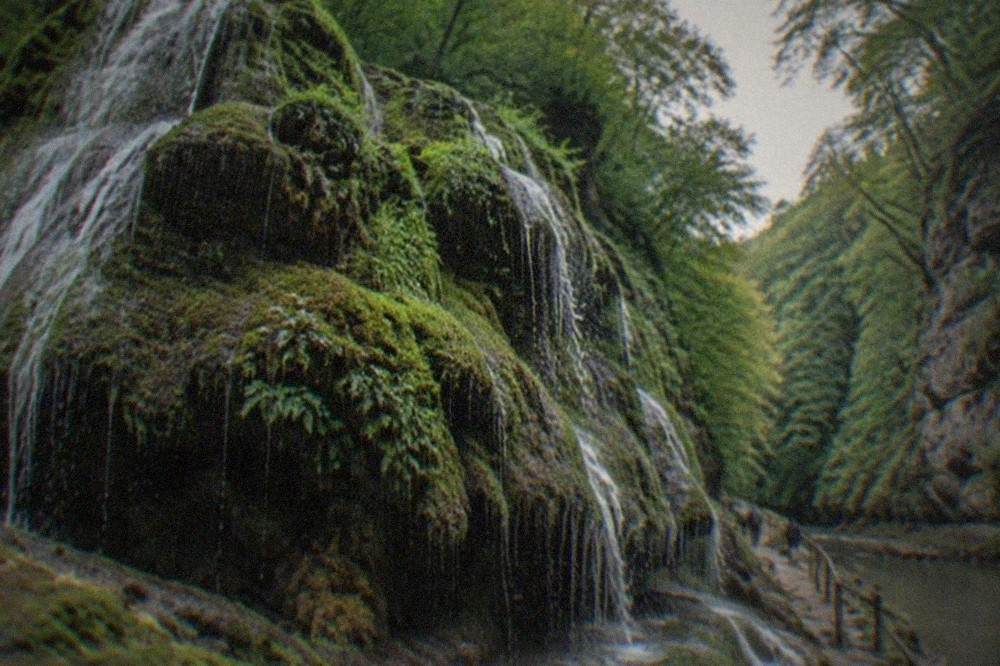
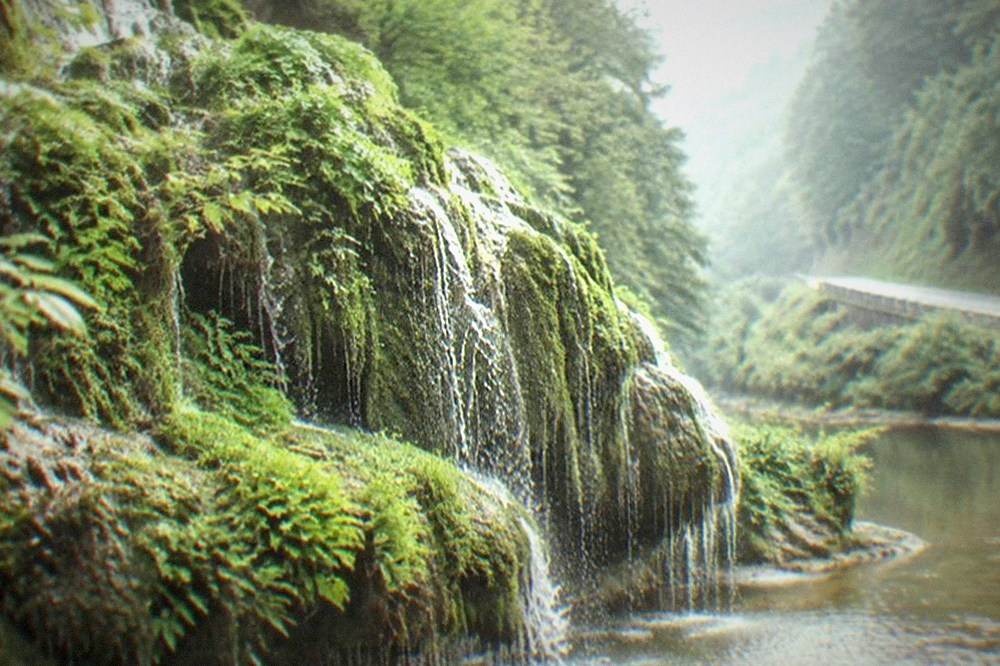
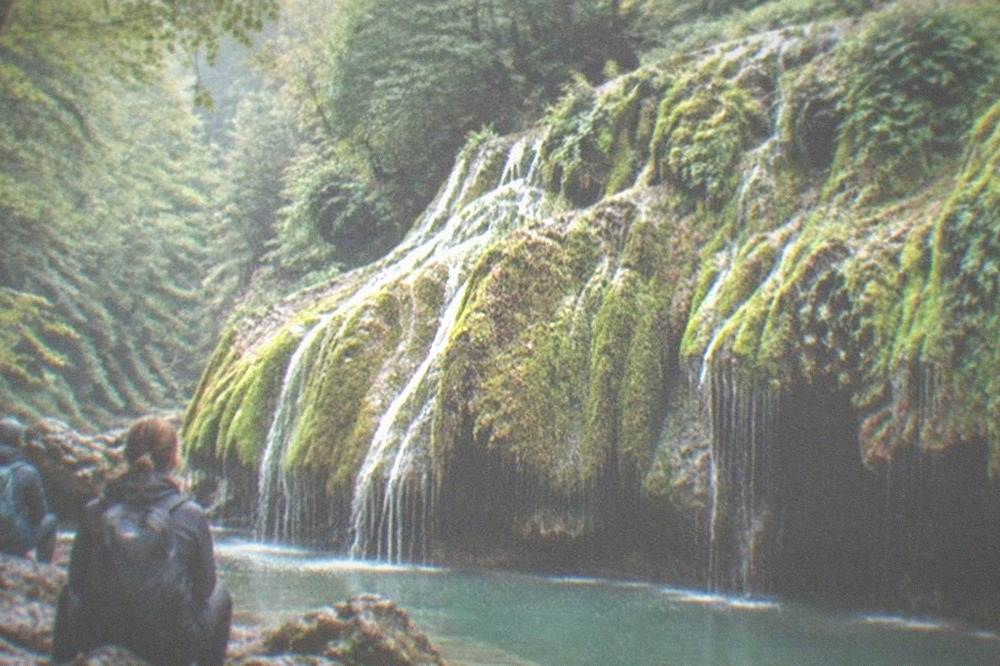
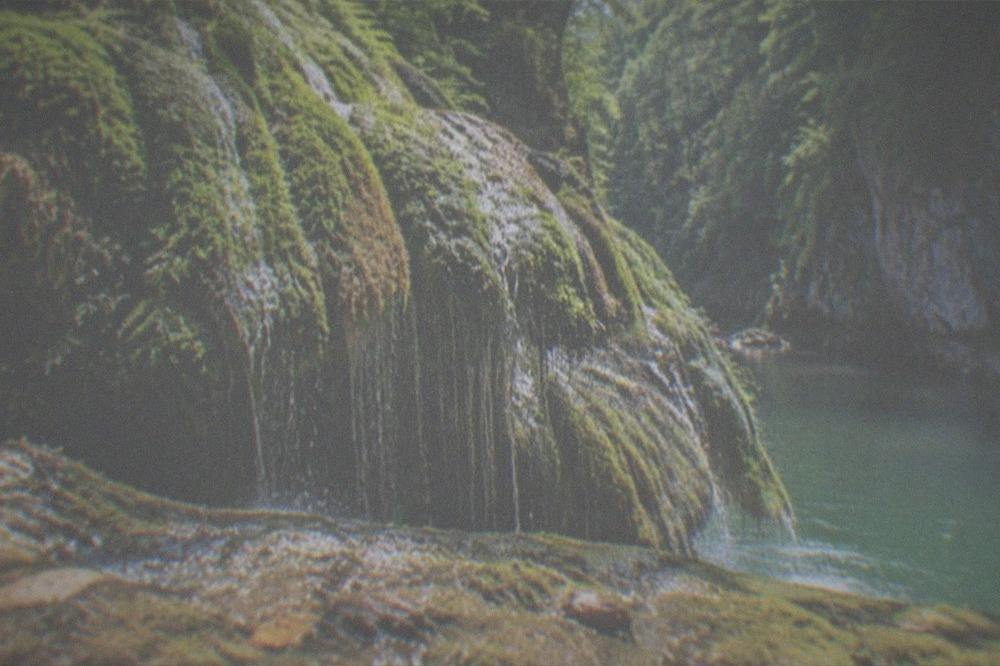
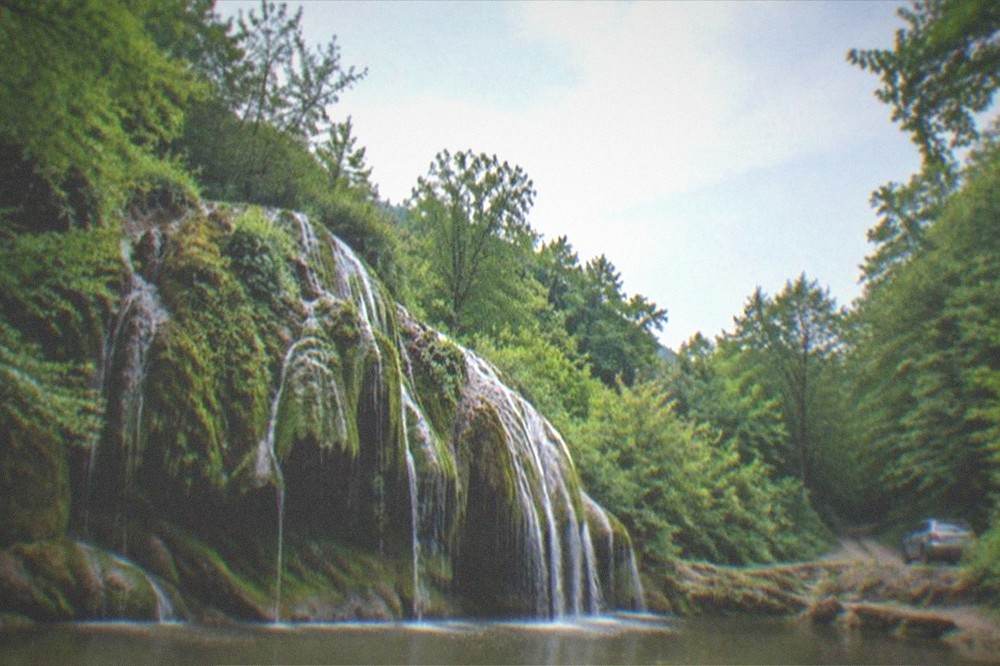
Bigar Waterfall sits in Cheile Nerei-Beusnita National Park in Caraș-Severin county, in the Anina Mountains of the southern Banat, roughly two hours by road south of Timisoara, and it is special because the water does not pour over a cliff edge but spreads over a moss covered limestone dome and falls in a full circle around it. The Minis river, which rises in these same mountains, is the source. The rock is a travertine formation, and the constant mineral rich water is what keeps the moss coat alive and impossibly green through the warmer months. The effect is a water curtain perhaps a dozen meters across, dropping only a short distance but doing so on every side simultaneously, which is the shape photographers travel for.
The geology explains the look. Travertine, sometimes called tufa, builds up where mineral laden water deposits calcium carbonate over centuries, and the dome at Bigar is a live example of that process still in motion. The moss layer is not decoration; it is part of the formation, and it grows only because the water keeps flowing across it year round. In deep winter the curtain can freeze into a shell of ice, and in dry late summers the flow thins to a lace of threads over the green rock. Both states have their fans, but the classic image, the full green curtain, belongs to late spring and early summer.
The park around it matters as much as the waterfall itself. Cheile Nerei-Beusnita National Park is one of the largest protected areas in the Banat, a landscape of forested gorges, karst springs and turquoise pools carved by the Nera and Minis rivers. The waterfall is not a lone roadside curiosity; it sits inside a stretch of forested valley with walking trails, smaller cascades and swimming holes nearby, which is why it works better as a half day of walking rather than a five minute photo stop. For more on the wider park, see the companion guide to Nera Gorge and Beusnita.
How Do You Get From Timisoara To Bigar Waterfall?
The practical route from Timisoara to Bigar Waterfall runs south through the Banat on a mix of motorway, national road and forest road, with the drive the only realistic option for a day trip because there is no direct public transport to the waterfall itself, and most independent travelers rent a car or join a guided tour from Timisoara. The first stretch of the drive uses the A1 motorway heading out of the city, and the A1 sections from Timisoara toward Arad and the Hungarian border are fully open, while the southern route toward Lugoj and Resita continues on national roads. From the Bozovici area, a local road follows the Minis valley into the park, and the final section is a narrow forest road where care is needed, especially in wet weather.
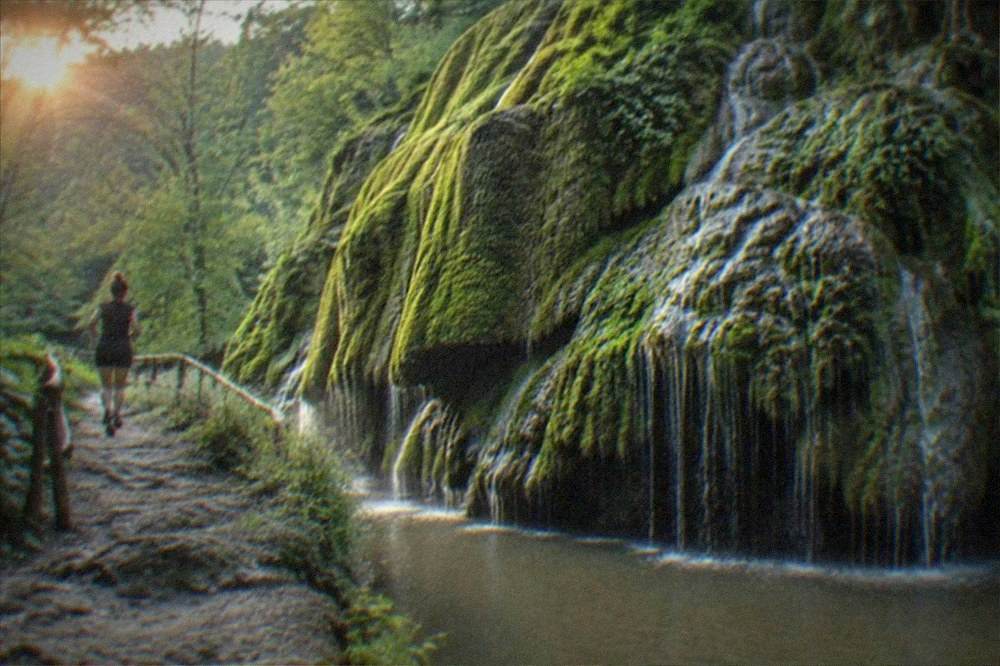
Parking at the site is informal and has changed layout over the years as visitor numbers grew; expect a short walk from wherever the cars stop down to the viewing area by the river. The trail to the waterfall is short and gentle, a few minutes of walking on a forest path, which makes the site one of the few headline Banat sights that almost anyone can reach, including families with children. Sturdy shoes still help, because the path can be muddy and the rocks around the pool are slick.
Guided tours solve the driving problem entirely, and several operators based in Timisoara run trips into the Banat mountains that include Bigar among their stops. The Danube Gorge and Banat Waterfalls tour is the natural fit for this waterfall, since it bundles the Banat's waterfalls and gorges into a single long day.
If you prefer a private format, there is also a dedicated Nera Gorge National Park private day tour from Timisoara, which covers the same protected area with more flexibility on timing and pace.
For a sense of the wider driving geography of the region, the guide to Lugoj, one of the towns on the southern route out of Timisoara, is worth a read before you plan the route.
What Does A Bigar Waterfall Day Trip Cost?
A self-drive day trip to Bigar Waterfall from Timisoara costs very little at the site itself, since the main expenses are car rental and fuel, while food and coffee in the Banat villages run at small-town Romanian prices, roughly 45 to 50 RON for an inexpensive restaurant meal and 13 to 15 RON for a cappuccino, according to cost of living trackers updated in September 2026. The waterfall area does not have a formal museum style entrance, and the money you spend goes to parking, food and getting there rather than a gate fee. Guided tours cost more, but they bundle transport, guiding and often other park stops into one price shown on the operator's live listing.
The table below shows what the everyday items around the trip actually cost in Timisoara and the region, in Romanian lei, based on September 2026 data from cost of living aggregators:
| Item | Typical price (RON) | Notes |
|---|---|---|
| Cappuccino in town | 13 to 15 | Expatistan, Numbeo, Hikersbay, Sep 2026 |
| Draught beer, 0.5 L | 11 to 12 | Neighborhood pub pricing |
| Inexpensive restaurant meal | 45 to 50 | Lunch menu or cheap restaurant |
| Public transport single ticket, Timisoara | 5 | 60 minutes, all modes, STPT |
| Public transport day pass, Timisoara | 18 | Includes the Bega vaporetto in season |
| BNR euro reference rate | 5.2788 | Lei per euro, 23 September 2026 |
One cost that does apply to every visitor staying overnight in Timisoara is the tourist promotion tax. The tax exists under local council decision HCL 719/2025 for 2026, and it is widely reported as 2 percent of the accommodation tariff excluding VAT, collected by the lodging, though that rate figure comes from secondary sources rather than a primary tariff table, so treat it as reported rather than official. It is a small line on a hotel bill, not a planning factor.
If you would rather not drive mountain roads at all, a guided day trip is the alternative, and the Transylvania day tour below is one of the options departing from Timisoara that travelers compare against the Banat mountain trips.
The comparison is worth a moment of thought before you commit either way. A guided day trip bundles the driving, the guiding and the scheduling into a single price, which removes the forest road question entirely, while self-driving keeps your day flexible and lets you linger at the waterfall for as long as the light lasts. Whichever way you lean, the box below shows the current availability for the most popular guided option out of Timisoara.
When Is The Best Time Of Year To Visit Bigar Waterfall?
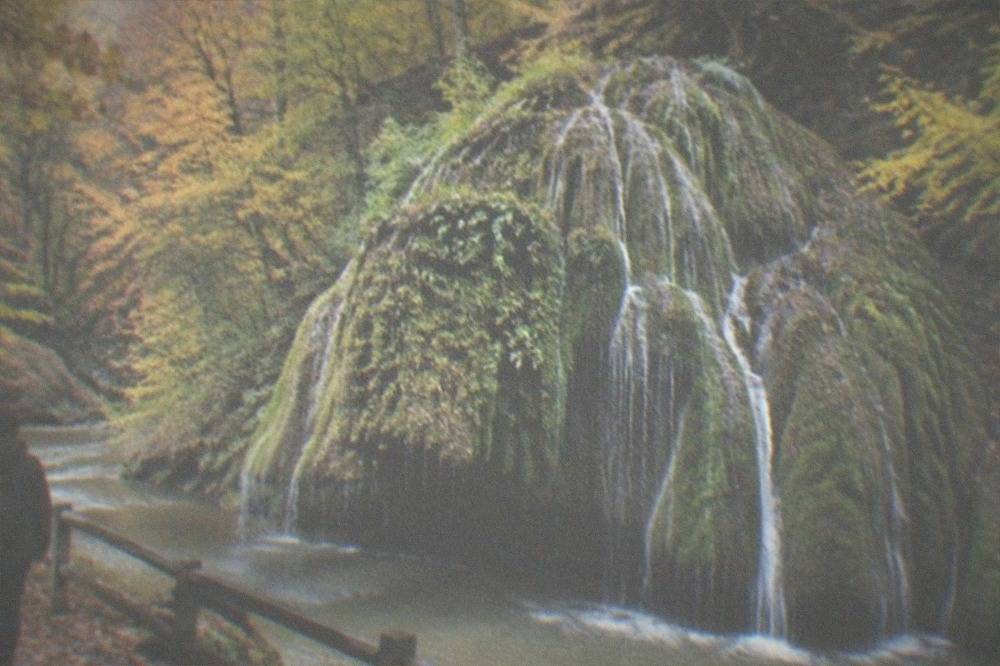
The best time to visit Bigar Waterfall is late spring through early autumn, with May and June the strongest months, because the water flow is high, the moss dome is at its greenest, and the JMA climate normals for the Timisoara station show mean temperatures of 17.3 C in May and 20.9 C in June, comfortable for the short forest walk; July and August are the warmest at 22.8 C and 22.5 C mean. The waterfall changes character with the seasons, so the "best" month depends on what you want to photograph. Spring gives the fullest curtain, summer gives the greenest moss and the easiest walking, autumn gives color in the beech forest, and winter can freeze the whole formation into an ice sculpture, though access roads in the mountains become a serious consideration then.
The climate of the Banat is continental, and the nearest long term station with published normals is Timisoara itself, station 15247 at 86 m altitude. The mountain valleys around the waterfall run cooler than the city lowland figures, so the table below is a floor, not a ceiling, for what to expect up in the Anina Mountains.
| Month | Mean temperature (C) | Precipitation (mm) | Verdict for a waterfall trip |
|---|---|---|---|
| March | 6.5 | 34.1 | Driest month of the normals, thin curtain |
| April | 12.3 | 50.6 | Flow good, forest waking up |
| May | 17.3 | 57.2 | Peak conditions, best overall month |
| June | 20.9 | 79.1 | Wettest month, fullest curtain, watch storms |
| July | 22.8 | 61.9 | Warmest month, greenest moss |
| August | 22.5 | 54.6 | Green but thinner flow in dry spells |
| September | 17.2 | 50.4 | Comfortable, early autumn color |
| October | 11.5 | 50.0 | Autumn color, quiet trails |
| November | 6.4 | 45.3 | Cold, short days, off season |
| December | 1.5 | 44.7 | Possible ice formation, road risk |
June deserves a special note: it is the wettest month in the normals at 79.1 mm, which means the waterfall is at its most dramatic but the trails and the final forest road are at their muddiest. March, at 34.1 mm the driest month of the year, is when the curtain can look threadbare. Annual precipitation at the station totals 600.7 mm, spread fairly evenly outside that June peak.
What Should You Pack And Know Before You Go?
Pack for a short forest walk with a long drive on either side: sturdy shoes with grip, a layer for mountain valleys that run cooler than Timisoara, water, cash in lei for village shops and parking, and a camera you can use in spray, because the pool below the dome keeps the immediate area damp and the rocks around it slick year round. The walk itself is short, but the ground is natural forest path, not pavement, and the viewing spots sit close to moving water. In the warmer months the wider park has swimming holes and longer gorge trails, so swimwear and a towel earn their place if you plan to extend beyond the waterfall itself.
A few practical points make the day smoother:
| Topic | What to know |
|---|---|
| Currency | Romanian leu (RON); the euro is not adopted, cards work in towns but carry lei for rural stops |
| Phone coverage | Patchy in the deeper valleys of the national park |
| Food | Village shops near the park are small; pack lunch or plan a stop in a town on the route |
| Timing | Arrive early in high season; the site is compact and crowds concentrate at midday |
| Schengen status | Romania is a full Schengen member, air and sea since March 2024, land since January 2025 |
| Emergency number | 112, the single European emergency number |
The Schengen point matters if your Banat itinerary crosses into Serbia, which is an external Schengen border with passport checks, while the Hungarian border to the west is now internal with no routine checks. The EU's Entry/Exit System, fully operational at all Schengen external borders since 10 April 2026, records biometric data for non-EU short stay travelers, so non-EU visitors crossing into Serbia and back should carry their passport and expect the process at the border. The rest of the planning pages sit on Timisoara Travel Guide.
Can You Combine Bigar Waterfall With Other Banat Sights?
Yes, and you should: Bigar sits inside Cheile Nerei-Beusnita National Park, so the natural combination is the Nera gorge, the Beusnita lakes and the karst springs of the same park, while longer routes add the Danube Gorges at Cazanele, the Decebalus rock sculpture on the Danube, or the Baile Herculane spa town, turning one waterfall into a full Banat loop of one or two days. The waterfall is close to the park's other headline sights, and the drive between them runs through some of the emptiest, greenest road in the country. A single day can comfortably hold Bigar plus one gorge stop; two days can hold the whole southern Banat.
The classic pairings, in the order most drivers route them from Timisoara:
| Combination | Character | Best for |
|---|---|---|
| Bigar plus Nera Gorge and Beusnita | Same national park, turquoise pools and gorge trails | First timers, one full day |
| Bigar plus Danube Gorges at Cazanele | Big river scenery, dramatic cliffs | Photographers, long day |
| Bigar plus Decebalus rock sculpture | The Danube's rock face landmark | Two-day southern loop |
| Bigar plus Baile Herculane | Historic spa town in the Cerna valley | Ending the day in thermal water |
| Bigar plus Banat villages | Traditional houses and quiet rural roads | Slow travel, two days |
The dedicated guides to the Danube Gorges, the Decebalus rock sculpture, Baile Herculane and the Banat villages cover each of those in detail. If a two day southern loop appeals but you would rather have someone else handle the roads, the guided options below are the ones departing from Timisoara that fit this part of the country.
What Can You Do In Timisoara Before Or After The Trip?
Treat the day around the waterfall as a Timisoara city break: start the morning with coffee in Piata Unirii, the baroque heart of the Cetate old town, plan the drive out through the city's squares, and on the return evening use the Bega canal promenade, the riverside bars and the restaurants of the old town, with 296,199 tourist arrivals recorded in 2025, up 3.86 percent on 2024. Timisoara has been building its city break reputation since its 2023 European Capital of Culture year, and the arrival numbers show the trend holding: 283,256 arrivals in the Capital of Culture year, 285,190 in 2024, and continued growth in 2025 while national tourism declined. The average stay, at roughly 1.83 nights, is short, so a waterfall day trip slots neatly into a two or three night visit.
| Year | Tourist arrivals in Timisoara | Context |
|---|---|---|
| 2021 | 153,794 | Pandemic era low |
| 2022 | 212,785 | Recovery year |
| 2023 | 283,256 | European Capital of Culture year |
| 2024 | 285,190 | Post-Capital consolidation |
| 2025 | 296,199 | Growth of 3.86 percent over 2024 |
The city rewards the time. The Metropolitan Orthodox Cathedral and St George's Roman Catholic cathedral anchor two of the great squares, the Revolution Memorial explains the 1989 events that began here, and Theresia Bastion wraps the old town in restored Habsburg walls. The full rundown lives on the things to do in Timisoara page, and Union Square is the natural place to start any evening. For a relaxed recovery morning after the mountain drive, Recas winery country sits just outside the city and makes a gentler second day trip.
Is A Guided Tour Or A Rental Car The Better Choice For Bigar Waterfall?
A rental car wins on flexibility and price for confident drivers, because the route is straightforward until the final forest road and you set your own schedule at the waterfall, while a guided tour wins on everything else, including mountain road experience, park knowledge, and the ability to chain Bigar with gorges and viewpoints you would never find alone, which is why most first time visitors to the Banat book a tour and most repeat visitors drive themselves. The decision comes down to the forest road at the end. It is narrow, it is unsealed in stretches, and in rain it rewards experience. If any of that gives you pause, the guided options cost more but remove it entirely.
The related tour below departs from Timisoara and is the one to compare against self-driving for a big single day out of the city. Availability and the current price are on the operator's live listing.
For the car route itself, the companion guides to Timisoara car rental and getting around Timisoara cover the practicalities of picking up a vehicle and getting out of the city toward the southern Banat.
Common Questions About Bigar Waterfall Day Trips
How far is Bigar Waterfall from Timisoara?
Bigar Waterfall lies in Caraș-Severin county, south of Timisoara in the Anina Mountains, and the drive is the standard way to reach it as a day trip. The route leaves the city on main roads toward the southern Banat and ends on a local forest road in Cheile Nerei-Beusnita National Park near Bozovici.
Can you visit Bigar Waterfall without a car?
Not easily as an independent traveler, because there is no direct public transport to the waterfall itself. The realistic options without a car are a guided day tour from Timisoara that includes the waterfall among its stops, or reaching the Bozovici area by bus or train and arranging local transport from there, which is far less reliable.
Is there an entrance fee at Bigar Waterfall?
The site has no formal museum style ticket gate. Costs at the site are limited to informal parking and whatever you spend on food and drink. Your main expenses are transport, fuel or a guided tour, plus the Timisoara tourist promotion tax on your hotel bill, reported as 2 percent of the accommodation tariff excluding VAT under local council decision HCL 719/2025.
What is the best month to see Bigar Waterfall green?
May and June. The JMA climate normals for the Timisoara station show May at a mean of 17.3 C and June at 20.9 C, with June the wettest month at 79.1 mm of rain, which keeps the moss dome at its greenest and the curtain at its fullest. July and August keep the green but can thin the flow in dry spells.
Can you swim near Bigar Waterfall?
The waterfall pool itself is small and protected, but Cheile Nerei-Beusnita National Park has well known swimming holes and turquoise pools along the Nera and its tributaries, a short drive from the waterfall. Bring water shoes, because the banks are rocky and the water is cold even in summer.
Is Bigar Waterfall worth the drive from Timisoara?
For most visitors, yes. The waterfall is one of the most unusual natural sights in Romania, the drive crosses some of the country's emptiest forested hills, and the surrounding park adds gorges, pools and trails that justify the full day. Visitors who combine it with a second Banat stop, such as the Nera gorge or the Danube Gorges, consistently rate the day among the highlights of a western Romania trip.