Buzias
Buzias is a small spa town in Timis County, in the Banat region of western Romania, a short hop from Timisoara and one of the quietest day trips you can make from the city. This guide covers how to get there, what to do once you arrive, and how to plan the day.
Short answer
Buzias is a historic mineral-spa town in Timis County, western Romania, best visited from Timisoara as a relaxed half-day or full-day trip focused on its park, its spa architecture, and slow Banat small-town life rather than on major sights.
Buzias is a small spa town in Timis County, in the Banat region of western Romania, and it sits close enough to Timisoara, the regional capital roughly 30 minutes to the north by road, to work as an easy half-day escape. Where Timisoara, known historically as Temesvár in Hungarian and Temeswar in German, is a city of squares and tram bells, Buzias is the opposite register entirely: a park town built around mineral springs, colonnades, and the unhurried rhythm of a resort that was fashionable long before anyone in the region had heard of a city break. This guide from Timisoara Travel Guide lays out how to reach it, what to do there, and how to fold it into a wider loop through the Banat.
What Is Buzias, And Why Do People Go There From Timisoara?
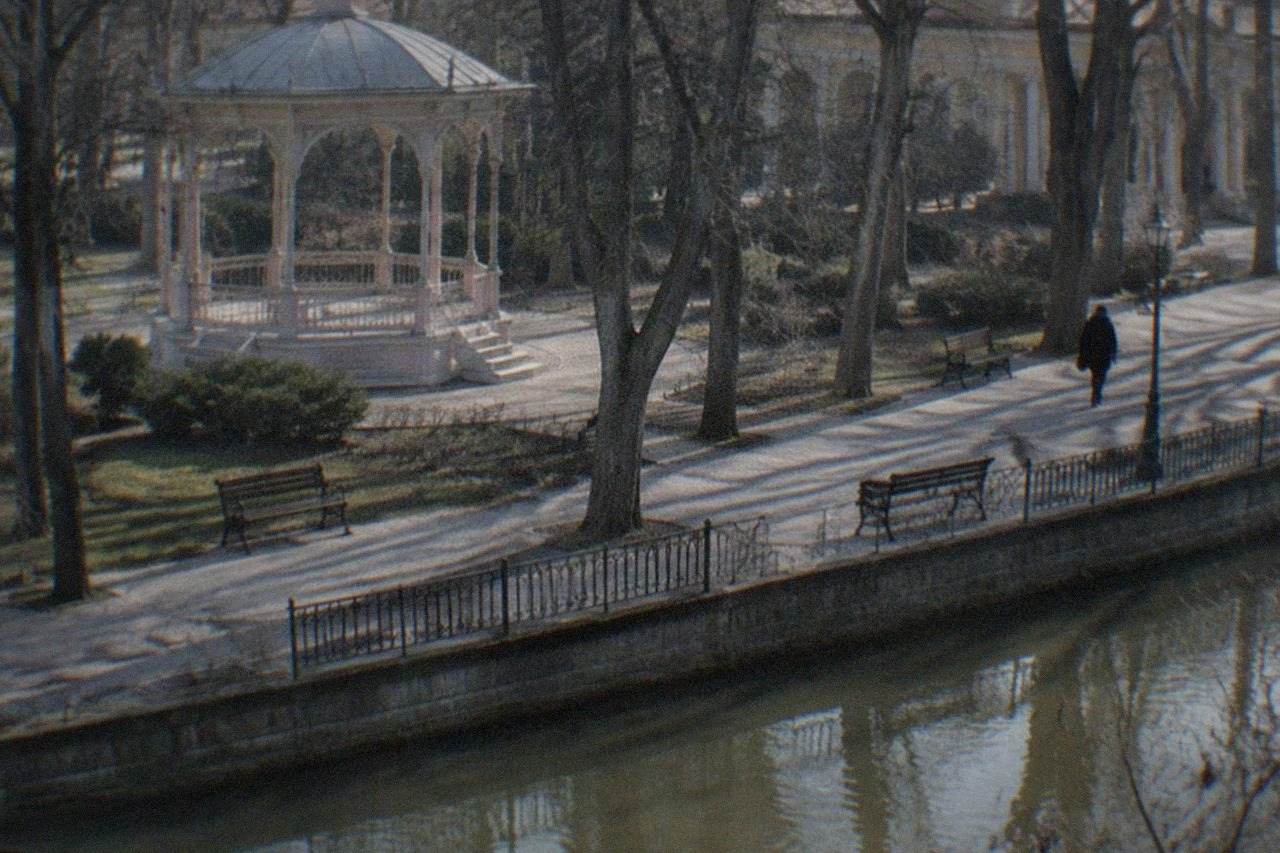
Buzias is a historic spa town in Timis County, western Romania, known for its mineral springs and its landscaped park, and people visit it from Timisoara precisely because it is small, green, and quiet. There is no fortress, no blockbuster museum, and no crowds. The appeal is the promenade culture of an old Habsburg-era resort: covered walkways, pump rooms, parkland, and the sense of a place that was designed for taking the waters rather than for ticking off sights.
That spa heritage is the whole reason the town exists on the tourist map at all. Like Baile Herculane further south, Buzias belongs to the Banat's tradition of thermal and mineral-water resorts, a tradition the region inherited from the Habsburg administration that shaped so much of western Romania. The town's identity is still built around it: the park is the center of town life, the mineral water is the local product, and the architecture that survives from the resort's heyday is what gives the place its character.
What surprises most first-time visitors is the scale of the greenery. Spa towns of this vintage were laid out as parks first and towns second, and Buzias follows that logic. An afternoon here is mostly walking: shaded alleys, ornamental water features, benches, and the slow circuit between the park, the town center, and a café. It is a day trip for travelers who have already done Union Square and Victory Square and want to see the Banat at village pace.
It is also a useful contrast piece. Timisoara was the European Capital of Culture in 2023 and carries the weight of a regional capital; Buzias carries none of that. If your trip is built around the city's squares, the 1989 Revolution Memorial, and the opera, a morning in Buzias resets the tempo before you go back for an evening in the old town.
How Do You Get From Timisoara To Buzias Without A Car?
The simplest way to reach Buzias from Timisoara without a car is by regional bus or by train toward Lugoj, with Buzias sitting on the corridor south-east of the city in Timis County. Many travelers instead fold the town into a guided countryside loop, which removes the scheduling question entirely. Whichever you choose, you will depart from Timisoara's city-center stations, all of which sit inside the local public transport network, where a single 60-minute ticket costs 5 lei and a one-day pass costs 18 lei.
The public transport part only covers Timisoara itself. The STPT network of trams, trolleybuses, and buses will get you from your hotel to whichever station your regional connection leaves from, and payment is easy: the operator's own fares page confirms a 5 lei single ticket valid 60 minutes across all modes including the Bega water bus, an 18 lei day pass, and contactless bank card payment on board. Real-time arrivals are on live.stpt.ro, so you can time the last tram to the station rather than guessing.
For the regional leg, check current timetables before you travel, because schedules on rural Banat routes are thin and change with the season. The pragmatic pattern travelers settle on is an early start, a late-morning arrival, the afternoon in the park, and a return before dark. If a connection is awkward, Lugoj is on the same corridor and makes a natural second stop or an alternative.
If you would rather not plan the logistics at all, a guided option does the driving. The two-day Banat rivers and traditions tour below is built around exactly this kind of countryside loop out of Timisoara, and it is the stress-free route if you are traveling without a car:
For independent travelers, one planning note matters more than any timetable: Buzias is a half-day destination, not a full one, unless you add a second stop. Pair it with Lugoj, with the Recas winery, or with a slow lunch somewhere along the way, and the day fills itself.
| Transport step | What it covers | Fare or cost | Where to check |
|---|---|---|---|
| Single 60-minute ticket | Any STPT tram, trolleybus, bus, or water bus in Timisoara | 5 lei | stpt.ro fares page |
| One-day pass | Unlimited STPT travel for a day, water bus included | 18 lei | stpt.ro fares page |
| 30-day general pass | Only relevant for long stays | 160 lei | stpt.ro fares page |
| Contactless payment | Bank card on board, no ticket needed | Same fares | On-vehicle POS |
| Regional leg to Buzias | Bus or train from Timisoara stations | Varies by operator, check before travel | Current operator timetables |
What Can You Actually See And Do In Buzias In One Day?
A day in Buzias centers on its spa park: walk the tree-lined allees, drink or bottle the local mineral water at the pump rooms, admire the ornate colonnades and pavilions that survive from the resort era, and finish with a long lunch in town. There is no ticketed attraction circuit, so the day is shaped by walking, eating, and resting rather than by queues. A comfortable visit takes three to five hours, which is why pairing Buzias with a second stop works so well.
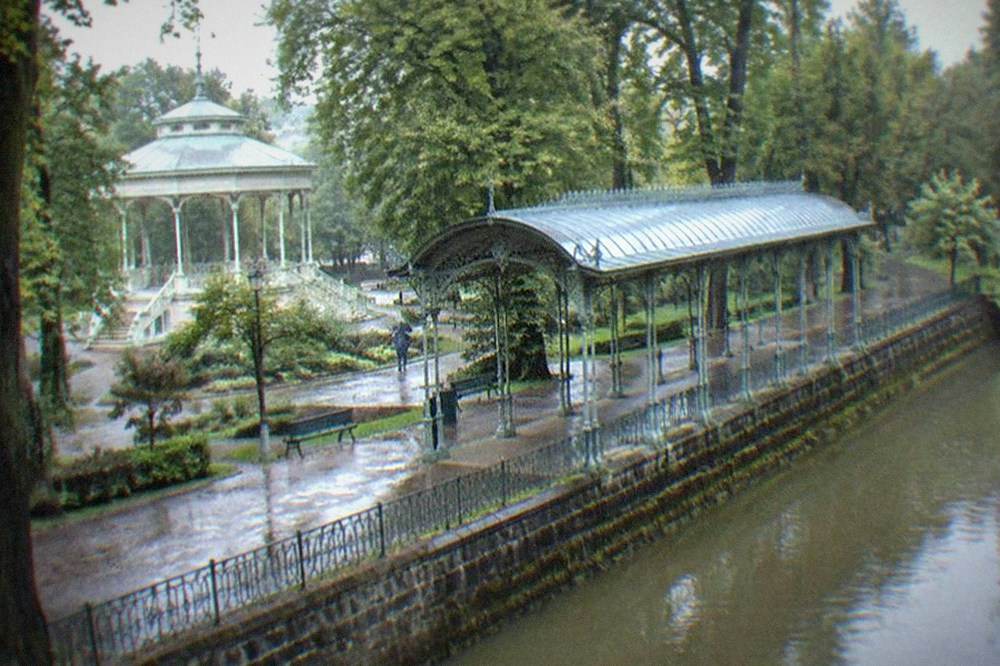
Start in the park, and give it more time than you expect to. The covered promenades are the town's signature: wrought-iron and timber galleries that belong to the same Central European spa architecture you find in old resorts across the former Habsburg lands. They were built for the cure-taking ritual, walking between the spring and the promenade in all weather, and they still frame the town's social life. Photographers gravitate to them early, when low light comes through the trees and the ironwork throws long shadows.
The mineral water itself is the second act. Buzias's springs are the reason the resort exists, and tasting the water, an acquired, distinctly mineral flavor, is part of the visit. Locals arrive with empty bottles; visitors usually settle for a glass and an expression of surprise. Do not expect a spa-treatment day unless you have booked something specific in advance; the town's public face is the park and the promenade, not a wellness clinic.
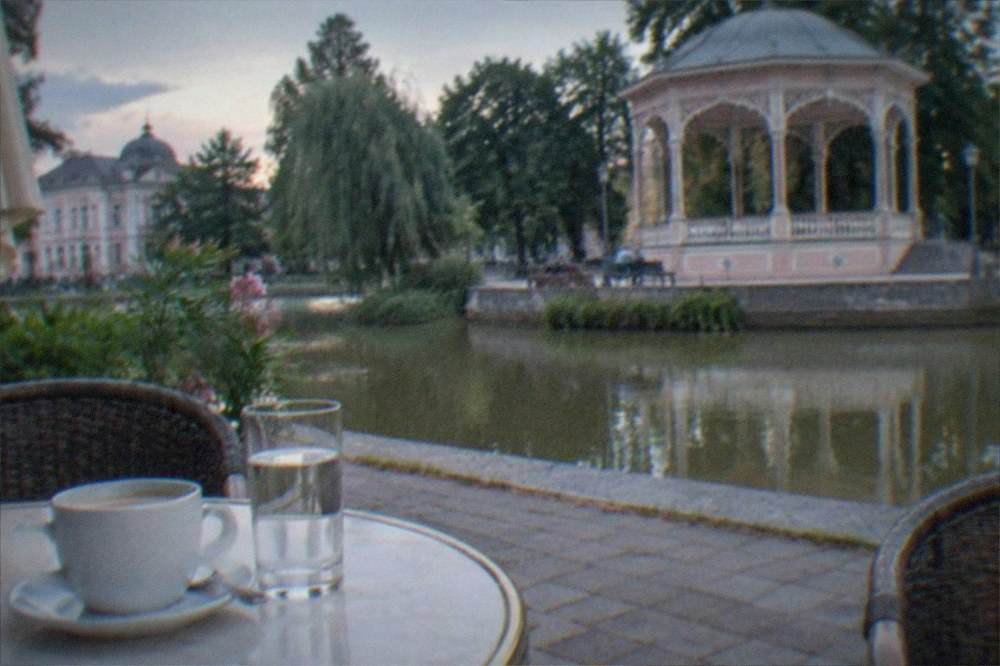
After the park, drift into the town center. Small Banat towns reward low expectations and slow feet: a church or two, a market square, cafés where the coffee comes with a glass of water, and the ordinary texture of Romanian provincial life. If you are traveling with children, the park's open space is the main draw; for more structured family ideas, see our wider guide to Timisoara with kids, whose logic, green space over attractions, transfers directly to Buzias.
| Time block | Activity | Why it works |
|---|---|---|
| Morning | Walk the park allees and colonnades | Best light, quietest paths |
| Late morning | Taste the mineral water at the pump area | The town's defining experience |
| Midday | Long lunch in the town center | Banat small-town cooking at local prices |
| Early afternoon | Slow circuit of the town center and churches | Low effort, real local texture |
| Mid afternoon | Return toward Timisoara, optionally via Lugoj or Recas | Leaves evening free in the city |
If you would rather have the Banat countryside interpreted than merely observed, a guided day trip does that well. The half-day countryside option below includes lunch and covers the villages around Timisoara:
Is Buzias A Good Day Trip With Kids Or Older Travelers?
Yes, Buzias is one of the easiest day trips from Timisoara for both children and older travelers, because the day is flat, slow, and centered on a park. There are no long transfers once you arrive, no steep climbs, and no crowded interiors. Children get open space and water features to investigate, while older travelers get benches, shade, and a compact town that can be seen at walking pace. The only real planning variable is the regional journey, so travel outside rush hours and keep the return leg in daylight.
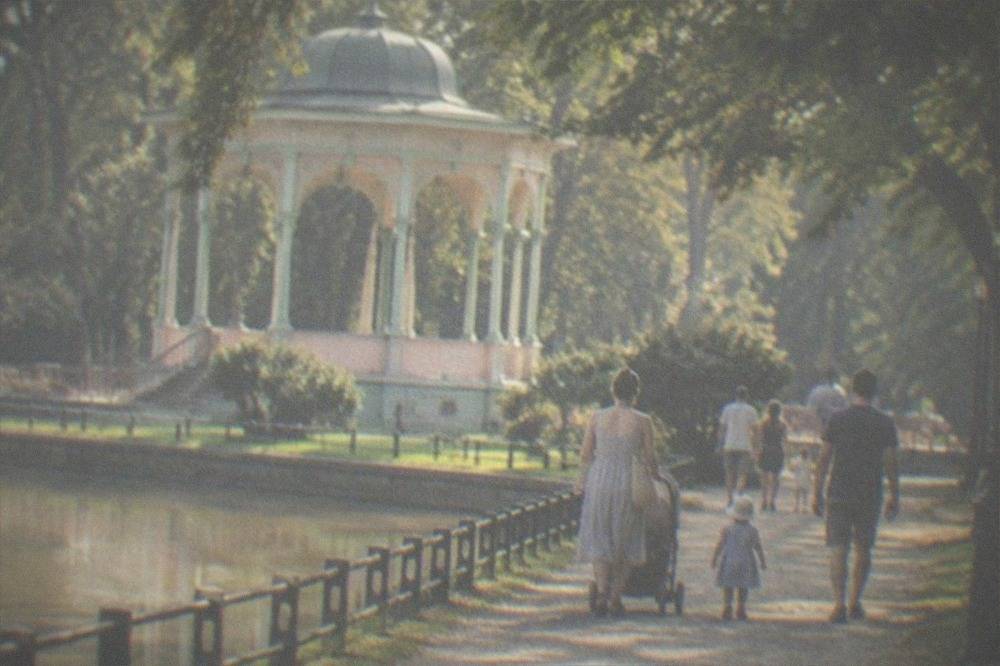
The flat terrain is the practical point. The Banat plain does not ambush you with hills, and a spa park is by definition built for gentle circulation. That makes Buzias a better choice for multigenerational groups than, say, the gorge country of the Nera Gorge, where the scenery is spectacular but the walking is real walking.
For older travelers, the colonnades earn their keep in bad weather too. A covered promenade means a shower does not end the visit, and the town's compactness means a taxi or a patient driver can bridge any gap that matters. For families, the same park that bores a guidebook writer is a playground: gravel paths, ducks if the ornamental water is running, and enough distance for a stroller to earn its keep.
One honest caveat: there is not a full day of child-specific programming here. If your kids need a museum or an aquarium every few hours, plan Buzias as a morning and spend the afternoon back in Timisoara, where the Theresia Bastion and the city's squares fill an afternoon without effort.
When Is The Best Time Of Year To Visit Buzias?
The best time to visit Buzias is late spring through early autumn, roughly May to September, when the park is in full leaf and the promenade walk is the whole point of going. The climate is continental, not Mediterranean: JMA climate normals for the Timisoara station record a July mean of 22.8 C and a January mean of 0.0 C, with June the wettest month at 79.1 mm and March the driest at 34.1 mm. A winter visit changes the character of the day completely.
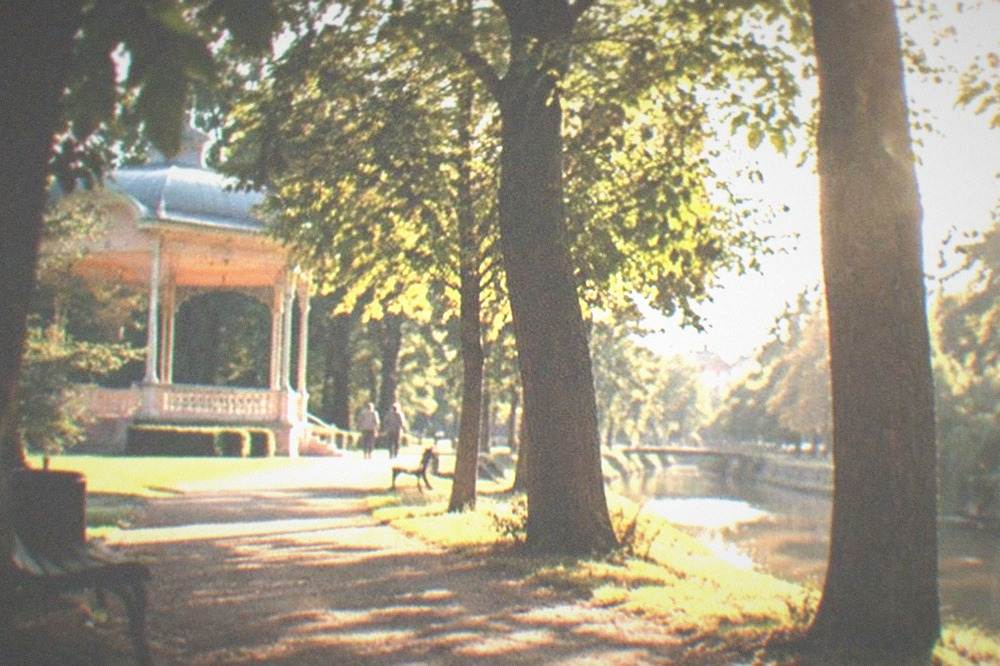
Spring is the sleeper season. March is the driest month in the normals table at 34.1 mm, and by May the mean temperature has climbed to 17.3 C, which is park-walking weather without the July heat. The trade-off in early spring is that the trees are still waking up, so the allees are less photogenic than the postcard version in your head.
High summer, July and August at means of 22.8 C and 22.5 C, is the classic spa-town season, and it is when the park carries the most life. June is the wettest month at 79.1 mm, so pack for the possibility of a downpour and use the colonnades as your shelter plan. Autumn is the photographers' pick: October's mean of 11.5 C is crisp but dry-ish at 50.0 mm, and chestnut alleys in October are the Banat at its most photogenic.
| Season | Mean temperature (Timisoara station normals) | Precipitation | Verdict for Buzias |
|---|---|---|---|
| Spring (Mar to May) | 6.5 to 17.3 C | 34.1 to 57.2 mm | Good; driest in March, greenest in May |
| Summer (Jun to Aug) | 20.9 to 22.8 C | 54.6 to 79.1 mm | Classic spa season; June is wettest |
| Autumn (Sep to Nov) | 6.4 to 17.2 C | 45.3 to 50.4 mm | Best light; October is crisp |
| Winter (Dec to Feb) | 0.0 to 2.1 C | 35.5 to 44.7 mm | Quiet and bare; a short visit only |
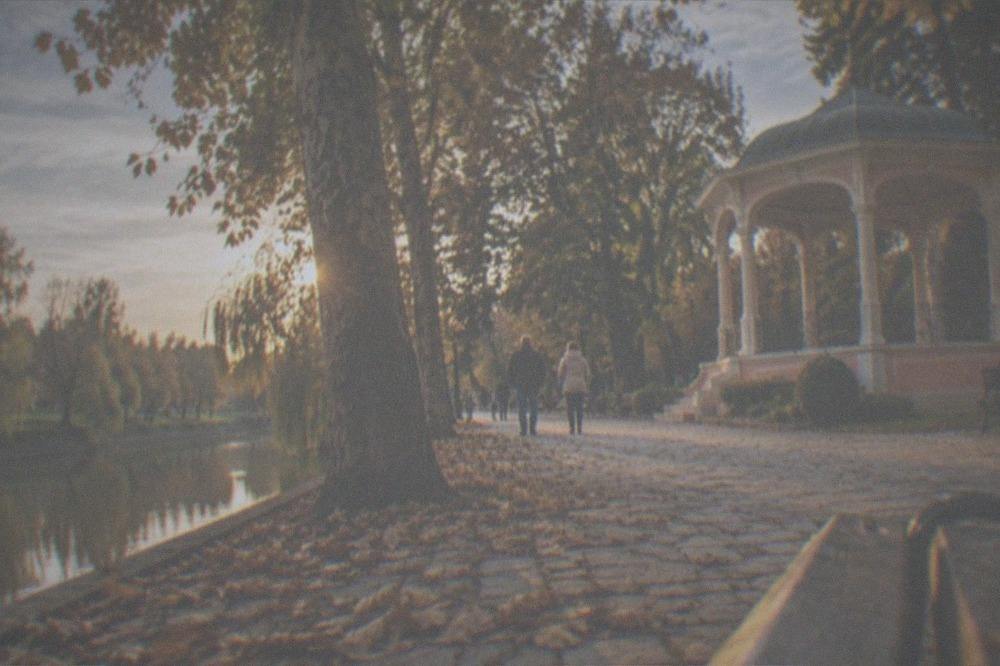
Winter deserves a mention only for completeness. At a January mean of 0.0 C the park is bare, and a spa town out of season is a quiet place indeed. If your trip falls in December, you are better served by the Timisoara Christmas market in the city, with Buzias saved for a warmer visit. For month-by-month detail, see our Timisoara weather by month guide.
What Should A Day In Buzias Cost?
A day trip to Buzias is cheap by Western European standards, because the town's core activity, walking a park, is free. The costs that matter are regional transport, one restaurant meal, and coffee. As planning ranges for the Timisoara area, cost-of-living trackers updated in September 2026 put an inexpensive restaurant meal around 45 to 50 RON, a cappuccino at 13 to 15 RON, and a local draught beer at 11 to 12 RON. The BNR reference rate stood at 5.2788 RON per euro on 23 September 2026.
Those ranges are Timisoara-area figures, and small-town Buzias generally sits at or below them, but treat them as planning ranges rather than promises and check the menu before you sit down. Romania's currency is the leu (RON); the euro is not adopted, and US dollars are not accepted at the till, so plan on paying in lei or by card where cards are taken.
One line item that surprises some visitors is the local tourist tax. Timisoara levies a "taxa speciala pentru promovarea turistica" set by local council decision HCL 719/2025, and the 2 percent rate is reported in local tax commentary rather than confirmed on a primary page, so treat the percentage as reported rather than official. If you stay overnight anywhere in the county, ask your host how it appears on your bill.
| Item | Planning range (September 2026 trackers) | Notes |
|---|---|---|
| Inexpensive restaurant meal | 45 to 50 RON | Timisoara-area range; small towns often lower |
| Cappuccino | 13 to 15 RON | Regular café, expat-area pricing |
| Local draught beer, 0.5 L | 11 to 12 RON | Neighborhood pub pricing |
| Mid-range hotel night | 176 to 227 RON | Only if you extend to an overnight |
| Timisoara day transport pass | 18 lei | Getting to your departure station |
| BNR reference rate | 5.2788 RON per EUR | 23 September 2026 |
Guided alternatives carry their own price tags, printed on their live listings rather than guessed here. The two-day Banat tour that covers this countryside is the fullest option:
Where Else Can You Combine With Buzias On A Banat Loop?
The natural combinations with Buzias are Lugoj, the Recas wine country, and the Banat villages circuit, all of which sit in the same corridor east and south-east of Timisoara. A one-day loop of Buzias plus one of these gives you spa-town calm in the morning and something with more flavor in the afternoon. Over two days, add the Nera Gorge or the Danube gorges for the scenic half of the Banat, keeping Buzias as the gentle opener to a wider regional itinerary.
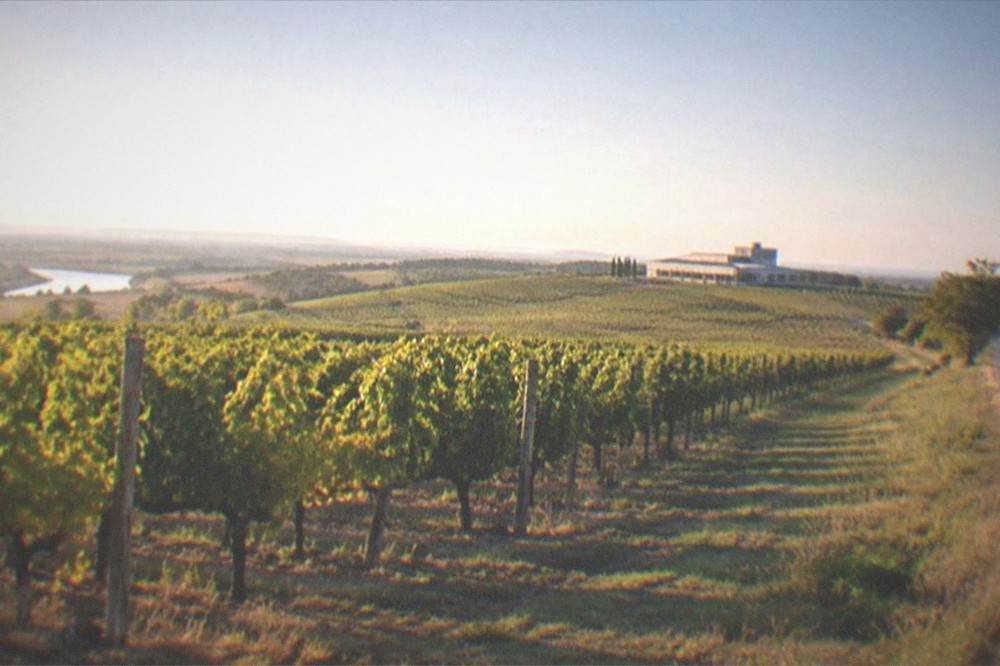
Lugoj is the easiest add-on because it is on the way. A small market town on the Timis corridor, it pairs with Buzias for travelers who want two slow towns in one day without any dramatic driving. Recas flips the day in the other direction: Romania's best-known wine region within reach of Timisoara, where a tasting lunch turns a Buzias morning into a proper Banat afternoon. See our Recas winery and Banat wine guides for the fuller picture.
For a two-day version, the pattern writes itself. Day one: Buzias and the countryside, possibly with a village stop. Day two: the gorge country, either the Nera Gorge with its waterfalls or the Danube gorges at Cazane, both of which deliver the dramatic scenery that Buzias deliberately does not. The hiking-focused villages tour below is the deepest version of that second day:
| Combination | Character | Best for |
|---|---|---|
| Buzias plus Lugoj | Two slow market towns | Zero-stress day, no driving drama |
| Buzias plus Recas | Spa park then wine tasting | Food and wine travelers |
| Buzias plus Banat villages | Park morning, village afternoon | First-time Banat visitors |
| Buzias plus Nera Gorge | Calm day then gorge day | Two-day scenic itinerary |
| Buzias plus Baile Herculane | Two spa towns, two eras | Spa-heritage enthusiasts |
If spa heritage is what pulled you to Buzias in the first place, Baile Herculane is the grand, crumbling elder sibling of the genre, a full trip in itself. And if you are building the whole region into one week, our western Romania in 7 days itinerary shows where a Buzias morning slots into the bigger route.
For travelers who prefer to let someone else sequence the Banat, these are the tours that cover the city and the countryside best:
Common Questions About Buzias
Is Buzias worth visiting from Timisoara?
Yes, if you want a quiet half-day rather than a blockbuster sight. Buzias trades on its spa park, colonnades, and mineral-water heritage, and it suits travelers who have already seen Timisoara's main squares or who want a green pause between city days. It is not a full-day destination on its own.
How far is Buzias from Timisoara?
Buzias lies south-east of Timisoara in Timis County, close enough for an easy half-day trip by road. Exact journey times depend on whether you go by bus, train, or car, so check current timetables before you travel rather than relying on a fixed figure.
Can you drink the mineral water in Buzias?
Tasting the local mineral water is part of the visit, and locals commonly arrive with bottles to fill. The flavor is distinctly mineral and is something of an acquired taste. If you have any health concerns about mineral water, treat it as you would any other and ask locally about the current source arrangements.
What is the best season for a Buzias day trip?
May to September. The JMA climate normals for the Timisoara station show a July mean of 22.8 C against a January mean of 0.0 C, and a spa park is at its best in full leaf. June is the wettest month at 79.1 mm, so keep the colonnades in mind as shelter.
Can you visit Buzias without a car?
Yes, by regional bus or train from Timisoara, though frequencies on rural Banat routes are thin and seasonal, so plan an early start and a daylight return. Many travelers instead join a guided countryside tour out of Timisoara, which removes the scheduling risk entirely.
Is Buzias good for families and older travelers?
It is one of the easiest Banat day trips for both. The terrain is flat, the town is compact, and the day is built around a park with covered walkways, which means no climbs, no queues, and shelter if the weather turns. Pair it with an afternoon back in Timisoara if children need more stimulation.
Buzias will never compete with the gorges or the castles for drama, and that is exactly its use in a Timisoara itinerary: a green, flat, unhurried morning within easy reach of the city, best taken in late spring or early autumn and best paired with Lugoj or the Recas vineyards to make a full day of it.